They're like that in this apartment we're renting and I keep seeing them elsewhere. I don't get it.
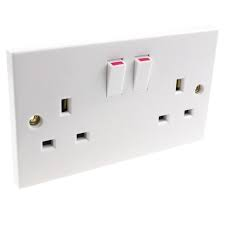
top 50 comments

sorted by: hot top controversial new old
[–] 180 points 2 years ago* (last edited 2 years ago) (27 children)

the UK power grid is weird. mostly due to echoes of the war. used to be that, to save copper, the entire house and sometimes multiple houses on a street would be wired as one big loop of wire, no fuse box or anything. that's where the individually fused plugs and switched sockets come from. then, since it turned out to be quite a good idea for safety, they kept doing it.

  • source
  • hideshow 27 child comments
  • [–] 41 points 2 years ago

    This isn't strictly true. Most houses built between WWII and the '90s were built with sockets that didn't have switches on them. It was only later safety regulations / suggestions that made the switches preferable.

    Where I live was built in the late '80s right before switched sockets became more common. All the original sockets have no switch. Some in the kitchen have switches, but it's clear these were added at a later date.

    I'm not sure of the exact rulings and where and when a socket must have a switch, but you can still find switchless sockets for sale at the sorts of retailers who sell those sorts of things, so there are definitely places where those sockets are still allowed.

  • source
  • parent
  • load more comments (24 replies)
    [+] 160 points 2 years ago (12 children)
  • [–] 31 points 2 years ago (5 children)

    Allows you to remove power from the plugged in device without unplugging it. This provides convenience to easily and quickly turn things on and off and prevents arcing when unplugging.

    That's exactly what I do, because it's more convenient than unplugging everything.

    I live in South Africa, where we had rolling blackouts (called loadshedding) for a few years. It's easier to switch everything back on when the power comes back than to plug it back into a socket without a switch, especially with my fucked up spine.

    The electricity in the place I live was done poorly, so having something plugged in "live" risks a surge or something and then the appliance gets fucked and then everything smells like burnt plastic.

    And that's the best case scenario. Others have had housefires.

    Also, the South African plugs aren't pleasant accidentally to step on. It won't pierce your foot, but it can still hurt like a motherfucker for a few seconds if you step on it in the wrong way.

    Those UK plugs do look a lot more nasty to step on. I shudder at the thought.

    I like the EU and US two prong cables ( 🔌?) where the prongs are parallel to the cable, but not the cables with the orthogonal prongs.

  • source
  • parent
  • hideshow 5 child comments
  • load more comments (5 replies)
  • load more comments (6 replies)
    [–] 122 points 2 years ago (23 children)

    So we can turn the power on and off.

    Why else would you have a switch next to a power socket?

  • source
  • hideshow 23 child comments
  • [–] [S] 23 points 2 years ago (4 children)

    Most of the places in the world I have been to do without them, or at least did when I was there, so it confused me. But some people have given good explanations now.

  • source
  • parent
  • hideshow 4 child comments
  • [–] 37 points 2 years ago (3 children)

    Open one up. There's also a fuse connected to the live wire. The amperage is dependent on the normal draw of the appliance. Just added safety features. Also the live and neutral holes only open up if you put the earth in first (that's why it's longer). British plugs are arguably the safest.... Unless you leave them prongs up and step on it accidentally. That makes stepping on Lego feel like a shag carpet.

  • source
  • parent
  • hideshow 3 child comments
  • load more comments (3 replies)
  • load more comments (18 replies)
    [+] 86 points 2 years ago* (last edited 1 year ago) (8 children)
  • [–] 80 points 2 years ago (1 child)
    load more comments (1 reply)
    [–] 54 points 2 years ago (3 children)

    This is virtually standard in Australia

  • source
  • hideshow 3 child comments
  • load more comments (3 replies)
    [–] 46 points 2 years ago (18 children)

    I like them, personally. You don't have to use them but they are sometimes handy. I just spent 30 seconds feeling around a TV to turn it off only to discover it doesn't have buttons. Killed it at the wall.

    It's not a deal breaker, in any case. The weird foreign convention I would like to shame is doors that require a key to open from the inside.

  • source
  • hideshow 18 child comments
  • load more comments (12 replies)
    [–] 46 points 2 years ago (19 children)

    Americans don't have this???

  • source
  • hideshow 19 child comments
  • [–] 15 points 2 years ago (3 children)

    We do have ground fault circuit interrupt (GFCI) outlets, which are required when a socket is within a certain distance of a water source but can be installed on all outlets if you want. They have a little breaker inside that trips automatically if it detects a problematic difference in current flow.

    They're not on/off switches but you could press the "test" button on the outlet to break the circuit.

    I've also seen some whole outlets that are switched on/off from a light switch elsewhere in the room. Those are super annoying because there's no required indication that they work that way so you get to find out for yourself.

  • source
  • parent
  • hideshow 3 child comments
  • load more comments (3 replies)
  • load more comments (15 replies)
    [–] 34 points 2 years ago (6 children)

    Safety, easier to switch things off without unplugging them. Why not have one if it's more convenient? Not all of them have switches though.

  • source
  • hideshow 6 child comments
  • load more comments (6 replies)
    [–] 33 points 2 years ago (15 children)

    Kind of off topic, but I've just gotta add that the safety shutters over the positive and negative terminals that only open when the ground pin (which is longer than the others on the plug) is inserted up top is brilliant, it basically makes short circuiting impossible. Electrical outlet design is one of the few things I'll concede the UK does better than the rest of the world.

  • source
  • hideshow 15 child comments
  • load more comments (15 replies)
    [–] 29 points 2 years ago (15 children)

    UK household electricity is pretty spicy compared to many other places - it has more safety features as a result. (3 pinned fused plug, socket switches etc)

  • source
  • hideshow 15 child comments
  • load more comments (2 replies)
    [–] 29 points 2 years ago (7 children)

    Great for turning off a device or several devices without having to unplug (e.g. if the sockets are behind a bookcase, this is much more convenient). Not a super common need but when it saves moving furniture it helps. Given that UK switches are tougher to plug in and unplug than most (due to safety features), I prefer using a switch. Also, the switches are cheap and give more options, so may as well!

    I rely on one for a light where the switch broke and wasn't easily replaceable, so being able to fall back on the mains switch meant I can keep using the light.

  • source
  • hideshow 7 child comments
  • load more comments (7 replies)
    [–] 29 points 2 years ago (3 children)

    I present to you my favorite YouTube person:

    The GFCI/RCD, a simple but life saving protector:

    https://youtu.be/ILBjnZq0n8s?list=PLv0jwu7G_DFU62mIGZNag5vQ0a6tDGBpO

    In defense of the Switched Outlet:

    https://youtu.be/2DGqVbTHX-k

    Electrical topics playlist:

    https://youtube.com/playlist?list=PLv0jwu7G_DFU62mIGZNag5vQ0a6tDGBpO

    I could just watch this guy all day lol

  • source
  • hideshow 3 child comments
  • load more comments (1 reply)
    [–] 28 points 2 years ago (2 children)

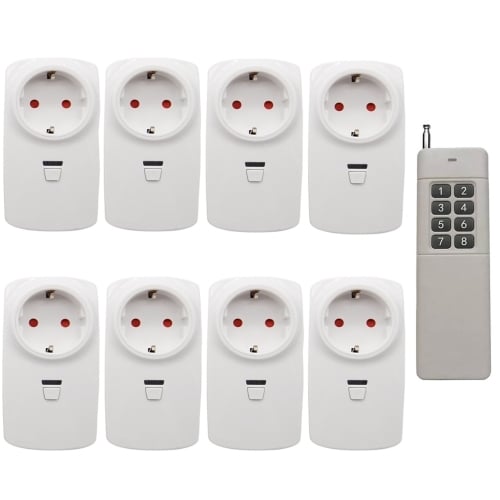
    I like the integration of the switch, should be standard. I use many switch plug-ins just to avoid stand-by consumption (it really adds up over the year) and to avoid high pitch humming on some devices.

    YSK: there's also remote controls for these switches, very handy 1000083879
  • source
  • hideshow 2 child comments
  • [–] 26 points 2 years ago (6 children)

    As any cautious parent could tell you, these are helpful when the toddler starts sticking things in places where they don't belong. Such as metal cutlery. In the power sockets.

  • source
  • hideshow 6 child comments
  • load more comments (1 reply)
    [–] 24 points 2 years ago (3 children)

    "so many"?

    isn't it all of them?

  • source
  • hideshow 3 child comments
  • load more comments (3 replies)
    [–] 21 points 2 years ago (10 children)

    Being a uk person its cause they can & its also in to building / electric code. Its just a switch that breaks the live leg, stops sparking when plugging in stuff.

  • source
  • hideshow 10 child comments
  • load more comments (10 replies)
    [–] 19 points 2 years ago

    Everything you'd want to know about British wiring and my introduction to Tom Scott:

    https://youtu.be/UEfP1OKKz_Q

  • source
  • [–] 18 points 2 years ago (8 children)

    No one seemed to mention the important fact that UK and I think most Europe is a higher voltage than the US. Tom Scott as well as Technology Connections have some good videos on the whys and differences it causes.

  • source
  • hideshow 8 child comments
  • load more comments (8 replies)
    [–] 14 points 2 years ago (6 children)

    Safety and convenience versus the cost of including them, I expect.

    The Wikipedia page for BS 1363 says they're optional and weren't added to the standard until 1967. I can't recall having seen a domestic socket without one.

    But it seems the only legal way to read the actual standard is to pay for it, and even the HSE website isn't much help.

  • source
  • hideshow 6 child comments
  • load more comments (6 replies)
    load more comments
    view more: next ›