92
Well, let's see where this goes.
Well, let's see where this goes.
Video of the killing archived here: https://tankie.tube/w/7aqRDCL79DRNndUaDPTbVX
You don't think there are reactionary elements within this movement being supported by foreign interests?
Tom Latchem Lead Global CorrespondentPublished Jan. 13 2026 11:56AM EST
5 - 6 minutes
Sensitive details of around 4,500 ICE and Border Patrol employees—including almost 2,000 agents working in frontline enforcement—have allegedly been released by a Department of Homeland Security whistleblower following last week’s fatal shooting of Renee Nicole Good.
The Jan. 7 killing of the mother by ICE agent Jonathan Ross in Minneapolis, Minnesota, has sparked nationwide protests and worldwide outrage, including among some DHS employees.
The alleged leak to ICE List, a self-styled “accountability initiative,” is believed to be the largest ever breach of DHS staff data. It appears to include names, work emails, telephone numbers, roles, and some resumé data, including previous jobs of federal immigration staff.
ICE List founder, Dominick Skinner, told the Daily Beast: “It is a sign that people aren’t happy within the U.S. government, clearly. The shooting [of Good] was the last straw for many people.”

Renee Good had been protesting with her wife, Rachel (L), when she was shot dead by an ICE agent. (Instagram / Renee.n.good, Getty Images / Stephen Maturen)
According to Skinner, who leads the volunteer-run website, the dataset includes about 1,800 on-the-ground agents and 150 supervisors. Early analysis by the organization suggests that around 80 per cent of the staff identified remain employed by DHS.
An initital set of the names from the leak will be posted on Tuesday night, Skinner told the Daily Beast.
He said individual reports from the public have also “spiked” “a lot” since Good’s shooting. “I’ve had hotel staff sending post-it notes, bar staff sending DHS IDs, and loads of people saying their neighbour is an agent,” he said.

Prior to the Monday’s leak, which Skinner said he received on Monday, ICE List had been in possession of details of around 2,000 federal immigration staff, including names it has chosen not to make public.
Roughly 800 of these, he said, are frontline agents or are permitted to deputise for them on the ground. The latest leak brings details of the total number of federal immigration staff in its possession to around 6,500.
Skinner said he plans to list “the majority” of names the project is able to verify, because “ICE and CBP are in clear need of reform, and I believe working for either is a bad move on a moral level.”

A Border Patrol agent detains a man following yet another brutal immigration arrest. ADAM GRAY/Adam GRAY / AFP
He added: “We will make exceptions on a case-by-case basis, the best examples of which will be those who work in childcare within the agency, and nurses. There will be more exceptions, but we will have a discussion once the team flags a position as something we need to think twice about.”
DHS has said it shields the identities of its staff and agents—who famously almost always wear masks—for their own safety. It has previously had similar projects hosted in America taken down—including the ICE tracker app, ICEBlock.
Skinner, who is Irish with American relatives, but lives in the Netherlands, where he hosts the database outside of U.S. jurisdiction, said: “We never began with the goal of creating a large database [and] first just promised to share agent names sent to us, as Kristi Noem threatened Americans would be arrested if they attempted to do so.

ICE List is hosting outside of the U.S so that it cannot be taken down by the Trump administration. ICE List
“That’s now turned into the most recent version of the database, our ICE List Wiki, where we are aiming to have a comprehensive record of incidents, where we hope to be able to record all agents on the scene, all vehicles present, the field office that sent out the agents, and any other relevant information to the incidents.”

Homeland Security Secretary Kristi Noem has, like the rest of the Trump administration, blamed Good for her own death, while refusing to censure Ross, or wait for the investigation to play out. CNN
It was reported on Monday that Jonathan Ross, who has worked for ICE since 2015 and served Border Patrol before that, had lied to his neighbours about what he did for a living. People reported that the 43-year-old had pretended at a 2020 neighborhood garage party that he was a botanist.

Jonathan Ross photographed in 2014. Facebook
Skinner said that, since June, two federal immigration staff members identified by ICE List had reached out to say they had left their posts and had been removed from the site. “We would do the same for any who has quit and has not been identified at a raid,” he added.
He said his project was important because DHS refuses to hold its own agents accountable for violations of the law.

Assistant Secretary Tricia McLaughlin told the Daily Beast that its “law enforcement officers are on the frontlines arresting terrorists, gang members, murderers, pedophiles, and rapists,” but that “thanks to the malicious rhetoric of sanctuary politicians, they are under constant threat from violent agitators.”
She added: “Publicizing their identities puts their lives and the lives of their families at serious risk.”
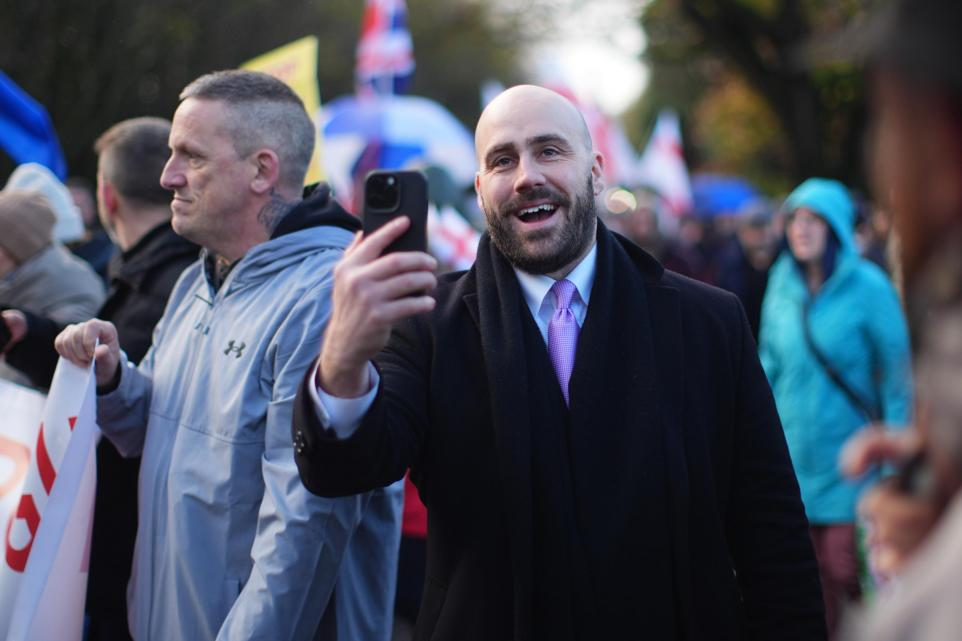
UKIP leader Nick Tenconi (Image: James Manning)
A NEW party logo proposed by the UK Independence Party (Ukip) has been slammed for being strikingly similar to a Nazi symbol.
The party has bid to replace its purple and yellow logo featuring a gold pound sign with a black and white symbol that appears to mirror the Iron Cross -- a military medal in the Kingdom of Prussia and Nazi Germany.
The logo, which will need to be approved by the Electoral Commission, also features a shield and spear as well as a slogan branding the party "the new right".

The similarity to the Iron Cross has been picked up on by scores of people on social media.
However, the party has claimed the emblem features "the holy lance, the Eucharist and the Cross Pattée" adding it is "outright offensive" to suggest the logo is a "Nazi symbol".
Angus Pargas-Wyatt, director of political engagement at Total Politics, posted on Twitter/X: "UKIP has submitted an application to the Electoral Commission to change its official logo. And it's ever so slightly concerning..."
Sunder Katwala, the director of the British Future think tank, added on BlueSky: "Ukip have submitted a new logo and slogan to the Electoral Commission, swapping the £ pound sterling symbol for a cross, that looks very much like it is modelled on the Iron Cross used by Prussia & Germany 1871-1918 and Hitler's Nazi regime from 1933-45."
The logo has appeared already at protests on supporters' flags but has now been officially proposed to the Electoral Commission.
If approved, it could be used on ballot papers for General Elections.
NEW: @UKIP has submitted an application to the Electoral Commission to change its official logo.
And it's ever so slightly concerning... 👀 pic.twitter.com/Ux6yYe7Nb9
Angus Parsad-Wyatt (@anguswyatt) January 12, 2026
Another user said: "Ukip go completely mask off. The cross is obviously the huge red flags but a f****** weapon on a political party logo?
"Don't forget the axe and sticks is the reason we call these vermin fascists."
The Eurosceptic, far-right party used to be led by Nigel Farage and gained two MPs in the 2010s, but has rarely made headlines since the UK left the EU.
READ MORE: SNP MP to host Greenland minister in Westminster amid Donald Trump threats
They are now led by Nick Tenconi, the chief operating officer of Turning Point UK, an organisation set up to promote right-wing politics in UK schools and universities.
In October last year, a planned demonstration by Ukip was banned by the Met Police from taking place in an area with a large Muslim population.
The gathering had been due to take place in east London and had been billed as a demo to "reclaim Whitechapel from the Islamists".
A Ukip spokesperson said: "Our new logo features the holy lance, the Eucharist and the Cross Pattée, to show UKIP's commitment to reinstate Christianity into the heart of government.
"The Templar Cross/Cross Pattée is a powerful Christian symbol that symbolises spiritual victory and sacrifice.
"The Cross Pattée has been featured throughout British history and is used as the Victoria Cross, sits on the crown of our monarch, and is also found within the Parliamentary logo. Are critics suggesting that the King, Parliament and our war heroes are all Nazis?
"It is outright offensive, ignorant and Christophobic to suggest that the Cross Pattée is a 'Nazi symbol'. The Cross Pattée is displayed throughout Christian religious texts and these efforts to slander us with vile allegations is simply religious bigotry and discrimination."
If you're a little too online, you likely know that Marco Rubio as a teenager made extra cash working for his late brother-in-law Orlando Cicilia. The business imported and sold exotic animals as a front for moving nearly a half million pounds of cocaine and marijuana. It was later said, when kingpin Mario Tabraue became a main character on the monstrously popular documentary series Tiger King, that the cocaine was actually stuffed into the bodies of vipers and boa constrictors, though an 80-page indictment of the enterprise makes no mention of that, and Tabraue has been known to sue those who accuse him of animal cruelty.
"I dealt to support my animal habit," Tabraue humbly told the Netflix documentarians about the drug ring that imported and distributed $79 million worth of drugs between 1976 and 1987. It was Rubio's job, according to Manuel Roig-Franzia's 2012 biography of the then-senator, to build the cages.
Rubio has sworn he knew nothing about the drugs. He was only 16. (Admittedly, one of Cicilia's co-defendants had been only 16 when Tabraue had allegedly ordered him to murder his estranged wife to stop her from telling the feds what they'd done with the body of another guy they'd murdered the year earlier.) Not that it matters, of course: What politician doesn't have a felon relative? But for Rubio in particular, the connection seems too incongruous with his long-cultivated squeaky-cleanness. As a third grader, Rubio convinced his family to convert to Mormonism to better fit in with their wholesome new neighbors during a short stint living in Las Vegas. He spent every spare hour of high school obsessing over football, and his wife attends masses at multiple churches multiple times per week.
When Univision broke the story of his ties to Cicilia's business in 2011, Team Rubio declared war on the entire network, first dispatching surrogates like Ana Navarro to pressure executives to shelve the story, then convincing a host of other Republican politicians to boycott its debate on the nonsensical premise that the network had attempted to use the information about his brother-in-law as "blackmail" for the purposes of "extorting" an interview out of him.
The following year, Rubio's memoir cast Cicilia as a paragon of Old World filial piety, a central presence in his fondest childhood memories. The house where Cicilia cut and stored cocaine into emptied cigarette cartons was depicted as a sanctuary that held his far-flung family together during the difficult Vegas years. Most significantly for the football-obsessed young Rubio, Cicilia paid him enough cash to clean animal cages and bathe his seven Samoyed dogs so he could buy tickets to every Dolphins home game of Dan Marino's 14-2 sophomore season. On the December day in Rubio's junior year of high school that Cicilia was taken away in handcuffs from the home where he'd briefly lived, his entire family was "stunned."
Today, Marco Rubio is the Trump administration's most formidable liar. When Pam Bondi or Pete Hegseth or Karoline Leavitt or Stephen Miller refers to an anti-genocide protester or a day laborer or a sandwich hurler or a fisherman clinging to the wreckage of a fishing boat that has just been struck by a Hellfire missile as a "terrorist," they come off as pathological. But Rubio's approval ratings are the highest in the Republican Party, even as he is the architect of what is arguably Trump's single most cynical policy: the scheme to appoint drug cartel bosses and their cronies atop the governments of every Latin American country, in the name of fighting drug cartels.
In September, Rubio hailed Ecuadoran President Daniel Noboa, who leads a country whose homicide rate has risen eightfold since 2016, as an "incredibly willing partner" who "has done more just in the last couple years to take the fight to these narco-terrorists and these threats to the security and stability of Ecuador than any previous administration." Just five months earlier, a damning investigation revealed that Noboa's family fruit business had trafficked 700 kilos of cocaine to Europe in banana crates between 2020 and 2022. Rubio has tirelessly promoted the cause of convicted (alas, just-pardoned) drug trafficker Juan Orlando Hernández. In 2018, Rubio personally and publicly commended Hernández, then president of Honduras, for combating drug traffickers (and supporting Israel), just seven months before his brother was indicted for trafficking 158 tons of cocaine in containers stamped "TH," for Tony Hernández.
Rubio has raved about the crime-fighting efforts of Salvadoran and Argentine junior strongmen Nayib Bukele and Javier Milei, in spite of the former's documented alliance with MS-13 and the various Miami cocaine trafficking scandals that enveloped his libertarian political party last fall, as well as both leaders' slavish devotion to the drug cartels' single favorite mode of money laundering. Rubio has been one of the Beltway's biggest backers of newly elected Chilean president José Antonio Kast, the son of a literal Nazi war criminal who has spent his entire political career lionizing, whitewashing, and promising a restoration of the brutal reign of Augusto Pinochet, who personally ordered the Chilean army to build a cocaine laboratory, consolidated the narcotics trade inside his terrifying secret police, and then allegedly "disappeared" key conspirators like his secret police chemist Eugenio Berríos.
And for at least a decade, Rubio has lauded, strategized with, and viciously condemned the multitude of criminal investigations into former Colombian President Alvaro Uribe, whom some describe as a kind of Kissingerian figure to the former Florida senator. A 1991 Pentagon analysis described Uribe, whom Rubio depicts as a kind of paradigmatic drug warrior, as one of the 100 most important Colombian narco-terrorists, a close personal friend of Pablo Escobar and a political figure "dedicated to collaboration with the Medellín [drug] cartel at high government levels."
That brings us to Rubio's current campaign of state-sponsored terrorism against Venezuela and fisherman emanating from there, on the pretense that Nicolás Maduro runs something called the "Cartel of the Suns," which has flooded the United States with cheap cocaine. The case that this is anything but a fairy tale is laid out in a 2020 indictment whose insanity I hope to explore soon, but its flimsiness is also underscored by the puny vessels SOCOM has chosen to drone-strike into oblivion.
Last week, Berkeley professor emeritus Peter Dale Scott wrote a letter to The New York Times disputing the newspaper's characterization of "a remarkable dissonance" between Trump's simultaneous massacres of subsistence traffickers and pardoning of a convicted trafficker of more than 400 tons of cocaine. Actually, he pointed out, the "contradiction" was markedly unremarkable: "The ill-conceived and deliberately misnamed 'War on Drugs' has been a cover for contradictory CIA involvement with drug-traffickers for decades." This is especially true in Venezuela, Scott noted. Customs Service investigators probing a 998-pound cocaine seizure in the country in 1990 discovered the Agency had been operating a joint venture with top military generals to traffic cocaine as a purported means of "infiltrating" Colombian cartels. The venture had been nicknamed "Cartel de los Soles," and the Times itself reported that it had successfully smuggled tons of cocaine into the United States with virtually no accountability until Hugo Chávez imprisoned the general who had spearheaded the cartel and expelled the DEA from Venezuela, at which point it became fashionable to finance industrial sabotage, military coups, and ultimately terror attack projects, under the premise that it was a "narco-state."
As historian Greg Grandin pointed out in a recent podcast appearance, whereas in many realms the scale and breadth of the Trump administration plunge into mafia rule is truly unprecedented, in Latin America it is more of a continuation of policy that dates back at least a century. "Behind every single horror that Donald Trump represents exists a long train of U.S. presidents that have first put in the policies that make what Trump does today possible," Grandin said. Few Americans learned this lesson the hard way at so tender an age as Marco Rubio.
THE LABYRINTHINE SCANDAL KNOWN AS "IRAN-CONTRA" began to unravel in 1986 when the Nicaraguan Air Force lobbed a missile at a suspicious Fairchild cargo plane. As the fuselage packed full of grenade launchers, AK-47s and ammunition, two pilots, and a radio crewman plunged to the Earth, a lone white guy from Wisconsin (who died just weeks ago) parachuted down intact and quickly admitted he worked for a CIA project with a guy named "Max Gomez." Gomez turned out to be Félix Rodríguez, one of Mario Tabraue's dad Guillermo's old comrades from the Movimiento de Recuperación Revolucionaria, or MRR, the crew of anti-communist revolutionaries led by physician Manuel Artime that carried out the Bay of Pigs invasion and various subsequent terror attacks and sabotage operations in Cuba for years afterward.
The plane turned out to have belonged to Barry Seal, a Special Forces pilot turned prolific cocaine trafficker who had just been murdered by cartel hit men. Following a conviction for smuggling quaaludes, Seal had let the CIA install hidden cameras on the plane and set out on a covert sting operation to "frame" Nicaragua's Sandinista government for drug trafficking by capturing images of Pablo Escobar stuffing cocaine into duffel bags in Managua alongside a titular top aide to a Sandinista general, which thereupon became the basis for the Reagan administration's renewed appeal for funds to finance regime change in the Central American country. "I know every American parent concerned about the drug problem will be outraged to learn that top Nicaraguan government officials are deeply involved in drug trafficking," President Reagan said in a 1986 televised speech. "There seems to be no crime to which the Sandinistas will not stoop."
But the "Sandinista official" turned out to be a former U.S. embassy staffer, and Seal seemed to be a longtime CIA asset who appears to have participated at the Bay of Pigs and was even photographed in 1963 with the same Félix Rodríguez who would later become his Agency handler. Rodríguez was not known for a soft touch: Three officials involved in the investigation of the gruesome 1985 cartel execution of Kiki Camarena, a Mexico-based DEA agent, have repeatedly claimed Rodríguez ordered the hit after the young agent uncovered evidence revealing the extent of the agency's collaboration with Mexican cartels, an accusation the Miami stalwart, who currently stars in a series of YouTube shorts and recently hosted former Colombian president Uribe for a Bay of Pigs anniversary event, denies.
The genesis of the MRR's conquest of the Latin American underworld dates back at least to 1964, when the CIA reportedly got hold of pornographic photos of Manuel Artime's lesbian wife, who his bosses learned had been a mistress to both Fulgencio Batista and former Venezuelan dictator Marcos Pérez Jiménez. Around the same time, the MRR accidentally killed three Spanish sailors off the coast of Cuba. To contain the PR fallout, Artime was advised to spend more time in Managua, where the right-wing dictatorship of Luis Somoza could nurture his projects more unreservedly. But Artime was soon in the news for a different scandal: A young Cuban immigrant from New Jersey whose husband had been recruited to one of his Central American training camps had received an anonymous letter advising her that Artime had hired assassins to murder her husband because he "did not approve of the immoral activities in the camps; among them the smuggling of liquor which took place on the boat of Artime, in collusion with an official of the Nicaraguan Government." Costa Rican customs officials around the same time discovered an abandoned plane full of tens of thousands of dollars' worth of contraband whiskey and women's clothing in the jungle near what appeared to be an unauthorized guerrilla camp. An FBI informant "advised that different Cuban exile leaders continued to claim that Artime and the MRR were making a living off the cuban revolutionary activities; were engaged in smuggling instead of anticommunist warfare; and were misappropriating funds designed for commando and infiltration activity ... it was claimed that Artime's men returned from Central America very disenchanted, or with large sums of money earned through illegal activity." Guillermo Tabraue served as the MRR's "paymaster" during these years, and there would soon be little ambiguity about which camp he fell into.
In 1970, the Bureau of Narcotics and Dangerous Drugs carried out a blitzkrieg seven-city drug bust they called the "largest roundup of major drug traffickers" in recorded history, noting in a press conference that none of the 150 men arrested was a "known member of organized crime," but declining to mention that most---as many as 70 percent, by one estimate---belonged to Artime's Bay of Pigs veteran organization. Just two years later, the state attorney's office opened an investigation into Tabraue's jewelry shop after discovering he'd given cufflinks to a municipal judge who had reduced sentences for two young women convicted of "loitering" and sold various items to the chief of police. The following year, Artime recruited a 23-year-old accounting whiz named Ramon Milian-Rodriguez, who would rise to become the top accountant to the Medellín cartel and a close confidant of Panamanian dictator Manuel Noriega, to begin laundering money into Nicaraguan banks to assist the legal defense funds of four Bay of Pigs alumni who had participated in the Watergate burglary.
In 1972, the CIA offered to detail a team of its own covert operations specialists to assist the Bureau at keeping an eye on its old assets, while ensuring that drug investigations did not conflict with "national security" concerns. The BNDD put together a sophisticated database called the Bureau of Narcotics Covert Intelligence Network---later renamed DEACON when the Bureau was absorbed into the DEA---and hired Tabraue as its first big recruit to flesh out its intelligence network. The CIA paid Tabraue $1,400 a month during the 1970s for his intel on rival drug traffickers.
The scheme worked exactly as intended: Drug traffickers who were allied with the CIA's ideological objectives were protected, assisted and/or recruited as assets, while drug traffickers who bribed or cooperated with leftists, crossed the Agency, or outlived their usefulness were set up for prosecution or discarded. Prosecutions were a low priority, and the DEACON team reportedly contributed no admissible evidence whatsoever to DEA drug prosecutions in the 1970s. (As the former DEA official Dennis Dayle lamented in 1986: "In my 30 years of experience with the DEA and related agencies, the main objectives of my investigations almost invariably turned out to be CIA workers.") In the CIA's "defense," those drug revenues financed terrorist attacks, assassinations, and infiltrations that arguably intensified the atmosphere of fear, distrust, and hopelessness that eased the challenge of repressing the left. In 1975, Bay of Pigs veterans were involved in nearly half the terrorist attacks that took place, though they chose their battles wisely. During the Watergate investigation, Artime testified that CIA agent-turned-Nixon operative E. Howard Hunt had recruited him to assassinate Panamanian populist Omar Torrijos because "the Nixon Administration was highly concerned that the flow of narcotics into the United States was being filtered through Panama," according to a report written by a private investigator confidant of the Cuban exile leader, who died suddenly in the weeks before he was slated to testify before the House Subcommittee on Assassinations.
Twin Operations Condor set the tone of the era: a clandestine continental program officially launched in 1975 by Augusto Pinochet and the Argentine junta (and only revealed two decades later by the discovery of a top secret Paraguayan "terror archive") to unleash cocaine-financed death squads to disappear left-wing activists, dissidents, whistleblowers, and other inconvenient persons across South America. Some scholars now argue based on more recently discovered documents that Condor's true genesis was the 1967 operation overseen by the ubiquitous Félix Rodríguez and another MRR veteran to hunt down and execute Che Guevara. "The idea ... is that frontiers don't terminate with the individual geography of each state but that it is necessary to defend Western politics wherever necessary," explained an Argentine intelligence officer quoted in the aforementioned Berkeley emeritus professor Scott's canonical survey of the Iran-Contra era. "It is therefore necessary to act against those who could become a second Cuba, and to collaborate with the United States directly and indirectly."
Around the same time and under the same name, an official collaboration of the American DEA, the Mexican army, and the Mexican police eradicated thousands of acres of poppy and marijuana plants, devastating many small farmers and unleashing an epidemic of murder and grotesque violence that persists to this day. The scholar Adela Cedillo argues that the Mexican Operation Condor's real purpose was to eradicate the populist left by essentially criminalizing small-scale agriculture while reorganizing and centralizing the Mexican military to the benefit of a handful of dominant players; in other words, to serve a hidden agenda near-identical to that of its namesake. When Marco Rubio maligns the efficacy of interdiction and other traditional law enforcement approaches to mitigating narco-trafficking in favor of "military" operations, as he did in a recent speech on Trump's speedboat bombings, he is contradicting every empirical evaluation of drug war efficacy that exists, yes, but he is also pining for a kind of Cold War--era blanket license to commit dirty war in the name of some bigger goal.
"They're bringing back Operation Condor," an emerging market bond investor told me casually in October after the Trump administration pledged $40 billion to stabilize the Argentine peso but warned that the money would vanish if Milei's party lost its majority in the country's midterm elections. And perhaps it never ended: Earlier this month, the longtime CIA agent Bob Sensi was indicted for conspiracy to commit narco-terrorism alongside a former high-ranking DEA official for laundering $750,000 and agreeing to procure grenade launchers and commercial drones capable of carrying six kilograms of C-4 for a government informant posing as an agent of a Mexican cartel. The duo advised the informant to "create the perception that they are moving fentanyl operations from Mexico to Colombia to divert attention from Mexico" and toward the center-left government of Gustavo Petro. Perhaps notably, the scheme launched just weeks after the November 2024 election.
A memoir titled America at Night by a CIA acquaintance of Sensi's named Larry Kolb describes the alleged money launderer as a cunning all-purpose fixer who was personally introduced to him by George H.W. Bush in 1985 and said he reported directly to then CIA director Bill Casey. Sensi was at the time deeply immersed in the Middle Eastern back-channel elements of Iran-Contra, in which shadowy operatives and informal surrogates met clandestinely with officials of Hezbollah and Iran to negotiate secret ransoms for various hostages, but was indicted for skimming funds from a "cover" job at Kuwait Airways---and, according to the book, out for revenge ever since. A former intelligence officer predicted to the Prospect that Sensi's current legal troubles would not last long, because the Trump administration would find him useful, as previous administrations have most Iran-Contra major players who made it out of the early 1990s alive.
Which brings us back to the Tabraue family, who in the 1970s belonged to a sprawling drug trafficking organization associated with Rolls-Royce-driving hairdresser and MRR veteran José Medardo Alvero Cruz. When Cruz and a whole raft of the Tabraues' collaborators were busted in 1979, a related group of Bay of Pigs vets got involved with Operation Condor's first big success story of the 1980s, the "cocaine coup" in Bolivia, in which the Nazi war criminal Klaus Barbie and the Israeli-trained Argentine psyop guru-turned-cocaine trafficker Alfredo Mario Mingolla collaborated in the weeks following the election of a left-leaning presidential candidate to install one of the world's most unabashed narcocracies. As a right-wing military junta raced to release drug traffickers from prison and even open a cocaine factory that the country's pre-eminent cartel boss claimed was "controlled by the DEA," the traffickers raced to collaborate with the new regime, in a cycle that repeated itself the following year with the sudden death of Torrijos and installation of the narco-friendly Manuel Noriega in Panama. But Nicaragua, where the Somoza family had been such accommodating hosts to anti-communist mercenaries throughout the Cold War, had been conquered by the Sandinistas in 1979, and the old MRR rank and file took it personally. To fight the Sandinistas, the CIA and the thriving drug traffickers bankrolled a confederation of anti-communist militias known as the "Contras" with bases in El Salvador, Costa Rica, Guatemala, and Panama, who torched oil storage tanks and planted magnetic mines in the ports and bombed the Managua Airport, all with the idea, as verbalized by one State Department official, of turning Nicaragua into "the Albania of Latin America." Meanwhile, draconian crackdowns on users and subsistence entrepreneurs sent the prison population surging by 250 percent between 1975 and 1990, permanently traumatizing families and communities.
Because Congress worked a little differently back then, it passed a series of five laws attempting to prevent the Reagan administration from using tax dollars to fund the Contras. The CIA's sprawling network of drug traffickers had already done so, but the tightening restrictions led to an intense off-the-books fundraising effort. Tabraue hosted fundraisers for "anti-communist struggle" in Nicaragua at a social club he owned called Club Olympo, and the Unification Church cult hosted anti-communist speaking tours with Contra leaders. The Contras sought out traffickers with legal problems to offer to trade deep-state lobbying services for cash and weapons. Manuel Artime's old protégé Milian-Rodriguez pitched in just under $10 million on behalf of the Medellín cartel, delivered directly to Félix Rodríguez.
ORLANDO CICILIA EMIGRATED TO MIAMI the year after Marco Rubio was born, started dating Rubio's sister not long afterward, and featured prominently in the young boy's childhood; an especially memorable moment of his memoir describes the guilt-stricken terror on Cicilia's face when a second-grade Marco walked in on him assembling a bicycle that was supposed to be from Santa. About three years after that, when the Rubios were living in Las Vegas, Cicilia began working for the Tabraue family business.
Just one year earlier, the untimely death of Ricardo Morales and the apparent sloppiness of future attorney general Janet Reno had unraveled a cluster of interrelated drug trafficking cases against Mario Tabraue and about five dozen other mostly Miami Cubans. Morales was yet another Bay of Pigs guy and self-confessed terrorist suspected of involvement in the Kennedy assassination, though he always told his son he showed up in Dallas in November 1963 only to find himself "ghosted" by handlers who never ordered him to do anything.
That the Tabraue family was dealing drugs was something of an open secret, according to law enforcement memos from the 1970s and also Guillermo Tabraue's 1981 registry of a business at the jewelry store address by the name of "Mota Import Corp Inc." But it was also an open secret that Tabraue was essentially untouchable: Dozens of Miami and Florida Keys law enforcement officers spent time on his payroll during the 1980s. But Morales and other informants told the feds that greed and infighting had sent the enterprise spiraling out of control and left a trail of bodies, among them Tabraue's estranged wife and an ATF informant named Larry Nash. By 1981, prosecutors had put together an indictment. A raid of Tabraue's residence and safe houses alone had yielded 12,000 pounds of weed and more than 150 assault rifles and submachine guns.
But all the cases began to collapse when defense attorneys began homing in on the wiretaps. They argued that Morales had no credibility, not only because he was a career criminal himself but because he was associated with a rogue cadre of CIA agents who had gone to work for Muammar Gaddafi, then also schemed to assassinate the Libyan leader. And they found a section of surveillance tape in which detectives assumed a conversation about an ailing toucan was code for narcotics, when actually the body of the late toucan in question could "prove" Tabraue and his lawyer had been talking literally.
Then Morales was shot dead by an off-duty police officer during a bar fight in the Florida Keys in what authorities concluded was justifiable homicide for which no one should be charged. "If you believe that, I've got a piece of expressway I'll sell you cheap," said one of Morales's attorneys, John Komorowski. "Somebody needed Mоrales dead and just executed him ... Who? God only knows. It could have been the Cubans, the anti-Castro Cubans, the druggers, the CIA, anybody." (Morales was hardly the intelligence community's only victim of this brutal calculus: Just months earlier, a Mexico-based DEA agent had been elaborately tortured and executed in a crime three government investigators claimed to have been orchestrated by none other than Félix Rodríguez, who has claimed he was not involved.) Incredibly, a splashy Miami Herald feature on the crime wave's impact on Little Havana published in the months between the raid and his case's dismissal featured as its lead protagonist none other than ... Guillermo Tabraue, lamenting the toll exacted upon his store by the "bad guys" who had migrated to Florida from Cuba on the Mariel boatlift.
The year Cicilia joined the Tabraue pet shop, another Tabraue named Jorge, who was also a business partner of Guillermo's, was indicted in Detroit along with a Dade County detective the ring had hired for trafficking "much of the [marijuana] sold in Michigan over the past five years" through a network of RVs and mobile homes; an informant in that case said the crew had unloaded its weed in Louisiana in full view of Coast Guard officials who had been paid off. Then in 1985, a third Tabraue named Lazaro was indicted alongside Alberto Rodriguez, a newspaper publisher who was (yet) another pillar of the Cuban exile community, for selling $90,000 worth of cocaine to an undercover cop near the jewelry store parking lot. And in 1987, the whole racket finally went down in a multi-agency sting dubbed "Operation Cobra," in which Guillermo Tabraue was described as the "patriarch" of the operation, his son Mario as "chairman of the board," and Orlando Cicilia the "front man" and "number two."
On the tenth week of Guillermo Tabraue's 1989 criminal trial, a man named Gary Mattocks showed up at the courthouse and testified that he'd been Guillermo Tabraue's handler for four years at the CIA's DEACON project inside the DEA. Mattocks had previously been the liaison of Sandinista defector Edén Pastora, a prolific Contra trafficker based in Costa Rica; both had been present during Barry Seal's sting operation. It was rumored George Bush himself had personally ordered Mattocks to disrupt the proceeding.
The revelation that Tabraue was a removedwas at once the least surprising revelation of all time and a "jaw-dropping surprise," in the characterization of Mario Tabraue's lawyer. Prosecutors accused the defense team of purposely withholding their "bombshell" until the moment of maximum impact; the judge accused the government of "not knowing what the left hand was doing." It turned out Tabraue had operated under the pseudonym "Abraham Diaz" during his years as a DEACON informant, though his status as a federal informant had been reported in news stories on the first big Tabraue bust in 1981. The patriarch, by then 65 years old, was ultimately released in March 1990 after just a few months in a minimum security prison camp on the Maxwell Air Force Base.
By that point, the Tabraue gang's prosecutor Dexter Lehtinen had moved on to bigger fish: Panamanian dictator Manuel Noriega, whose refusal to self-extradite himself on narcotics trafficking and money laundering charges the Bush administration had just used as a pretext to literally invade the country. His star witness was Ramon Milian-Rodriguez, the Medellín cartel accountant who had been Manuel Artime's protégé back in the 1970s and said he'd paid Noriega between $320 million and $350 million to protect shipments of drug cash into Central American banks.
There were some hiccups when Milian-Rodriguez testified that he had also sent some $10 million to the Nicaraguan Contras, care of Félix Rodríguez, in hopes of currying favor with the CIA. Later, Noriega claimed the CIA had paid him tens of millions of dollars for his participation in their dirty drug war---the Agency could only find records it had paid him $330,000. But in general, the campaign to invade a titularly sovereign country so as to throw an erstwhile CIA puppet under the bus for the sins of the CIA, known as Operation Just Cause, was such a smashing success that such giants of Trump's foreign-policy brain trust as Elliott Abrams and Brett McGurk have publicly pleaded with war-weary Americans to understand that it is Panama, not Iraq or Libya, that is their blueprint for regime change in Venezuela.

The summer after the invasion, Marcio Rubio scored an internship with Lehtinen's wife Ileana, the daughter of yet another CIA-affiliated anti-communist Cuban exile who had just been elected the first Cuban American member of Congress. That fall, he briefly departed Florida for a "football scholarship" in Missouri but transferred to a community college soon afterward amid revelations that the college itself was a "front" for an elaborate diploma mill scheme to scam the student loan program.
Rubio returned to Miami and never left, any misgivings about his ties to a scary narcotics gang apparently negated by his conspicuous political talent. By the time he ran for city commissioner in the late '90s, Jeb Bush was donating to his campaign, as were a number of executives of the Fanjul sugar empire and a collection of eye doctors including (and likely corralled by) the ophthalmologist and onetime political fixer Alan Mendelsohn, who would later host the first fundraiser for Rubio's first presidential campaign exploratory committee. In one of the more "only in Miami" episodes of recent history, a midsized ship seized by the Coast Guard in the Pacific Ocean in 2001 turned out to have 12 tons of cocaine concealed inside its fuel tank, along with a cursory paper trail that led investigators to a Miami-based Ponzi scheme that was laundering drug cartel proceeds, whose ringleader had in turn funneled millions into Mendelsohn's various foundations and political action committees in a vain attempt to "fix" his legal problems. But where that scandal took down Rubio's close friend and sometime roommate David Rivera, who was elected to Congress in the 2010 election that sent Liddle Marco to the Senate, he emerged untainted. As one local political consultant told Rubio's biographer, "He was the anointed golden child, even then."
Nov 24, 2025 6:00 AM
Earlier this year, I attended a shooting competition for queer, often trans, very online misfits. Then Charlie Kirk was killed.

Trans guntuber Tacticool Girlfriend at the Brutality match in Parma, Idaho.Photograph: Natalie Behring
Listen-20 minutes
This isn't the story I set out to write.
I was going to talk about a pretty feel-good firearms competition I went to earlier this year, where trans and queer people made up about a quarter of participants and the unofficial rule was you're not allowed to be a bigot. I was going to describe the strange and whimsical mix of subcultures people embraced there---like polyamory and Mad Max cosplay---wrapped up in pro-LGBT and Black Lives Matter patches.
Then Charlie Kirk was killed.
Suddenly I found myself wondering if I should write this story at all. If doing so would put my sources---gun-loving trans people in Trump's America---in danger. I'm still going to talk about the things I just mentioned. But this story, even as I write, continues to get darker.
It's late July, and I'm riding bitch in a pseudo golf cart at a gun range in the not-quite-desert that is Parma, Idaho, listening to two competitive shooters jokingly bicker over which one of them is more marginalized. One, a 22-year-old YouTuber who goes by Gun Bunny, is a Russian Jew who is poly-pansexual and has Ehlers-Danlos syndrome, a disability that makes her joints hurt, along with autism and ADHD. The other, our driver, is an Indigenous-Mexican Slovak Jew who is trans and chronically disabled. As we grind to a halt, dust from the dirt road blowing around us, Gun Bunny declares the other shooter a winner. "You have Slovak Jew, so you do have me beat," she says, to which our driver replies, "even the Russians screwed us." Laughing, Gun Bunny offers a truce and a mission for them both. "So what you're saying is we should team up to defeat Nazis."

A quarter of Brutality match attendees were LGBT+.
Photograph: Natalie Behring

YouTuber Gun Bunny at the Brutality match in Parma, Idaho.
Photograph: NATALIE BEHRING
Quip notwithstanding, the vibes at the High Desert Brutality match are closer to Burning Man than paramilitary. The shooting competition combines marksmanship with tasks like throwing 58-pound kettle bells down a field, lugging heavy jugs, running around in trenches, and hitting targets from a fast-moving postapocalyptic sand buggy, all under the beating hot sun. There's also a leftist theme ("a workers' rights uprising on Mars"), cosplay---Gun Bunny is dressed in a Dune-inspired grey stillsuit made from workout clothes and faux leather---and elaborate set design. It's one of the most intense shooting competitions I've been to and also one of the most queer-friendly events I've attended all year. Almost all of the 135 participants have traveled a long way.
Featured Video
While America has no dearth of shooting contests, there are only a handful of Brutality matches a year, and again and again I hear there's nothing else like them. A big part of that is the effort that goes into staging and the difficulty of the challenges. But a much bigger part is that minorities aren't made to feel like outsiders. "We will welcome with open arms anyone that isn't hateful," says event organizer Karl Kasarda, a 6-foot-tall firearms content creator on YouTube---aka a "guntuber"---with a salt-and-pepper undercut that flops to the right on top.

Karl Kasarda, who runs the InRange TV YouTube channel, hosts several Brutality matches a year.
Photograph: Natalie Behring
Kasarda is dressed in a sandy acid-wash T-shirt and tartan cargo pants---"postapocalyptic cowboy meets dad," Gun Bunny chimes in. A 51-year-old cis white man whose love of subcultures spans hacking, industrial music, and a stint as a minister with the Satanic Temple, Kasarda eschews the title of "leader." On the contrary, he says he has "a problem with authority" and "flirts" with the idea of anarchy. But there is no question he is largely responsible for building this alternative gun community, which he and others describe as the "punk rock outsiders of the shooting community."
"If you want to learn about guns, ask your spicy trans girlfriends."
His movement started about a decade ago with a YouTube channel, InRange TV, which now has around 930,000 followers. Kasarda's videos frequently focus on firearms history he believes many conservatives in the gun world would love to forget, like slave revolts, members of a Native American tribe kicking the KKK's ass in a standoff in North Carolina in 1958, and a possibly trans midwife in Colonel George Armstrong Custer's cavalry. The channel's description says it's "actively anti-racist, pro human liberation and LGBTQ+ rights," and Kasarda is a champion of "2A For All," the belief that everyone, particularly minorities, should have access to arms. While that might seem like a natural stance for any gun-loving American, Kasarda's views have pissed off right-wing gun nuts so badly that there are years-long angry threads about him on AR15.com and Kiwi Farms, a forum notorious for harassing trans folks. "We don't want to talk about marginalized communities depending on firearms because we don't like the marginalized communities," Kasarda says, of how right-wingers see the issue.
These tensions have gotten worse under Trump 2.0. After the president was reelected, left-leaning and queer-focused firearms organizations and classes like the Liberal Gun Club and the Pink Pistols told me they were seeing major spikes in interest and attendance. In early September, media outlets reported that Justice Department officials were considering a gun ban for trans people. In response, one trans gun content creator recommended trans Americans who'd been planning to purchase firearms "do so now."
Seconds before he was shot to death, Charlie Kirk shared a myth about trans people propagating mass shootings. An attendee at one of his Turning Point USA events asked him, "Do you know how many transgender Americans have been mass shooters over the last 10 years?" to which Kirk replied, "Too many." Numbers from the nonprofit Gun Violence Archive find that there have been five confirmed trans or nonbinary mass shooters between January 2013 and September 2025, making trans people responsible for less than 0.1 percent of the 5,748 mass shootings the group tracked in that time period.
Neither that data, nor the fact that the suspect in Kirk's killing is not trans, has stopped the right from using his death to further its crusade against transgender Americans. Bolstered by an early Wall Street Journal report, which cited an inaccurate federal memo saying authorities suspected there was "transgender and anti-fascist ideology" carved into some of the bullet casings at the scene, prominent Republicans have said trans people should be locked in mental institutions or not be allowed to use the internet. The Heritage Foundation, which published Project 2025, a policy blueprint for the Trump administration, is now calling for the Federal Bureau of Investigation to create a "Transgender Ideology-Inspired Violent Extremism" category for domestic terrorism.
As with many pro-gun Americans---and I've talked to lots on the left and right---plenty of Brutality match attendees are concerned with self-defense. "People see a threat, they're scared," says Jane Bird, a soft-spoken trans educator in her late thirties. We're chatting inside the clubhouse at the Parma Rod and Gun Club as the shooters prepare for the day. It's a basic shack, equipped with a bathroom and water and swarming with an ungodly number of flies. So is the rest of the range---apparently a result of a local farm's recent fertilizer deployment. Bird is resting before her plan to compete tomorrow in the Roaring 20s division, where she'll be cosplaying as Corporal Betsy, a lesbian character in Fallout: New Vegas. (Other divisions, like Cyberpunk and Space Cowboy, determine what styles of guns people can use---modern or historic.)

Trans educator Jane Bird.
Photograph: NATALIE BEHRING

Photograph: Natalie Behring
Bird lives in Iowa, a state that recently removed gender identity as a protected class from its Civil Rights Act. She doesn't want her real name used here because, as someone who works with kids, she believes it would "be very, very, very easy to end up on the LibsofTikTok or Tucker Carlson." In recent months, Bird and a handful of other progressive shooters have been hosting free self-defense 101 classes for marginalized people. Sometimes, that just means helping people realize that firearms aren't suited for them. "There's almost a stereotype, an in-group stereotype, that if you want to learn about guns, ask your spicy trans girlfriends," she says. "I'm now, I guess, one of those."
She's a good shot. She should be---growing up in Wisconsin, her dad, a competitive shooter since the '70s, was "buying guns for me before I was born," she says. Both the rifle and handgun she's using this weekend were his. She took a break from them in her twenties, due to the mental toll of being closeted. "I didn't want to be around anything that made self-harm easy," she says. The decision to come out also alienated her from certain family members, including her grandfather, who refused to call her by her name.
After she started getting back into shooting around 2019, she came across InRange TV through some friends at a since-defunct Iowa chapter of the Socialist Rifle Association. Her first reaction to a Brutality match was, "I could never do that." Now, she's not only doing it, she's part of InRange's staff, in charge of making their logos and designs. She shows me one of her patches---a mama possum carrying armed babies on her back; her water bottles are decked out in stickered slogans like "Protect Trans Youth."
Bird has been to two Brutality matches this year. (For non-staff, the competition fee is $300 to $400.) She contrasts the vibe at those events with that of a local shooting club. "The last time I tried to show up, there were two other women there, and when the second arrived, the first one said to her, 'I'm glad there's another real woman here for a change,'" Bird says. "I just decided it's really not worth it trying to go to those anymore."

A Brutality match attendee in Parma, Idaho.
Photograph: Natalie Behring
Even before Kirk's death, right-wing personalities like Andy Ngo were sharing images of trans people taking up arms on social media, implying they present a threat. Following the arrest of Kirk shooting suspect Tyler Robinson, that paranoia reached a fever pitch, with many ostensible supporters of the Second Amendment suggesting trans people be stripped of their arms. "How much do you want to bet we are going to find out there is a Trans terror cell that groomed Tyler Robinson and possibly even provided him with the gun to kill Charlie?" asked MAGA influencer Laura Loomer on X on September 13, following up with a slur. "There are literally shooting clubs now where removed meet up to learn how to shoot rifles and they wear shirts that say 'Kill fascists' and 'the 2nd Amendment is for shooting cops.' They are training for war. It's very dangerous."
Reader, they are not training for war. Certainly not at this event.
Instead, I've been getting the tea about how Brutality matches are a kink-friendly space from Deviant Ollam, a 48-year-old hacker and guntuber with an "arm trans women" patch above his right butt cheek and "Abolish ICE" stickers he's handing out freely. Ollam is poly, pansexual, and currently figuring out his status with Gun Bunny. The two of them, who have 180,000 and 22,000 YouTube subscribers, respectively, affectionately hold each other throughout the weekend. Bunny's boyfriend, who is married, poly, and wearing a "Pro Gun, Pro Gay, A Better Way 2A" shirt, is also here.

Gear at the Brutality match.
Photograph: Natalie Behring

Competitors at the event used modern and historic guns.
Photograph: NATALIE BEHRING
I follow Ollam onto a platform about 20 feet up a watch tower to start his challenge---long-distance shooting to take down colonial attack ships on this fantasy version of Mars. But 30 seconds after he pops off a few shots with his rifle, people start shouting "Fire!" They don't mean gunfire. Ollam's shots spark a grass fire in the dry, 90-degree heat. It's spreading fast and wide---huge plumes of smoke blowing into the air---and we all make our way closer to the range's parking lot as we wait for emergency crews to arrive.
With my reporting plan literally up in flames, I decide to meet with Tacticool Girlfriend, one of the few prominent trans guntubers, at her hotel room in nearby Nampa. Earlier in the day, before the event came to a sudden halt, I watched her shoot targets out of an abandoned school bus with an AR-15, later placing third at that stage. I was impressed by her speed and marksmanship. In the poorly lit room, which she's sharing with two fellow trans women shooters, her content-creation prowess comes to life. She knows her angles, and that's harder with a bulky AR-15 involved. She is striking. Her thick, black eyebrows and pronounced cheekbones make her stand out in a crowd, even when her mouth is covered by her keffiyeh, which she wears to hide her identity.

Trans guntuber Tacticool Girlfriend.
Photograph: Natalie Behring
Unlike some of the others, Tacticool Girlfriend, who is also a "straight-up" anarchist, says she's never felt unwelcome at any shooting events. Her friend, whom I'll call Nancy (they both ask that I not use their real names), even jokes that they love coming to small towns because people generally don't "clock" them as trans. But they did get some looks at a gun store, Nancy adds, so they tried to fit in. "As soon as we started talking shit about Gavin Newsom, they got real friendly," Nancy says. "It's annoying, because it's like, yeah, like, you hate liberals and I hate liberals, but not for the same reason."
Tacticool Girlfriend's interest in firearms stems from being a history buff doing Soviet Red Army reenactments, but leading up to Trump's 2016 win, she started training in earnest, with modern guns. "I just kind of saw the writing on the walls, like where America was going," she says. She's also been the target of threats and paranoid accusations. While she carries at all times, to be prepared for a worst-case scenario, she says she knows it doesn't guarantee her safety---and she's not seeking confrontation. "People give us way more credit than we actually deserve," she says. "We're just dressing up in our little costumes and shooting guns for fun."
At a backyard gathering of Brutality match shooters later that evening, Kasarda tells me about his YouTube interview, in January 2021, with Tacticool Girlfriend. At the time, he'd noticed her YouTube channel, which now has almost 67,000 subscribers, and wanted to signal-boost her. They talked about shooting matches and "stuff we liked." They didn't talk about trans issues, or even the fact that she is trans. Still, everyone lost their shit, Kasarda says. "What that boiled down to was a realization that I don't think there was a way to fix the old gun community," he says. There were people he had to ask to leave the InRange community. But he also lost half of his Patreon income and "most" industry contacts. (He doesn't accept sponsors because he feels they're a "corrupting influence.") "We've had to really build our own path forward," Kasarda says.
Kasarda's ability to rally people almost has me feeling a sense of kumbaya about the community he's helped create. One that is about to be tested again.

"Reverend Charles" dressed as a martian at the Brutality match.
Photograph: Natalie Behring
In the weeks following Kirk's killing, everything ramps up. I watch the conservative rage machine deploy against trans people. There's a witch hunt for Robinson's roommate, whom Utah governor Spencer Cox alleged is trans---a rumor that spread quickly. (This despite the fact that the roommate, whom Cox also described as "incredibly cooperative," has not publicly commented on their gender identity.) My editors and I discuss if and how to proceed. I think about the photos and videos of trans people on gun ranges being used to drum up fear, and wonder how---or if---our reporting can avoid the same fate.
I check in with my sources to see how they're reacting to the news. There is a wariness in everyone. A sense that the temperature can't be turned down, that some people cannot be defused of their conviction that we're in an ideological war---or maybe even the beginnings of a real one. There are also nerves about how this piece will come together, but also a desire for their stories to be heard and told accurately; that's about all I can offer, but it seems a worthwhile effort.
Bird tells me that, the week Kirk died, she'd had a range day planned to help a trans woman friend select her first firearm. A couple days after the shooting, she went to a gun store to pick up ammo for the session. "That is the most stared at I have been at a gun store for years," she says. It's a shop she's been to before, where she's normally asked if she needs help finding anything. This time, she says, people edged out of her way and avoided talking to her. Immediately after Kirk's death, she remembers thinking, "Oh, please don't let it be one of us." Even though Robinson isn't trans, she feels people like her are being punished "collectively."
But Bird does offer glimpses of optimism, in small ways. In August, a family member died, and she reconciled with her grandfather---the one who couldn't accept her transition---at the funeral. "The first thing he said to me was 'Jane,' and he gave me a huge hug and called me by my name again, and said, 'Your grandpa's finally come around.'" And despite the fact that she disagrees politically with many of the people she encounters at her local gun range, an instructor recently reminded members that the "Second Amendment has to be for everyone."
Kasarda, meanwhile, is still fighting toxicity within the wider gun community. A few hours after Kirk was shot, he posted on Bluesky denouncing the crime: "Assassinations are not self nor community defense. This country is not at war, and we should all strive for it not to be. Violence begets violence and it is never acceptable to instigate it." Then he sat in his home office and cried. Forums like AR15.com and Kiwi Farms still blamed him and accused him of being in "cya" (cover your ass) mode. Authorities still haven't stated Robinson's motive, though an indictment listing the charges against him, including aggravated murder, includes an interview with his mother saying he started leaning "more to the left," due to his "pro-gay and trans rights" views. Kasarda doesn't think it matters much. "We're headed to some very bad things as a result of this," he says.

The competition combines physically exhausting tasks with marksmanship.
Photograph: Natalie Behring
When I check in on Tacticool Girlfriend, she compares this moment to Italy's Years of Lead, a period of left- and right-wing terrorism from the late 1960s to the 1980s, in which hundreds of people were killed in over 14,000 attacks. If America is going to have another civil war, she predicts, it'll be closer to that than anything else.
Still, she says, she likes the life she's made for herself here, and she doesn't want to give it up. "Being a trans person in the world is inherently dangerous," she says. "There are people who hate us for no good reason, no matter where we go." At the end of the conversation, she tells me she has another shooting competition next weekend.
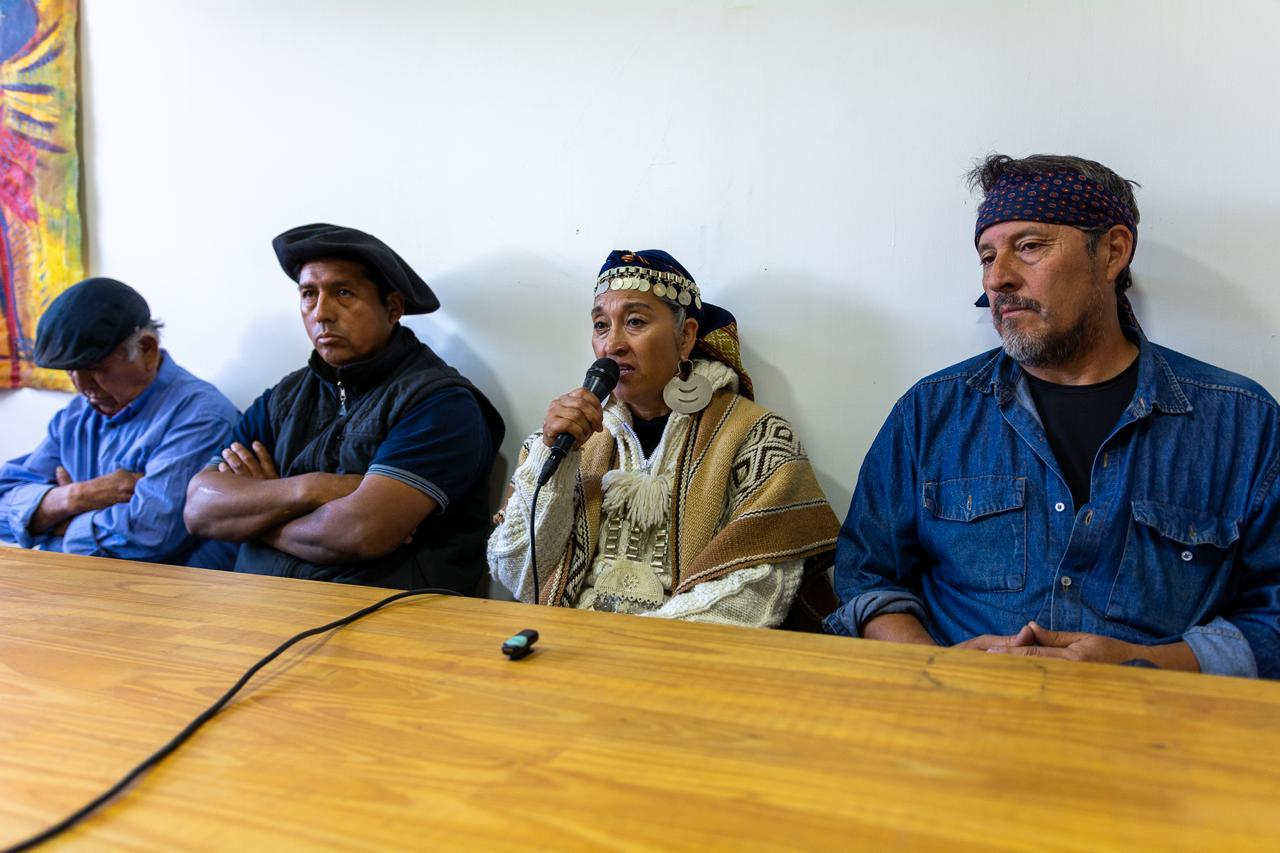
^Moira Millán, mapuche activist. Photo: Roxanna Sposar^
By Laura Carlsen
Some 40 people form a circle on the dusty, late-summer grass. Following days of uncertainty and fear, cut off from most forms of communication, families from Mapuche communities in Argentina's Chubut province gather to talk about what happened to them on Feb. 11.
At 7 AM that Tuesday, hundreds of Argentina's armed provincial and federal police forces raided their homes, smashing windows and destroying belongings. The special forces, wielding assault rifles, held men, women and children at gunpoint for more than ten hours.
During their day of terrorizing Mapuche families, police took cell phones and computers, leaving the communities---spread over miles at the eastern base of the Andes---cut off from each other. They confiscated books and farm tools, forced indigenous men, women and children to give DNA samples, semi-stripped young women and photographed tattoos and other body markings, manhandled elders, and separated young children from their parents while forcing toddlers to witness the violence against their mothers. In the twelve simultaneous strikes, police also broke into a Mapuche community radio in El Maiten, Radio Petu Mogelein, and destroyed vital communications equipment.
These communities, often just a handful of indigenous families that survived the bloody campaigns of genocide and displacement throughout Argentina's colonial history, are the now the target of a new offensive under the "anarchocapitalist" policies of Javier Milei. The repression aims at stripping them of the little they have left of their ancestral territory and placing it in the hands of some of the world's largest corporations and wealthiest billionaires.
Outside one of the homes that was raided, Mapuche community members described the violence. A few international journalists and representatives of regional human rights organizations observed the trawun---a community gathering to share information, repair the community and plan strategy. We strained to hear the words of their testimonies as the wind whipped through a stand of poplar trees.
An 84-year-old elder pushed up his sleeve to show bruises from being thrown to the ground and cuffed by police. Young women described being forced to lie face down on the floor for hours and as police intimidated them with their guns. Children witnessed scenes of brutality that will mark them for life.
For hours the security forces refused to present a judicial order or inform indigenous families of the reason behind the violent invasion of their homes. Authorities finally presented a judicial order, signed by judge Jorge Criado, who was formally accused of racial discrimination against the Mapuche in a 2020 case, to investigate a vandalism attack Jan. 18 in Estancia Amancay 80 kilometers away.
Police arrested Victoria Núñez Fernández, a 37-year-old member of the Lof Pillan Mawiza who has lived with and worked with the Mapuche community for years. Witnesses and evidence from GPS records prove that Núñez Fernández was miles from the scene at the time the equipment was set on fire, but the judge ordered 60 days of house arrest as government authorities continue to declare her guilt.
Since they began in December, Argentine government propaganda has blamed the Mapuches for forest fires that have burned more than 50,000 hectares of mostly national forest land in Patagonia. It's a triple ploy-- to distract from the role of climate change and government negligence in the fires, to divert attention from real estate interests waiting to take over land for megaprojects, and to criminalize the indigenous people who are the last the remaining bulwark against the mass exploitation and destruction of one of the world's largest freshwater and forest reserves.
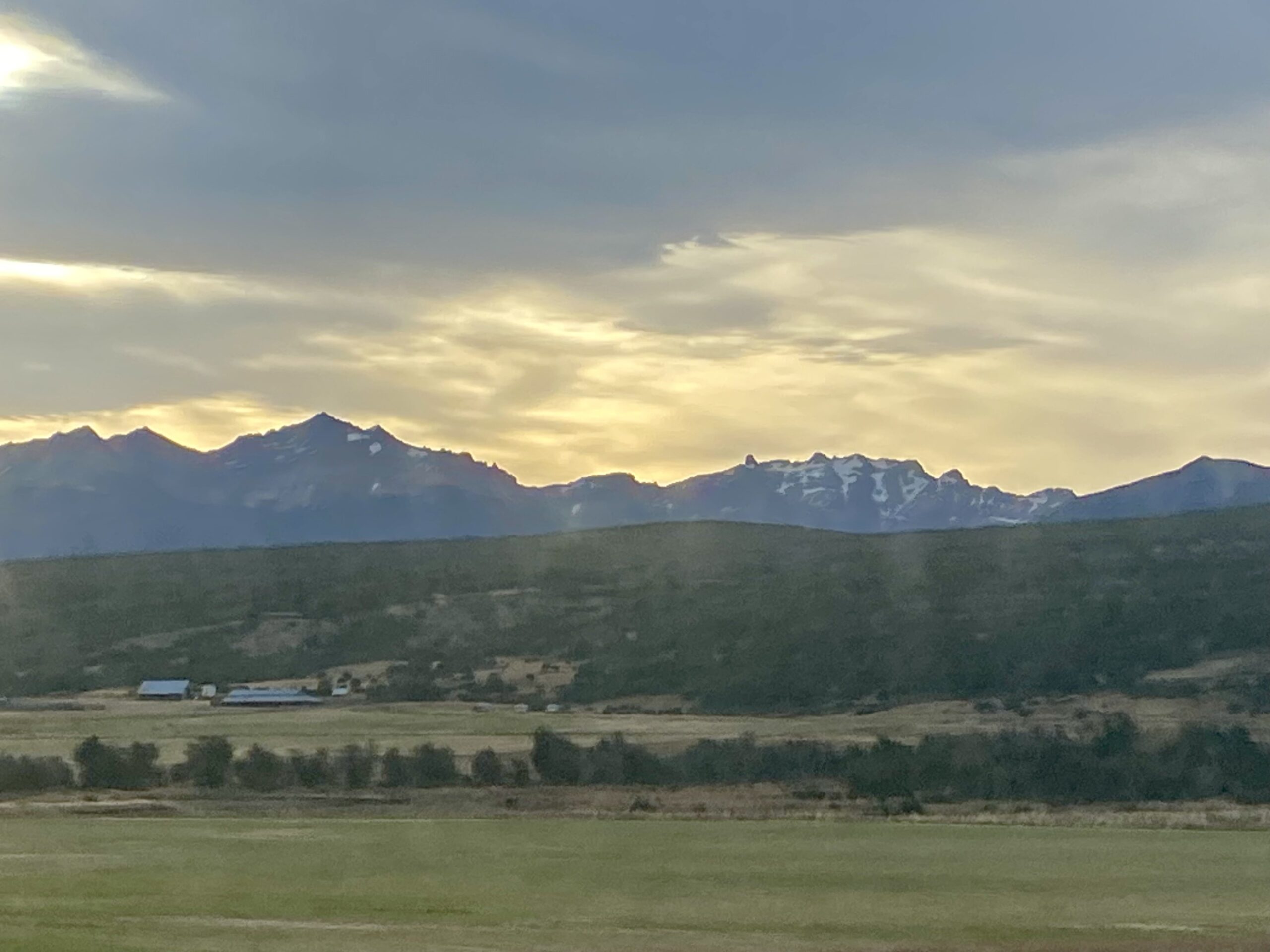
^Forest in Patagonia, Argentina. Photo: Laura Carlsen^
"It's so outrageous that we should be blamed when actually the Mapuche community has always done everything to protect life here. We're part of the territory that we defend, and we're going to protect the life of the river, the life of the mountain, the life of the forest", Evis Millán of the Lof (community) Pillan Mawiza told me in an interview at her ranch by the river.
"We would never set fire to it. This set-up that the government of Chubut is carrying out with the national government has a clear objective--to name an internal enemy to cover up the criminalization and eviction of the Mapuche communities."
Without a trial or investigation, the day after the police operation, Governor Ignacio Torres of Chubut province presented a PowerPoint accusing the Mapuche of the fires and the vandalism. Flanked by hooded agents bearing machine guns in what was supposed to be a press conference, he projected the faces of four indigenous women, calling them "the persons responsible for the attack [on Amancay]" and swore "they will rot in jail". Among them was Victoria Núñez Fernández, still in custody, and Moira Millán. Moira Millán is an internationally known indigenous land defender, novelist and women's rights leader.
Torres' performance followed a playbook handed down from the far-right government of Javier Milei and his Minister of National Security Patricia Bullrich. Bullrich, whose ministry is also responsible for preventing and controlling forest fires, has long promoted usurping land from indigenous peoples for sale on the international market. Following the raids, she released a video with images of the police raid on Millan's home, stating, "These people will be declared under Article 41 TER-ROR-ISTS".
Milei's government established the legal framework for this extreme measure just days after the raids, when it listed "RESISTENCIA ANCESTRAL MAPUCHE (RAM)" (Mapuche Ancestral resistance) as a terrorist organization in the Public Registry of Persons and Entities linked to Acts of Terrorism and its Financing. The RAM is an invention to smear the Mapuche people; the communities have stated repeatedly they have no knowledge of or contact with it. There's only one person identified with the RAM, Facundo Jones Huala. Despite taking credit for the vandalism at Amancay, Jones Huala has not been arrested and makes no effort to hide from authorities. Meanwhile, the government continues hold Núñez Fernandez on trumped-up charges and to make the untenable claim that a handful of Mapuche women torched the forests they live in as an act of revenge for efforts to displace them.
Mapuches in the Patagonia point to powerful economic interests with ties to Milei's government as the real culprits behind the fires.
The forest fires that destroyed thousands of acres in the summer months are finally being quelled by autumn rains. Experts have warned that the high temperatures and low rainfall caused by climate change is behind rising fire destruction in the region. But local governments and the government of Javier Milei---a climate change denier---prefer to blame the Mapuche, while taking advantage of the destruction to privatize a land coveted for its minerals and pure water, and for its natural beauty and remoteness.
Milei began preparations to sell off the Patagonia to foreigners as soon as he took office. Using presidential decrees, he repealed the law that limited foreign land ownership on Dec. 21 as part of a package of decrees to deregulate the economy and promote sale of resources to foreign investors.
In what seem to be moves to increase the vulnerability of protected natural reserves, he eliminated the Fund for the Protection of Forests and transferred responsibility to the security ministry, leaving a huge void in know-how, infrastructure and funding to confront forest fires, despite the fact that each year fire destroys more forest land. He also cut spending of the National Service for Fire Management by 81%.
Milei also announced the repeal of the law that bans the immediate sale of land affected by fire for agribusiness and real estate development. This kind of law exists in most countries as a necessary safeguard against business incentives to torch public lands. Although the repeal has not gone into effect yet, it recently passed committee in the Senate and continues to be a key element in the government's plan for a massive fire sale of Patagonian lands.
Mining companies, real estate interests, hydroelectric plants and other megaproject developers have long waited to get their hands on more land in Argentina's Patagonia. Milei is banking on the sell-off of indigenous territories and resources to help pay for the huge debt he hopes to receive in order to prop up the Argentina peso and avoid the total collapse that looms under his radical free-market policies.
The Milei government has mapped the road forward for the Patagonia, and it runs right over the bodies and the territories of the Mapuche people. To mask its own complicity with business interests hoping to move onto affected lands, the Milei government launched a media and legal strategy to deflect attention from the link between the fires and land-use changes that stand to benefit billionaire foreigners, and to neutralize the Mapuche-Tehuelche people who stand in their way through criminalization, eviction and extermination.
The formula is not new. Crusades against the Mapuche began with the conquest of their ancestral lands centuries ago and has not let up since then. The current crisis has the same colonial roots as previous genocidal campaigns: racism and the takeover of land and resources by force.
In January, Bullrich ordered the eviction of the Lof Pailako in the Los Alerces National Park. To avoid bloodshed, community members abandoned their homes hours before the arrival of police forces. Families were left homeless, animals without sustenance and children without access to housing, health or education. Bullrich stated triumphantly: "This is the first eviction of a series that will mark the end of a period in which a lack of respect for private property reigned in Argentina."
The Minister of Security acts with the full backing of the federal and provincial governments. Milei, an admirer of Donald Trump and member of the international far right, launched the offensive against the Mapuche with his trademark free-market and white supremacist zealotry. While giving investors free rein, he ended indigenous land registry programs and rescinded Law 26.160, the Emergency Indigenous Territory Law of 2006 that at least nominally suspended evictions of indigenous communities in indigenous territory. Despite having signed on to international indigenous rights treaties, successive governments of both the right and the left failed to institutionalize recognition of land and rights, paving the way for Milei to revert gains and protections for the communities.
Human rights organizations have denounced the repeal of indigenous rights to the Inter-American Commission on Human Rights, the Inter-American Court of Human Rights, the Office of the Rapporteur on Indigenous Peoples and the United Nations High Commissioner for Human Rights.
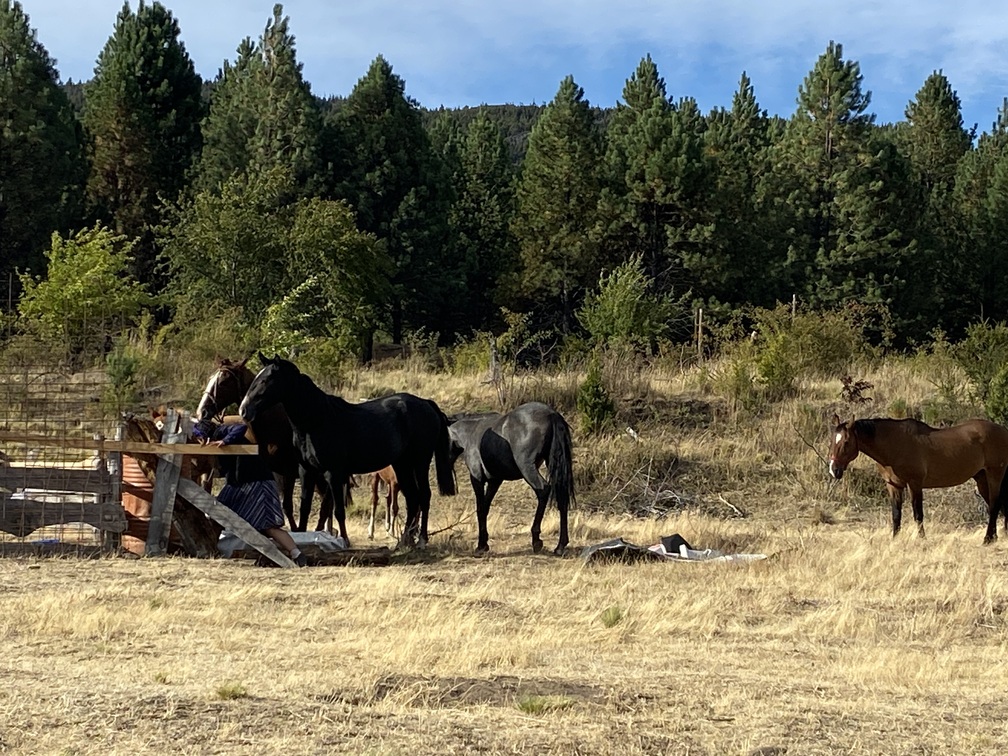
^The Patagonia, Argentina. Photo: Laura Carlsen^
As the Mapuche are violently evicted from the few hectares of land they live on, international billionaires already own, often illegally, millions of hectares in the Argentine Patagonia and are looking to take over more. The ultra-rich set their sights on this land with its sweeping views of the Andes and miles of clear lakes and open woods decades ago. The region holds much of the earth's remaining fresh water, clean air and pristine forests. Corporations have moved in to exploit natural resources, and individual billionaires see the region as their private playground and a refuge for when the rest of the planet becomes inhabitable.
A case point is Lago Escondido, property of the British multimillionaire Joe Lewis. Lewis owns 12-14 thousand hectares including the entire lake. Although he has entertained Argentine presidents and foreign dignitaries on his property, it's sealed it off to public access by physical barriers and armed guards. Other foreign interests with extensive holdings in the Argentine Patagonia include the Israeli firm Mekorot, the Italian firm Benetton, the actor Sylvester Stallone, and investment companies from United Arab Emirates, among others.
Like Trump, Milei's government of the rich and for the rich has acted fast to remove environmental and social restrictions. Milei instituted a new Incentive Regime for Large Investments (RIGI by its Spanish initials) last year that provides tax breaks, customs incentives and foreign exchange benefits for projects of more than 200 million dollars that are initiated within two years. The law will promote the kind of large-scale extractivist projects that citizen groups and Mapuche communities have opposed for uprooting communities and destroying the land.
An analysis of the likely impact of RIGI in Chubut finds that the Patagonian province could see a rapid boom in mining and oil and gas exploitation. Chubut has a ban on open-pit mining--the result of grassroots organizing. Experts fear a legal challenge that could result in overturning the popular will expressed in the ban.
RIGI and the other programs to sell the Patagonia to foreign investors set the scene for local conflicts over land and resource use. Billionaire land owners stand to profit enormously from Milei's measures and already have drawn up plans to expand holdings and operations.
The attacks, expulsions and criminalization of the Mapuche communities can be seen as a preemptive measure to weaken forces that defend native lands and environmental protection.
The federal government has prepared to put down resistance by legalizing violent repression of local and national opposition. On March 10, Congress passed the so-called "Anti-Mafias Law" that mandates that all members of a group can be given the same sentence as a single member, a law the international associations of jurists and human rights organizations have called the "legalization of a virtual state of siege" especially designed to apply to those most hurt by Milei's measure--the poor, political opposition, unionists and indigenous peoples.
Milei's government also adopted an "anti-picket protocol" that criminalizes protest. These measures have led to more than a thousand protesters injured due to excessive use of force, according to a report by Amnesty International. Most recently, police fired a gas canister directly at a photographer during March 12 protests. The photographer Pablo Grillo, whose skull was broken, is still in intensive therapy.
The recreation of a brutal police state in Argentina conjures images of the military dictatorship, a period of state terrorism that lasted from 1976 to 1983. Millan warns that the Milei government is a dictatorship and that the country is seeing a return to the "state terrorism" that led to thousands of assassinations and disappearances during the military dictatorship.
It's not surprising that the regime has made indigenous women the center of its defamation campaign. Women are the core of Mapuche defense of their territory and the protection of the land and life against extractivist projects and privatization. They've worked for decades to consolidate and reestablish communities in ancestral lands, teach new generations the Mapuche language and customs, and build peaceful resistance. The latest government-corporate offensive has put their lives and liberty at grave risk.

^Lakes in Patagonia. Photo: Laura Carlsen^
"This group in power---patriarchal, racist ---feels threatened by the capacity and the defense of life that we women carry out," Moira explained in a recent interview. "The State and the corporations know that women can build alliances among sectors to defend rights so they need to weaken this strong organizational process in this historic moment, including at the global level." In this context she added, the openly misogynist attacks of the Milei government are strategic, they're being incorporated into public policy, and they are a focus of repressive policies.
Despite all the forces against them, today's Mapuche communities continue to live on and care for their land. They protect the rivers and lakes, and manage the forests to keep trees healthy, prevent fire damage and control invasive species. Some have lived on these lands continuously for generations, others have returned from forced migration to urban slums to rebuild their lives, their land and their identity.
Almost every day during the weeks of our visit, the women left the house early to hold traditional ceremonies. Language, spirituality, and ancestral knowledge and practices are nourished through daily life, family and community ties. Even after the genocidal campaigns and the speeches devoted to denying their existence (the government frequently speaks of "pseudo-Mapuches") or spreading hate, these communities still survive and it's because of them that the region still offers world-famous fresh water, abundant fish and unspoiled views.
The power of example can be more threatening to illegitimate power than might. Two radically different views of the land and humans' relationship to it are in play here. As plans advance to create an extractivist enclave out of nature's masterpiece, Moira Millán summed it up: "We have firmly opposed extractivist large-scale mining, dams, hydroelectric projects that would murder the river to provide electricity to transnationals and lately the aqueduct that oil companies are pushing for. The Mapuche people recover land to reaffirm the commitment to life. For us, life is the most important. And not just human life, the life of everything in our surroundings."
I'm going to preface this with a few comments:
Get trained on the use of a fire arm. Find a political organization near you to join, PSL, DSA, or whatever is near you. Bring this energy into the collective struggle, work together the way the Black Panthers did, and you'll find far more success than working alone.
He's really out there still doing the thank you bit. What a loser.
I feel like every fair.org post is pure gold. So invaluable!
Wait, are you blaming the person who was shot? I'm confused.
This is imperialism folks. Let's take a look at Nigeria's exports:

Ah, petroleum. How is that managed in Nigeria?

Ah I see, a state-owned oil company that is the only entity licensed to operate in the countries petroleum industry.
But sure, "Christian Genocide". That must be it. Obviously, its not. Instead of taking the soft rout through the IMF, imposing austerity and liberalization policies on the country via development loans, they're taking the hard rout of simply blowing the country up until it destabilizes.
I thought the article made its case pretty clearly and what they are asking of the DSA. From the first paragraph:
It is in this climate that Left Voice has called on the DSA to break from the reactionary capitalist graveyard of social movements that is the Democratic Party [emphasis mine]. It’s vital in this disruptive moment to keep a clear analysis of what is happening, what we want to happen, and what history tells us could happen.
The second section lays out what is at stake using a historical reference: fascist rule for 50 years. It could be longer, but it could also be shorter. They highlight that socialists' (in this context, that means "Democratic Socialists") attempts to work within existing systems of power ultimately lead to their destruction at the hands of that same system. In the case of the DSA, their current strategy of hitching a ride on the Democratic ticket binds them to a much more powerful system that ultimately corrupts and shapes their candidates, blunting their success.
In simple terms, history categorically condemns the social democratic strategy put forward by people like Karl Kautsky and adopted by those like Matteotti. In the wake of the Bolsheviks’ momentous seizure of power in Russia, these so-called “socialists” oriented themselves to a conciliatory strategy based on electoral gains. Lenin dissected this flawed logic with masterful prescience, but we can at least afford them the benefit of hindsight; they didn’t realize just how wrong they were as they hadn’t seen how bad things could get [emphasis mine]. All over the world, in Germany as in Italy, reformists not only failed to stop the rise of fascism within the halls of polite politics — losing at their own game — but also helped inform an atmosphere of non-confrontation in the streets.
It seems clear that the DSA (or at least, the DSA-NYC) has not learned these lessons of the past, even though they have every opportunity to do so. There are many competing worldviews within the broader DSA (don't let the name fool you), and there is a path forward for the DSA that could help build a larger, more effective working-class party and movement.
The article does present a real solution also; it is the headline of the second section: "Build a Working-Class Party to Defeat the Far-Right"
"OK but what does this mean?" You probably wonder. To your credit, I'll say they really could have done a better job of explaining what they mean when they say, "It is in this spirit that rank-and-file DSA members should reorient their organization away from the reformist strategy condemned by history." They mean that the DSA needs to end this policy of Democratic Party entryism, which has clearly not yielded any results and ultimately defanged most of their candidates and officials in the process. The Democrats obviously are not interested in cultivating these DSA candidates and incorporating them and their ideas into the party. Instead, they are clearly more interested in molding and shaping these DSA candidates to support Democratic Party ideas and filing down their more "radical" positions so that they can masquerade as anti-capitalists upholding working-class interests.
Instead of running on the Democratic Party ticket, they should be unifying their chapters, building out a structure that can support their members electorally, and building a working-class political party instead of a political organization. The fact that they are currently an organization and not a party means that they are not making any efforts to get themselves recognized by the states as a legitimate political party. Doing so would show that they will be met with pushback from Democrats, and this can be leveraged as rhetoric to pull Democratic voters who also support DSA ideas to the DSA. The PSL made many efforts in the past national election to be a registered party in many states. The Democrats in some of those states went so far as to spend money litigating against their petition in an attempt to keep them off the ballet. Part of the role of a working-class political party is to use the platforms given to you by the state to show the masses just how disfunctional and combative the existing state is to the ideas they support. Instead of just washing their hands of the failures as a win for bipartiteship, they would instead highlight how much people actually stand to lose by turning to the right under this system.
You were given a taste of this with the Mamdani campaign. The Democratic establishment turned against Mamdani, was outwardly hostile to their candidate, and pumped money into the campaigns of two independent candidates who changed their affiliations just to run against him. This is just a short list of the kind of tactics that show you what the Democrats are really about. Turning these attacks into political agitation against the Democrats is fully lacking in all the DSA's electoral efforts. So building a working-class political party out of the DSA and running against the establishment would be much more effective in educating the masses on just how much resistance there is to their ideas. That's what must be done here, alongside building a coalition with other leftist parties and leftist organizations.
One thing that should be kept in mind as well is the way the US political environment uses the words "left" or "leftist." Leftism starts at anti-capitalism; it has always and historically been an anti-capitalist movement, and to say otherwise is dealing in revisionist history. In the US, however, they have framed the "left" strictly around social issues, and social issues only. This lops off a massive history of thought and also leaves no room for a clear distinction between the policies of the Democrats and parties like the DSA. For all intents and purposes, that is all counted as "the left" and that means that phrases like "purity testing" allow the establishment to continue to stifle true leftism in the country, that being the anti-capitalist left. This is something both the Democrats and Republicans engage in and both find useful. The Democrats engage in it because it prevents people from seeking parties and candidates within the anti-capitalist left, claiming we can't let "perfect be the enemy of good" and that we should "be realistic", leading people back to candidates that are not anti-capitalist. The Republicans engage in it because it means they can attack both anti-capitalists and pro-capitalists and reformists together as if they were both the same threat, regardless of how many Democrats would take their side over the anti-capitalists. This is simply historically true.
It's like the poem by Pastor Marin Niemöller, states, "First they came for the communists". Why did they come for the communists first? Because the Social Democrats and the Fascists agreed on one thing: the preservation of capitalism. This is also the reason the poem draws a distinction between Communists and Socialists. "Then they came for the Socialists." it continues. Instead of moving to the left and uniting with the Communists, the Socialists fed them to the wolves, only to be eaten themselves.
The faces are usually part of teaching young kids how to make the right mouth shapes when saying words I think.
This is pretty fair. The US banned the use of Kaspersky in 2024. If I was the CPC I wouldn't trust CrowdStrike either.