cross-posted from: https://lemmy.world/post/21066079
cross-posted from: https://lemmy.world/post/21066079
Here's her essay talking about her translation:
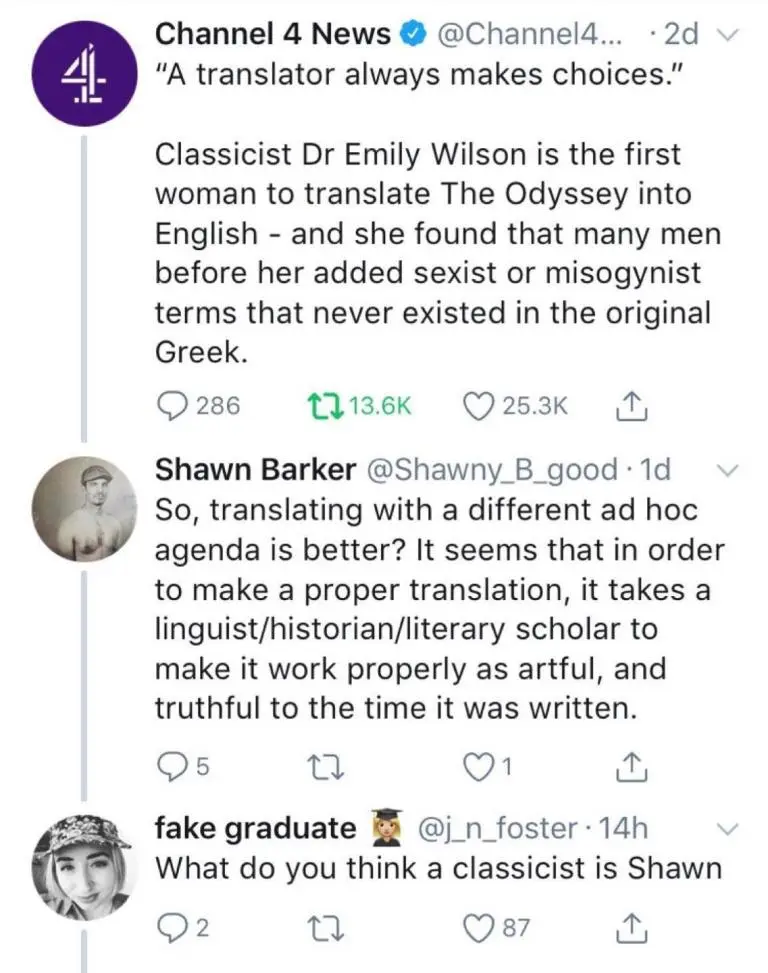
The study guide SparkNotes describes these women as “disloyal women servants” who must be “executed,” while CliffsNotes calls them “maidservants” who were “disloyal,” and claims that their murder has a “macabre beauty.” In the poem’s original language, Telemachus refers to them only with hai, the feminine article—“those female people who . . . slept beside the suitors.” In my translation, I call them “these girls,” and hope to convey the scene in both its gruesome inhumanity and its pathos: “their heads all in a row, / were strung up with the noose around their necks / to make their death an agony. They gasped, / feet twitching for a while, but not for long.”
By the way, this is only a few dozen lines after Odysseus gives Eurycleia a civility lecture about how it's a major faux pas to celebrate someone's death. (In that case, the someones are all of the suitors, and he brings Eurycleia in to mop up the blood.)