16
Any suggestions for remembering Characters
(lemmy.ml)
I'm a beginner too but i find that some things which help me are:
Hey first one I try to do, seconds a good idea third point I'm also guilty of. Thanks :)
I've never been taught the language in a formal classroom setting though, so this is just based on self-teaching. I would be curious to know what methods your teachers recommend.
I'm doing it at my local university, I'm kinda old and I have pretty bad depression so I'm behind, but basically we started with the word tables sounding them out we also learned the tones in the first lesson. Then we get about 30 vocabulary words each week to learn often those build upon words we already learned like 学 and then we would learn 学习, and we would learn different grammar concepts we have language labs where we exclusively practice pronunciation and reading. Also learning how to use a Chinese dictionary that's what we did the first semester so far.
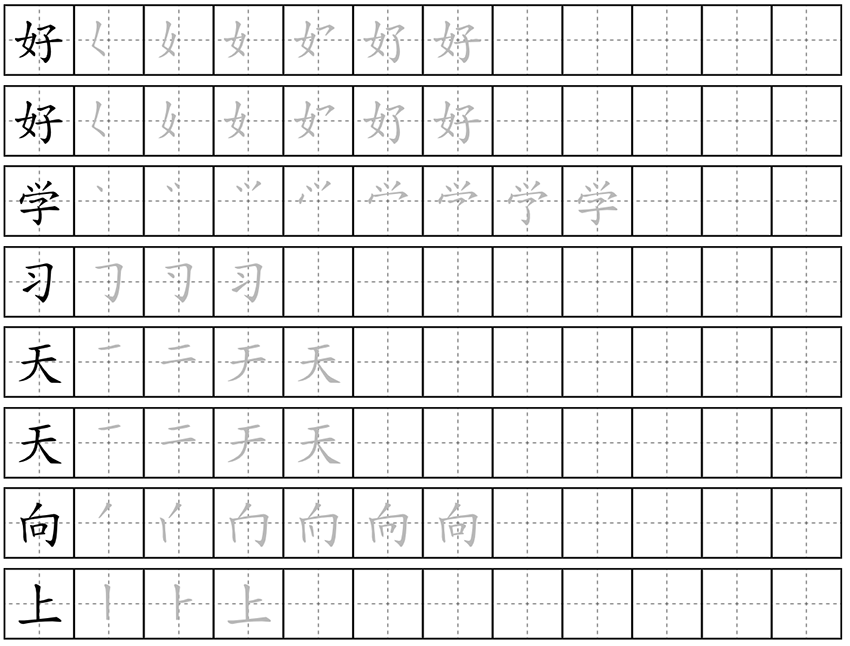
it kinda sucks but the best way to really commit character forms to memory is through mechanical repetition of repeatedly writing the character (either the 字 itself or in conjunction in various 词 that it shows up in). Like the "traditional" learning in this way is why kids are handed big empty booklets of empty character sheets 田字格 (if you're fancy sometimes these will come with like, shadows of specific character to be practiced, and sometimes with the stroke order included, example linked). Using the rote mechanical repetition is basically unavoidable especially if you're just starting out. Repetition and having mechanical (physically writing) basis is a much more solid foundation than trying to schematicize like, mnemonics via pictograms/vibe by image, even in small sets.
longer explanation for last sentence. TLDR writing system made of many diff types of characters and it's not obvious what you're dealing with when you're learning until after the fact+small shortcuts only useful if you already have like 1K characters under your belt already
**I don't suggest reading this blurb if you're still at a very early stage where you're not already familiar with "radicals" (chinese character part), ** there's a good chance jumping ahead too quickly will confuse you. At the very least, first go skim some understanding of how a character can be broken down or composed, and then come back.
The chinese writing system is composed of several different types of characters. The major ones are pictographic 象形 (usually have a much more ancient origin/are root components), compound logographs 会意 (many commonly used characters but low%) where usually two pictograms are joined to create new meaning but resultant character has no relation in pronuciation to its etymology, loangraphs 假借 (~3rd or 4th most populous) and phono-semantic compounds 形声 (most populous, something between 70-90% characters used in modern vernacular) both have elements that can help hint you towards pronounciation. There are more types than these, but those are the main ones.
You can't really guess pronunciation for 形声 until you already have a solid block of known characters already. But to make matters harder, it's not always obvious what type of character you're looking at. The same radicals can be used for different types of character, so some of them are used in characters that lend phonetics (typically almost always from the non-radical segment) while others don't. Similarly, it's not obvious just from a glance if a non-radical portion was borrowed for semantic or phonetic reasons.
EXAMPLE SEMANTIC: ri4日(sun)+ yue4月(moon) -> ming3明(illuminated in 明亮, but also smart in 聪明, coincidentally perfect semantic overlap with english "bright")
CONTRAST WITH EXAMPLE PHONETIC: ri4日(sun)+ zha4乍(first, initial) -> zuo3昨(yesterday 昨天)[phonetic borrowing].
To add more fuel to the fire, what radical is used aren't 100% reliable for strict categorization by semantics (the hand radical is most often used for verbs/action characters like 拿 (take) or 拉(pull) 扯(shove), but the singular-person radical is also used for lots of actions 偷(steal) 休(rest) 修(mend) 作(work/labor) 做(make/produce)... but the person radical is also used for personages like 他(he/him) 你(you) 儡(puppet) 仙(sage/immortal) 傅(expert,phd,academic)
otherwise, if you just want to get good at reading/don't care too much about writing: read a lot, reread everything until you're very comfortable with how well you recall pronounciation+meaning, read out loud, read subtitles while watching shows, but the % rate of character forms sticking is a lot slower and lower rate than spending the time to fill out your 田字格 even if your goal doesn't include writing.
EDIT:as a child learning chinese I was pointedly instructed to repeatedly pronounce the character I was writing when filling out empty character sheets 田字格. not fun but it's what works
Thanks for the reply, I've been doing that and I get character sheets with stroke order like you posted from university, just out of interest do you have a resource for more? I'll just practice more I guess since I need to be able to write for tests anyways. I also always do repeat the characters out loud when writing them. I'm in my 30s and partied to much so my brain is just a bit slow. I'm also a kind of shakey person and my handwriting is awful with Latin letters, so my characters are very messy.
If any one wants I can send them the character sheets I get from school send me a DM.
so the image I linked was from https://www.an2.net/zi/ a page where you can generate your own practice pages. conveniently, handy dandy English version . I want to note that there are two youtube video tutorials linked in the sidebar, but I think it's mainly in Chinese but the visual probably helps since there's a lot of customization options available.
Awesome thanks, another question is do you have any tips for finding the radicals in characters? It's something I don't really have a grasp of yet.
if the character's of the vertically segmented variety like 明 桃 冰 妈, 9/10 times the radical is the leftmost segment. There are some notable exceptions for "known"/common radicals that sometimes appear on either rightmost or leftmost side like the ear radical 郑 耶 陈 队
for horizontally segmented/patterned characters, typically separation is harder to differentiate (especially if character has less strokes) but often it's the top part. common ones are grass radical 草 苗 藤 菜 or protection radical 宝 安 家 宫 ;stuff that's harder to pick out are like the 人 person (not singular-person, that's a left-right radical) in 金* 今 or singular dot
then you have, um, idk how to classify? but like it's common enough that it's obvious. one that I can think off the top of my head is the "of(?not sure if that's the best translation :x )" 之 radical,这 运 远 近 .... "corpse" 尸 radical 尿 屁 or "disease" radical 病 癌症 痒 。。。 but then you get the oddball radical “mouth" 口 which has "normal" leftright words like 嗓 嘴 叫 和,but words like 骂 呆 吞 园 国 are also considered mouth radical family (the latter two technically are called enclosure but it maps out the same in a chinese dictionary) 🙃.... similarly heart radical 心 has an upright leftright form 情 快 恨 but also a bottom form 态 怨 您
it's rare but it does happen, sometimes the bottom of a top-down character is the radical, like 妾(女 radical) 拿(手 radical)
characters don't have more than one radical. sometimes a word with a radical can become loaned into a new word but it's always the non-loaned that's the radical.
What even is a radical? I thought I knew the general idea but you saying "characters don't have more than one radical" confuses me
only one radical per character:: examples 明:日 is the radical,月is not the radical;安 :宀 is the radical, 女 is not the radical. (I specifically used these because 月 and 女 are also common radicals, ex 朋 in 朋友friend ; 好good 姐older sister)
Radicals typically help confer semantic hint at the word. It can help if you come across a new word with a familiar radical; for example most moon月 radical words have something to do with the body/body part 肝liver 肥fat 肺lung 脸face 肚belly. Sometimes they don't have much to do with semantics though, this case is more common in more elementary/foundational characters.
--Expanded semantics example: "heart" 心 radical words have something to do with emotion.
Wow, I was mostly just wondering how characters would only have one radical each because they seem to be made up of multiple radicals (like the traditional version of "wan": 彎, which seemingly has 糹、言、弓). Thanks for the extra information though!
erp I was editing my response because I realized I think I didn't exactly answer the "one radical per character". Pasting it here also:
only one radical per character:: examples 明:日 is the radical,月is not the radical;安 :宀 is the radical, 女 is not the radical. (I specifically used these because 月 and 女 are also common radicals, ex 朋 in 朋友friend ; 好good 姐older sister)
Oh, also, it's a lot less common (since a bulk of chinese characters are constructed/typed via phonetic loaning 形声) but the nonradical portion sometimes also confers semantic information, hooray for compound logograph (会意)characters. Easily my favorite category. 好good -> 女woman + 子child; 尘dust -> 小small + 土earth/dirt; 歪askew,crooked -> 不not + 正complete/orderly
Ok, would memorising a list of radicals help?
I mean getting familiar with the most common ones doesn't hurt, but it's not that important to like dedicate yourself to memorizing them. Just flipping thru a 字典 index often enough will get you far enough imo (I imagine your class already went through this but for self-study-ers and other people interested in learning Chinese, Chinese dictionaries are split into 字典 characters and 词典 - 词 is the most analogous to single words in English, sometimes a singular character is enough for some concepts but most word-concepts are made of two characters together (and order matters))
For me what helped learning characters was constant exposure to them. Especially compound words made of two characters. I learned Japanese so I'm not sure how similar Chinese words function but using a meaning guide to try to tie meaning into the compound word, and also repeatedly seeing it in the environment associated with things really helps build memories. Ultimately the way to remember something literally is to make as many meaningful memories with it as possible. If you have a local buisiness ran by a Chinese family maybe keep a look out for signs or products that have kanji you're studying. I had a really difficult time remembering 注意 until I went to japan and saw it written on every pole and sign warning about animals and people. Now I'll never forget it.
So mechanical repetition will work through brute force but it takes way less effort if you make each repetition more meaningful. Just mix em.
Yeah I'm already trying to do that. Thanks
A place to learn Chinese - writing, reading, speaking, listening
The only rule: no posts about how hard it is to learn Chinese.
Useful resources can be found here.
Immersion resources can be found here.