108
submitted 2 years ago* (last edited 2 years ago) by TankieTanuki@hexbear.net to c/science@hexbear.net

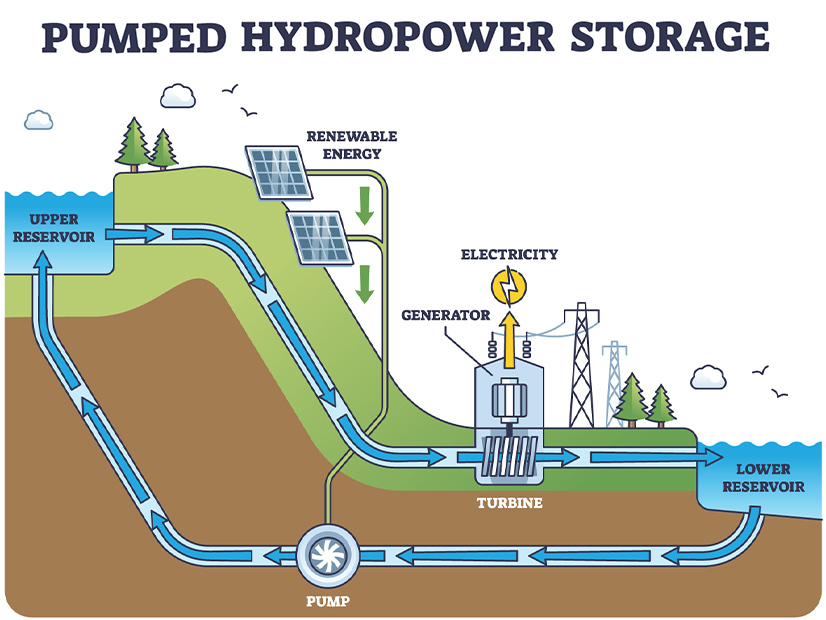
To make solar power viable, we need a solution for overnight energy storage.

Batteries are complicated.

Do you know what isn't? Water go up. stonks-up

you are viewing a single comment's thread
view the rest of the comments
[-] reallyzen@lemmy.ml 16 points 2 years ago* (last edited 2 years ago)

The landscape footprint is huge, this type of equipment takes a lot, in size / materials / visual impact on the environnement. But that can be minimised, laws about industrial equipment out there in nature can be amended etc. And cf course, as already said here, require both water and elevation.

The alternative is supposedly simpler, actually pretty costly and high-tech, while nerd-rejoicingly elegant, with an even worse visual impact : molten salt reservoirs. While not applicable everywhere like pumped hydro that needs water and relief, molten salt tanks require lots of heat and relatively even grounds on a huge area. But that dispositive has such a pharaonic, simplistic disposition to it you cannot not love it.

Unfortunately, the Ouarzazate Noor experience in Morocco has proved it to be too costly and complex in a context where electricity is a competitive business where final price per kWh has actual importance for the end user, even on a state-sponsored project.

Energy has a cost. Visual, material, human... Financial.

[-] Sausage@hexbear.net 7 points 2 years ago

Isn’t the salt very corrosive?

[-] reallyzen@lemmy.ml 6 points 2 years ago* (last edited 2 years ago)

Well, it's in a tank. Atop a 250m high tower. Smack in the centre of a ring of mirrors focusing all their heat on it. Liquified to generate steam.

I think the "corrosive" part is the least of the issues here.

[-] Sausage@hexbear.net 5 points 2 years ago

Just something I’ve heard from some people about molten salt.

[-] TankieTanuki@hexbear.net 3 points 2 years ago
[-] Sausage@hexbear.net 4 points 2 years ago* (last edited 2 years ago)
[-] TankieTanuki@hexbear.net 2 points 2 years ago
[-] Sausage@hexbear.net 4 points 2 years ago

I guess cleaning up after a huge salt spill isn’t its also probably terrible for the ground when it leaks. From reading Wikipedia it also uses an obscene amount of fresh water.

[-] TankieTanuki@hexbear.net 2 points 2 years ago
[-] Sausage@hexbear.net 3 points 2 years ago

I mean it also contains salt ;) as I said salt is corrosive sea water has 35 parts per thousand of salt in it and look how corrosive that is. Here we are talking about hot molten salt…

[-] Collatz_problem@hexbear.net 2 points 2 years ago

No, saltwater is corrosive, pure salt is not.

[-] Sausage@hexbear.net 3 points 2 years ago

Cool good to know, but why do they need to keep cleaning the pipes?

[-] Collatz_problem@hexbear.net 2 points 2 years ago

Some of molten salt crystallizes on pipe walls, because they are colder, and it makes the pipe narrower.

[-] Sausage@hexbear.net 2 points 2 years ago

https://www.sciencedirect.com/science/article/abs/pii/S030645492100801X

Just from reading here a bit there seems to be some corrosion though. My chemistry is to shit atm to understand it though

[-] Collatz_problem@hexbear.net 2 points 2 years ago

making it necessary to mitigate corrosion by either purifying the salt, controlling its redox potential in a reducing state, or using redox buffers

The salt is not pure enough, it seems.

this post was submitted on 29 Sep 2024
108 points (97.4% liked)

Science

23826 readers
16 users here now

Welcome to Hexbear's science community!

Subscribe to see posts about research and scientific coverage of current events

No distasteful shitposting, pseudoscience, or COVID-19 misinformation.

founded 5 years ago
MODERATORS