Its been a long while since I've read the books or seen the movies, but weren't they escaping WW2?
Seems kinda... worse than taxes and the subway. "Ah yes, lets give up on this magical world to return to ours to get *checks notes* bombed. Perfect."
Its been a long while since I've read the books or seen the movies, but weren't they escaping WW2?
Seems kinda... worse than taxes and the subway. "Ah yes, lets give up on this magical world to return to ours to get *checks notes* bombed. Perfect."
I've thought about the isekai genre (ending up in another world) a lot lately and how a big part is usually the characters trying to find a way home. I wondered what percentage of people would actually want that nowadays. I suspect it's considerably lower than it used to be.
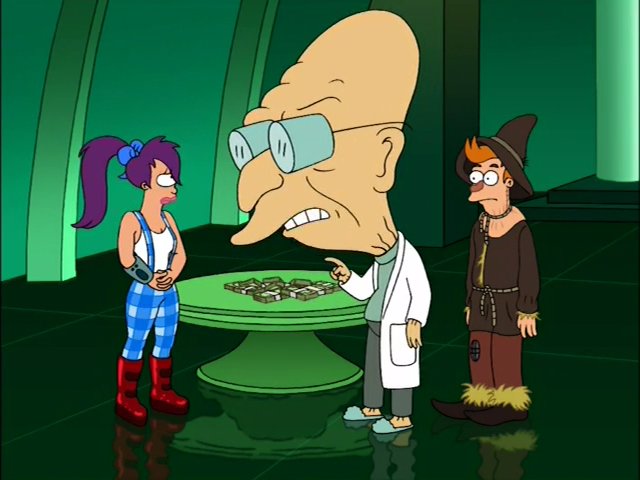
"As for you, young lady, you want to go home, right?"
"No, not anymore. I want to stay here and become the new wicked witch."
"Nonsense! Now click your big honking boots together three times and wish to go home to Kansas to live in poverty with your dirt-farming, teetotaling aunt and uncle!"
There's a big trend in recent isekai to just outright kill the character at the beginning. So, you're either reincarnated into another world or your soul is snatched upon death and body recreated in the other world as an explanation for why the character isn't spending their whole time just trying to get back, but I do think that would be an interesting angle to explore.
I can only think of two Isekais where the whole plot is the main character trying to get home, and the anime fans are gonna hate which two things those are.
A Kid in King Arthur's Court and Farscape.
3 if Quantum Leap could be counted as an isekai.
Quantum leap is an Isekai. Getting home is a mainstay of the "Summoned Hero" genre of isekai.
Anime examples include:
The Rising of the Shield Hero
My Status as the Assassin Obviously Exceeds the Hero's
My Instant Death Ability Is So Overpowered, No One In This Other World Stands A Chance Against Me!
Arifureta: From Commonplace to World's Strongest
Non anime example: Black Knight
Since we're talking that era, Sliders was a great show early on and it's a tragedy nobody knows it.
The Wizard of Oz, which Futurama is parodying, definitely counts! Yes, Dorothy wants to help the randos she meets, but the whole reason she's going to the Emerald City in the first place is to try to get home to live in poverty with her dirt-farming, teetotaling aunt and uncle.
Fabiniku is more along these lines. With the additional twist of the protag's boon being his best friend getting dragged in with him to help him out, so there's some exploration of why one or both would want to go back home.
...and genderbending.
Old isekai had the MC want to go home. Modern isekai has the MC wanting to start over and stay in their new world. You can chart the change based on how dissolutioned young adults are about the Japanese Dream of stable employment and raising a family.
The fantastic book series Magic Kingdom For Sale is basically about this. I started reading what I assumed would be a lighthearted comedy and it literally opens with our main character lost in alcoholic depression because of an awful tragedy. The fantasy land he's sent to is hostile, but it provides him enough hope to fight for a better world there.
It's bad when the idea of dealing with a fantasy Dark Lord is more appealing than real life. At least it's clear who the good and bad guys are.
Well, it's pretty clear in 2026 normie world too (who the bad guys are). People just aren't heroes in real life, and it's too hard to kill the top villains.
I'm aware of a few early isekai works from like the 80's to 90's (Dunbine, Elf Hunter, and quite a few western Choose Your Own Adventure books and pulp novels fall into this category). It seems to be that as a trend, the premise is that the main character wants to get back to the "real" world and that usually drives the main plot.
Then theres a big trend of Isekai light novels (and related anime etc) in the later 2000’s to today. These almost exclusively seem to feature characters who just want to live a life in their new fantasy world. Literal escapism, even. Konosuba is notable for being very popular, maybe being around the start of this trend, and the main character is given a task to complete and be returned to the real world, but he just ignores it.
I guess we can speculate on whether this means people got more miserable in the intervening time.
If I could bring my cat and like 3 other people, I would 100% be like "good luck, losers!" and would never be heard from again lol.
This was me the whole time playing Final Fantasy Tactics Advance
Every character except the main character is MUCH better off in the fantasy realm - the main character's brother is literally crippled and sick in the real world and healthy and robust in the fantasy realm, and the main character still wants to go back to the "real" world. Didn't identify with him at all.
Campfire Cooking is my favorite one of the newer crop of these.
His super power is basically Amazon Grocery. He immediately hides that fact from everyone, tells the people that summoned him he's useless, and leaves the country to live "off grid".
And all that before he even knows how that world works. I'm not even sure he knew he could do other kinds of magic at that point. Natural instinct to GTFO society / authority was something I could identify with
They found the fountain of youth and you call them "fucking idiots". Go to Narnia, live a full life, leave Narnia with your adult mind in tact, walk out of the wardrobe a kid again, repeat.
So there's a few problems with that plan:
If you leave Narnia, you will eventually forget Narnia. First it's like a dream, then a dream of a dream, and then you just completely forget ever having gone.
The same applies in reverse. You will eventually forget Earth and spend your time in Narnia instead.
You can't go to Narnia without Aslan taking you there. The Professor, who was infact one of the entities present at the creation of Narnia, tells the Pevensies that they won't be getting back to Narnia through the wardrobe again.
Even if you could pass through to Narnia on command, there is a varying degree of time dilation between Narnia and Earth. The entirety of Narnia's 2,555 year existence is compressed into 50 years on Earth, but the first 1000 years of that existence was compressed into the first 40 years of the timeline, and the remaining 1,555 was in that final 10 years. Also, you can spend 10 minutes in Narnia and end up having been gone for weeks on Earth, so the time dilation goes both way and is pretty inconsistent then too.
Wasn't there also a world war going on in their real world?
(Btw do not check the poster's youtube channel I remember them being one of the alt-right pipeline figures. Notice the blue checkmark.)
This has been fun, guys, but there's no Wi-Fi here, so we're gonna head back to hell.
Nah, they're based as fuck. Royalty willingly abdicating the throne to become one of the people should be applauded, not criticized. Though they could have established a new government of the people before doing so...
All so that we can figure out that God is a magic talking lion
I preferred Lev Grossman's version. In his Magicians books and their TV adaptation, the equivalent to Narnia is called Fillory and was created by two gods for their amusement. The rulers are required by divine mandate to be children of earth, specifically because one of said gods is on the southern edge of chaotic neutral and the idea of requiring all rulership to be invaders from a foreign world amuses him greatly.
In the TV adaptation, there's a whole thing where said children of earth arrange for an election to make things more legitimate and one of them wins by accidentally running on a pro-bestiality platform (stemming from a single comment at a bar) and then learning the talking animals outnumber the humans by a huge margin.
top 50 comments