top 50 comments

sorted by: hot top controversial new old
[–] 194 points 2 years ago (24 children)

The most common cause of their anxiety — the future.

Completely reasonable. I'm a Millenial and I also have a lot of anxiety about the future. Previous generations screwed us all really hard.

  • source
  • hideshow 24 child comments
  • [–] 146 points 2 years ago (10 children)

    GenXer here. What drives me nuts is that climate change was taught to me as scientific fact in year 9, back in the early 80s.

    The science was clear but collectively every government said "well, I'll be dead by then so why should we care now".

  • source
  • parent
  • hideshow 10 child comments
  • [+] 71 points 2 years ago* (last edited 2 years ago) (7 children)
  • [–] 45 points 2 years ago (6 children)

    Governments got off their collective assess and did something about the ozone layer and acid rain to the point that the problem has largely been corrected. Unfortunately, although climate change and now micro plastics get a lot of media attention, governments have since stopped trying to actually do something about it.

  • source
  • parent
  • hideshow 6 child comments
  • [–] 34 points 2 years ago* (last edited 2 years ago) (1 child)

    There is a big difference between the ozone layer, acid rain and climate change.

    Ozone: Required the move to different refrigerant gasses and implement measures to stop old cfc's being accidentally released.

    acid rain: Required the use of low sulfur fuels.

    While both were costly they were minor in comparison to climate change emissions.

    The problems were incidental to the industries involved and not a something that had to happen for the industry to function.

    And the big one, they industries that were required to change could profit from the change.

    The complete opposite for co2 emissions.

    There is no way to burn coal or oil without producing co2. So there was zero incentive from the companies and countries that profit from these industries to even look at solutions . Let alone implement them.

  • source
  • parent
  • hideshow 1 child comment
  • [–] 14 points 2 years ago

    The difference was that Ronald Reagan had had skin cancer so he actually took it seriously and listened to the scientists.

    Conservatives never believe anything until it effects them. Sonder is a foreign concept to them, along with empathy. Out of sight; out of mind.

  • source
  • parent
  • [–] 8 points 2 years ago (3 children)

    I recently read a study about micro plastics that fairly well substantiates tires as their most of prolific source.

    Think the media is gonna run with that? What would be seen as an attack on car culture itself, fuck the science or concerns of health effects. Micro plastics in the clouds, in the Arctic, in the placenta..

    I'm not holding my breath.

  • source
  • parent
  • hideshow 3 child comments
  • load more comments (3 replies)
  • load more comments (2 replies)
  • [–] 23 points 2 years ago (1 child)

    Not to mention all the shit we went through already.

  • source
  • parent
  • hideshow 1 child comment
  • [–] 12 points 2 years ago

    I can tell you (professionally) that the people who saw less anxiety during the pandemic were people with severe anxiety. Statistically.

    I can tell you personally it was because we could say, "Something catastrophic finally happened and I've been preparing for this my whole life."

  • source
  • parent
  • load more comments (6 replies)
    [–] 132 points 2 years ago (3 children)

    I mean....

    gestures vaguely

  • source
  • hideshow 3 child comments
  • load more comments (3 replies)
    [–] 124 points 2 years ago* (last edited 2 years ago) (5 children)

    This article is terrible. First off, where do they get 60% from?

    They link to the wrong research. The research they link to is a survey of people who already have anxiety. If you look at the research of the actual survey of the whole sample, not just those with anxiety, (here), it says that 42% have a diagnosed mental health condition, which includes an anxiety disorder amongst other disorders like depression, ADHD, and so on.

    90% of the diagnosed conditions (90% of 42%) is anxiety, which would mean the actual number for only anxiety would be 37.8%.

    78% of those 42% (32.76%) have depression as well. So a lot of those people with anxiety also have depression.

    So the actual title should be 38% of Gen Z have an anxiety disorder. Which is only a bit higher than the total population.

    According to large population-based surveys, up to 33.7% of the population are affected by an anxiety disorder during their lifetime. https://www.ncbi.nlm.nih.gov/pmc/articles/PMC4610617/

  • source
  • hideshow 5 child comments
  • [–] 17 points 2 years ago* (1 child)

    So the actual title should be 38% of Gen Z have an anxiety disorder. Which is only a bit higher than the total population.

    According to large population-based surveys, up to 33.7% of the population are affected by an anxiety disorder during their lifetime. https://www.ncbi.nlm.nih.gov/pmc/articles/PMC4610617/

    During their lifetime, so not that 33.7% of the population are affected by anxiety disorder right now. The study about Gen Z seems to be talking about the "right now" figure.

  • source
  • parent
  • hideshow 1 child comment
  • load more comments (1 reply)
  • load more comments (2 replies)
    [–] 70 points 2 years ago (17 children)

    To be fair, we have a much better understanding of mental disorders now. Back when I was little, people basically fell under four categories (and these terms aren't my choosing, just what it was back in the early 80's): gifted, normal, slow or retarded. That was the extent of our understanding. At least based on my personal experience in an american public school system. I'm sure for older generations things were even more misunderstood.

  • source
  • hideshow 17 child comments
  • [–] 21 points 2 years ago (6 children)

    It's also important note that people have always had mental disorders. We just didn't know it was a mental disorder. The main difference is that we know what to look for and we can diagnose the disorder and assign treatment.

  • source
  • parent
  • hideshow 6 child comments
  • load more comments (10 replies)
    [–] 59 points 2 years ago* (last edited 2 years ago) (4 children)

    If more than half of a population has it, is it really a disorder? The disordered thing is clearly our society, but rather than fix that we medicate all the people having a hard time living in such a world.

    Edit: looks like this headline isn't true.

  • source
  • hideshow 4 child comments
  • load more comments (2 replies)
    [–] 59 points 2 years ago (1 child)

    Is it a disorder if most of them have it? Wouldn't that make the anxious the baseline and 40% of them are weird calmies?

  • source
  • hideshow 1 child comment
  • [–] 59 points 2 years ago (28 children)

    Why wouldn't one be anxious about impending environment crisis and inability of institutions to act quickly enough.

  • source
  • hideshow 28 child comments
  • load more comments (28 replies)
    [–] 55 points 2 years ago (7 children)

    Is it really a disorder if it's just a normal response to circumstances?

  • source
  • hideshow 7 child comments
  • [–] 30 points 2 years ago (2 children)

    I'm Gen X, not Gen Z, but I think it's definitely a normal response to circumstances. Retirement has gone from "something I'm going to do someday" to "suddenly on the horizon." However, my finances aren't lining up with how much I need to have to retire. (I'm not alone. I saw an article recently that said under 20% of Gen X-ers have enough saved to retire.)

    I'm definitely feeling anxious about this. I don't want to be 80 and working a full time job so that I can pay my monthly bills because my bank account ran dry and the Boomers wiped out Social Security.

  • source
  • parent
  • hideshow 2 child comments
  • load more comments (3 replies)
    [–] 47 points 2 years ago
    [–] 46 points 2 years ago (1 child)

    ITT: Boomers gaslighting people who have anxiety

  • source
  • hideshow 1 child comment
  • load more comments (1 reply)
    [–] 41 points 2 years ago

    They were born into an absolute shit show, maybe don't blame them too much.

  • source
  • [–] 28 points 2 years ago (23 children)

    Stop reading crisis media.

    Turn off ALL notifications on your phone

    Disconnect occasionally.

    Or just weed. Copious amounts of weed.

  • source
  • hideshow 23 child comments
  • [–] 22 points 2 years ago (8 children)

    I don't think putting your head in the sand makes all the world's problems go away, just makes you ignorant and less prepared to handle them.

  • source
  • parent
  • hideshow 8 child comments
  • [–] 12 points 2 years ago

    Agreed. Paying attention to the local and national news is important. Ignoring the 24 hr crisis news cycle is what I’m referring to.

    I know that climate change is happening, am current on recent studies discussing causes, and read about what I can do personally to help. But I don’t watch every broadcast that blame every single possible situation on it, and then continue to harp on it constantly for days on end.

  • source
  • parent
  • load more comments (6 replies)
  • load more comments (14 replies)
    [+] [B] 25 points 2 years ago* (last edited 2 years ago) (5 children)
    load more comments (5 replies)
    [+] 24 points 2 years ago* (2 children)
  • [–] 22 points 2 years ago* (8 children)

    I do have to wonder how these figures compare to older generations and to what extent underreporting due to stigmas around mental health could be corrected for between generations.

    (I hope this already comes across, but I absolutely don't mean to diminish the severity of the mental health problems faced by Gen Z or anyone else.)

  • source
  • hideshow 8 child comments
  • load more comments (8 replies)
    [–] 21 points 2 years ago (2 children)

    I'm actually surprised that 40% are do not have an anxiety amongst those growing up in an environment of constant marketing pressure and social pressure to compare themselves against carefully selected images of other (i.e. real me vs facebook others) all the while slowly realising they're not going to have access to the same opportunities as they're parents, will inherit a World shafted in many many different ways and in some countries are pretty much starting their adult lifes in debt slavery.

    Maybe those 40% are a mix of those who can't afford to seek health and those too mentally simple to realize any of this (if you're so dumb that you "see" very little beyond your little bubble and everything that happens to you is a surprise, you're not going to be anxious about the future).

  • source
  • hideshow 2 child comments
  • [–] 18 points 2 years ago

    Future and finances - both things that have been screwed for us

  • source
  • [–] 15 points 2 years ago

    They couldn't even write the subheading without making a typo so yeah top quality shit here
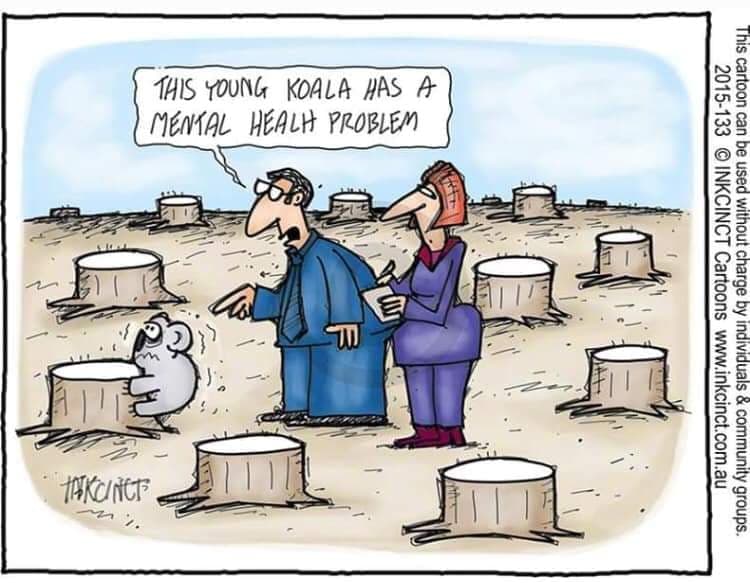
  • source
  • [+] 10 points 2 years ago* (last edited 2 years ago)
    load more comments
    view more: next ›