Device uses movement of ions to generate airflow without any moving parts like in iPads and MacBook Air.

top 50 comments

sorted by: hot top controversial new old
[–] 95 points 2 years ago (5 children)

Counterpoint: stop trying to make laptops thinner and implement realistic and functional air cooling

  • source
  • hideshow 10 child comments
  • [–] 76 points 2 years ago (2 children)

    Passive cooling is generally better for reliability if you can make it work, since all active airflow systems will degrade as dust and hair works into the airflow paths.

  • source
  • parent
  • hideshow 4 child comments
  • Plus, the two can be used in combination. Improved passive cooling systems will make active cooling better by reducing the need to run the active system all the time, or at least run it at reduced rates, which will make the whole system last longer and reduce maintenance.

  • source
  • parent
  • [–] 18 points 2 years ago (3 children)

    Make the chassis out of aluminium so the whole bastard is a heatsink.

  • source
  • parent
  • hideshow 5 child comments
  • load more comments (1 reply)
  • [–] 5 points 2 years ago* (last edited 2 years ago) (1 child)

    They already do. My thinkpad T14s is incredibly thin, and it can dissipate 400 40 watts of power. My P1 dissipates 160+ watts and it’s also very thin.

  • source
  • parent
  • hideshow 2 child comments
  • [–] 64 points 2 years ago* (last edited 2 years ago) (2 children)

    Speaking from experience here, and limited information from the company, this looks like a polished version of a high-voltage grid accelerator.

    https://ventiva.com/how-it-works/

    What can be an expected concern is that besides ionizing air and imparting motion to neutral air molecules as the ionized ones rush from one plate to the other, that same effect can and will charge dust particles. That "collector plate" will need to be easily accessible.
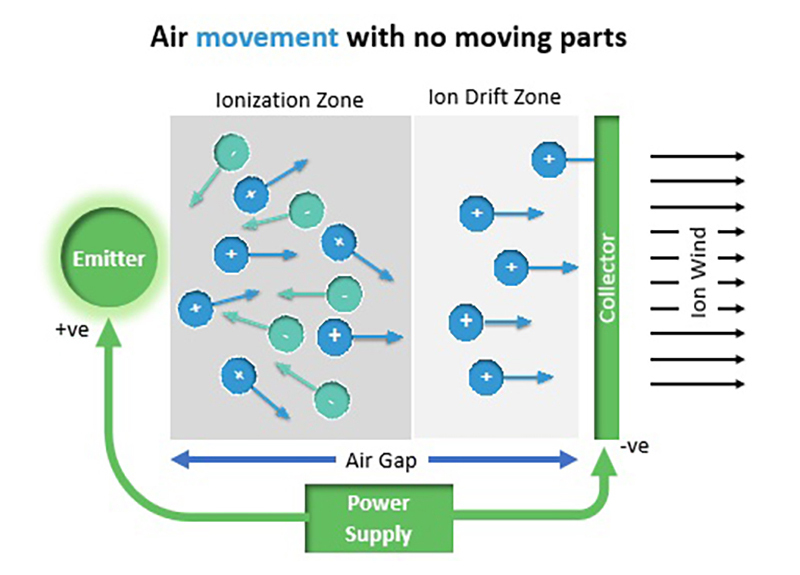
    Sound familiar?

  • source
  • hideshow 3 child comments
  • [–] 6 points 2 years ago (1 child)

    Appreciate the link. I've got a hand-me-down Ionic in my house, and knowing that I can skip running it for basically the same effect means I can save a couple of cents on my electricity bill.

    Gonna take another look at those IKEA tables with the HEPA filters built in. Those seem handy to avoid having to dust so often.

  • source
  • parent
  • hideshow 2 child comments
  • [–] 8 points 2 years ago*

    Sure thing, glad to be of some kinda help. Ozone can be a good irritant, never mind charged dust sticking to stuff it ordinarily wouldn't.

    I hope this company has a trick for dust control, but I'm expecting that'd be tougher than figuring out the ionic wind part.

  • source
  • parent
  • load more comments (1 reply)
    [–] 46 points 2 years ago* (last edited 2 years ago) (2 children)

    Ionic acceleration of air needs high voltages and the air gets ionized (the reason people recommend against vacuuming a PC). I'm surprised that it works at all in close proximity to sensible tech.

    Edit: right, low static pressure, meaning: lower voltages. But still not low.

  • source
  • hideshow 4 child comments
  • [+] 26 points 2 years ago* (last edited 4 months ago) (1 child)
  • [–] 5 points 2 years ago (1 child)

    Can't watch the video rn, anything about the dust problem?

  • source
  • parent
  • hideshow 2 child comments
  • [–] 5 points 2 years ago* (1 child)

    the reason people recommend against vacuuming a PC

    A regular vacuum isn't doing anything with ions or high voltages. Moving air can generate potentially harmful static electricity, but usually the reason people recommend against vacuuming a PC is because if you spin the fans doing that, the motors inside turn into generators and drive current back into your PC parts that could damage them.

  • source
  • parent
  • hideshow 2 child comments
  • [–] 28 points 2 years ago (2 children)
  • [–] 20 points 2 years ago (1 child)

    I think Dave2D made a video about those. He was cautiously optimistic.

  • source
  • hideshow 1 child comment
  • load more comments (1 reply)
    [–] 16 points 2 years ago (1 child)

    Doesn't an ionic air moving system like this put out a big ass EM field?

    Im a fabricator who don't fuck with the lecky, but maybe someone more educated than me can explain why this doesn't wipe your memory every time the cooling kicks on

  • source
  • hideshow 2 child comments
  • [–] 7 points 2 years ago (2 children)

    I want to put one in a Valve Steamdeck.

  • source
  • hideshow 2 child comments
  • load more comments (2 replies)
    [–] 5 points 2 years ago

    I'm more excited about those Frore MEMS airjet chips.

    That's actually in at least one consumer product right now.

  • source
  • [–] 5 points 2 years ago (4 children)

    Is this the same way those bladeless Dyson fans work?

  • source
  • hideshow 7 child comments
  • load more comments (1 reply)
    [–] 4 points 2 years ago

    I see what they did there with the "ICE9" name.

    If it works, it sounds like it'd be something meant for a future Steam Deck to experiment with.

  • source
  • [–] 3 points 2 years ago (2 children)

    So my take away from all of this is that this is a laptop that can propel itself around in space. Pretty neat.

  • source
  • hideshow 2 child comments
  • load more comments (2 replies)
    load more comments
    view more: next ›