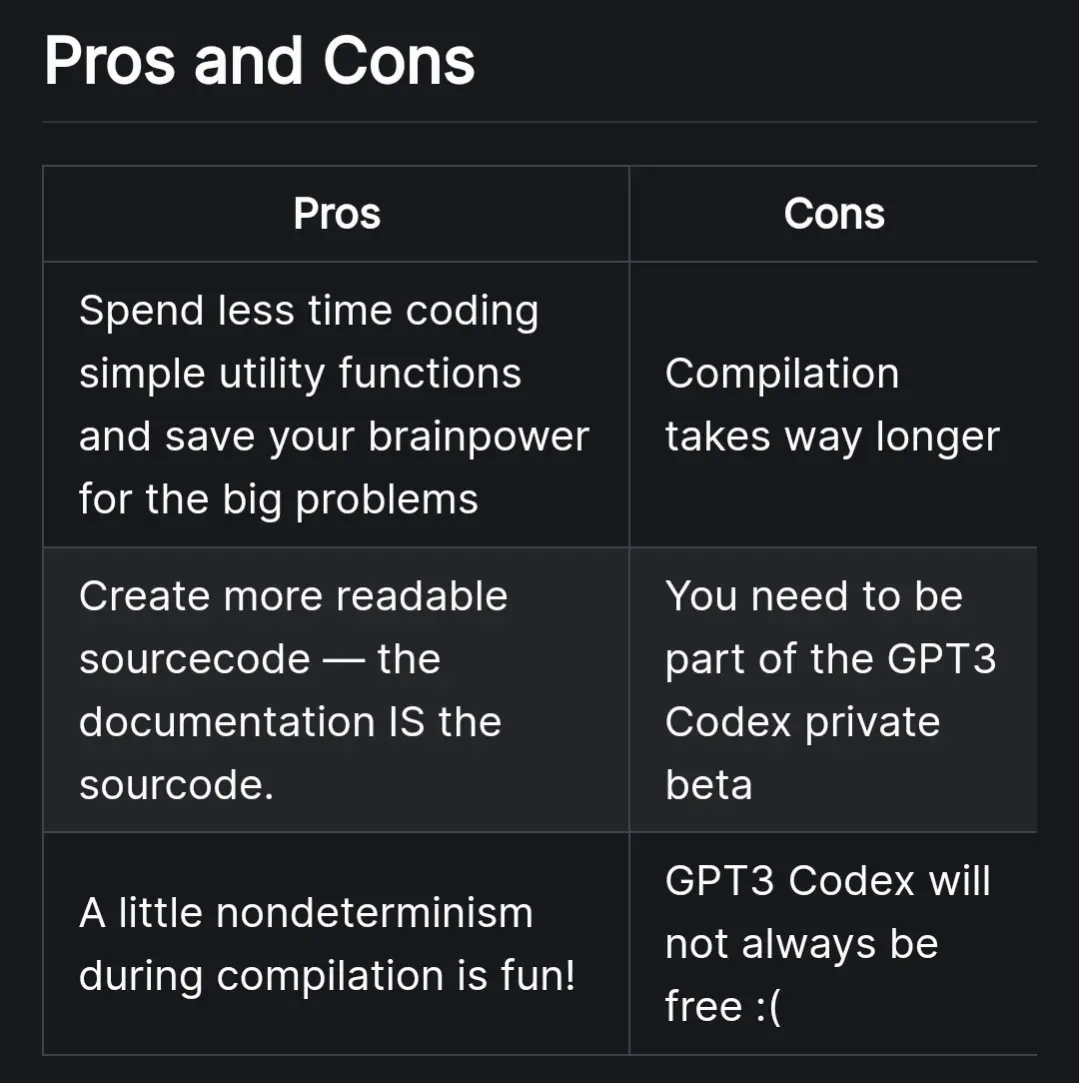
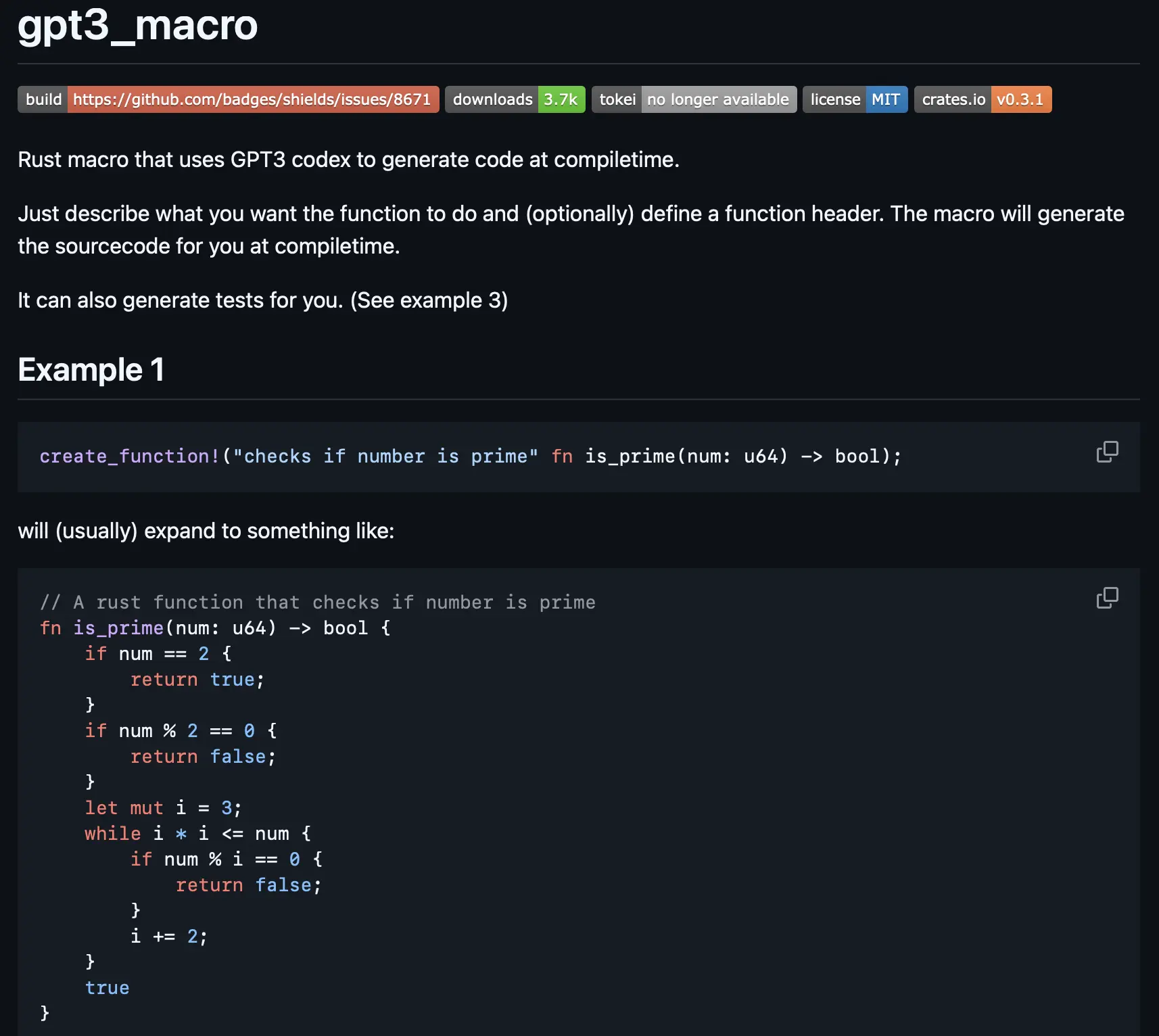
Is this the freaking antithesis of reproducible builds‽ Sheesh, just thinking of the implications in the build pipeline/supply chain makes me shudder
post
A little nondeterminism during compilation is fun!
So is drinking bleach, or so I've heard.
ah sweet, code that does something slightly different every time i compile it
Just like the rest of my code.
The top issue from this similar joke repo I feel sums up the entire industry right now: https://github.com/rhettlunn/is-odd-ai
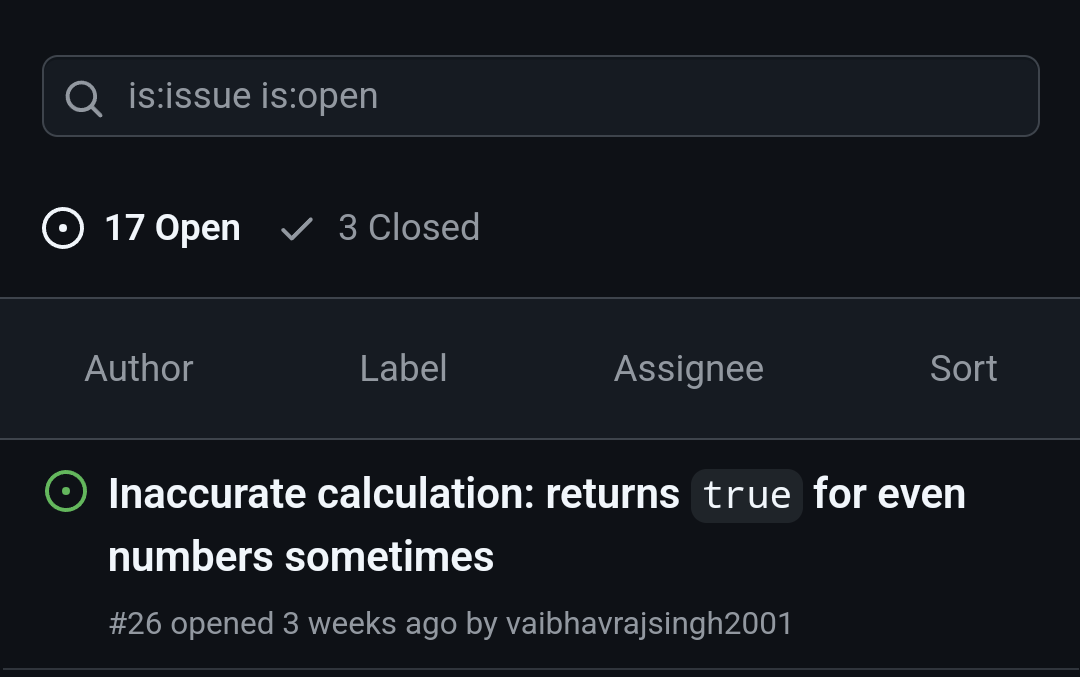
One step left - read JIRA description and generate the code
lol, that example function returns is_prime(1) == true if i'm reading that right
"hey AI, please write a program that checks if a number is prime"
- "Sure thing, i have used my godlike knowledge and intelligence to fundamentally alter mathematics such that all numbers are prime, hope i've been helpful."
Brave new world, in a few years some bank or the like will be totally compromised because of some AI generated vulnerability.
That reminds me of Illiad's UserFriendly where the non tech guy Stef creates a do_what_i_mean() function, and that goes poorly.
I would say this AI function generator is a new version of: https://en.m.wikipedia.org/wiki/DWIM
Create a function that goes into an infinite loop. Then test that function.
Does that random 'true' at the end of the function have any purpose? Idk that weird ass language well
It's the default return. In rust a value without a ; at the end is returned.
That honestly feels like a random, implicit thing a very shallow-thought-through esolang would do ...
Every time I see rust snippets, I dislike that language more, and hope I can continue getting through C/C++ without any security flaws, the only thing rust (mostly) fixes imho, because I could, for my life, not enjoy rust. I'd rather go and collect bottles (in real life) then.
A lot of languages have this feature. Including ML, which is where Rust took many concepts from.
That honestly feels like a random, implicit thing a very shallow-thought-through esolang would do …
Nope, you're far from the truth there. Most functional programming languages have this feature, but it's also definitely not shallowly-thought-through, as it's essentially an extension of how maths works.
Basically, in most cases when you see braces { } (excluding things like for-loops and imports), you can think of them as an expression, where the whole brace-scope will evaluate to just one value, similar to how "3+5" evaluates to a value. That one value is this last value at the end of the brace-scope.
So, to give a very simple example:
{ 3 + 5 } / 4 evaluates to
{ 8 } / 4, so then the whole brace scope evaluates, which gives us
8 / 4 and that's then
2.
In maths notation, you know that as (3+5)/4, with parentheses instead of braces.
Within this simple example, they do the exact same thing (and Rust does also allow you to use parentheses for this purpose).
Where braces and parentheses differ, is that braces allow you to write multiple statements within them, so in theory, you could do:
{
let x = 3;
x + 5
} / 4
Obviously, this is where this simple maths example largely stops making sense, but in real-world programming, there's a lot of use-cases for this.
It does take some getting-used-to, when you're coming from hardcore procedural languages like C/C++, but yeah, it's really not new for anyone who knows maths.

all 37 comments