56
Airlines should tell UK customers the carbon impact of flights, watchdog says
(www.theguardian.com)
Discussion of climate, how it is changing, activism around that, the politics, and the energy systems change we need in order to stabilize things.
As a starting point, the burning of fossil fuels, and to a lesser extent deforestation and release of methane are responsible for the warming in recent decades:
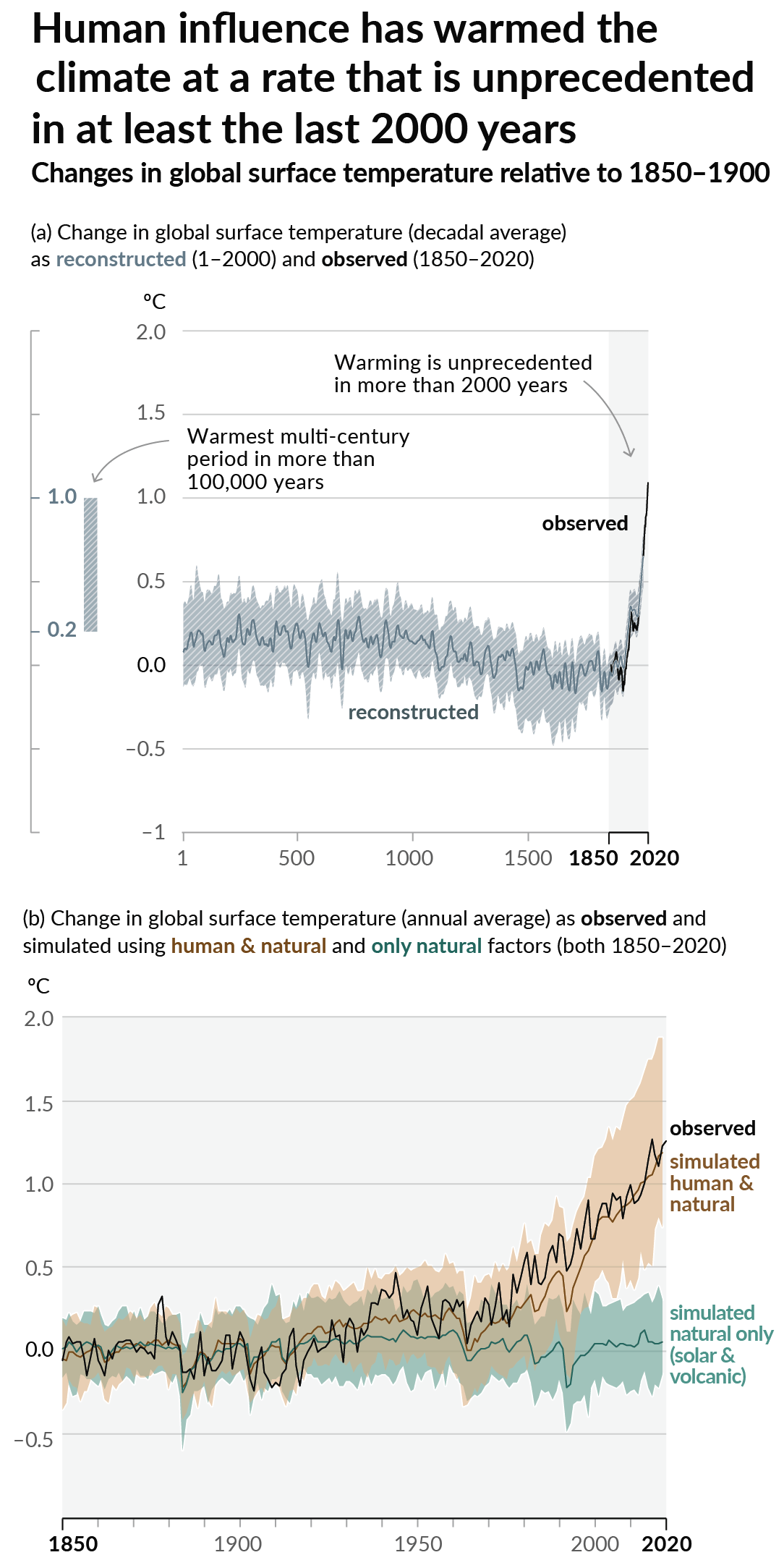
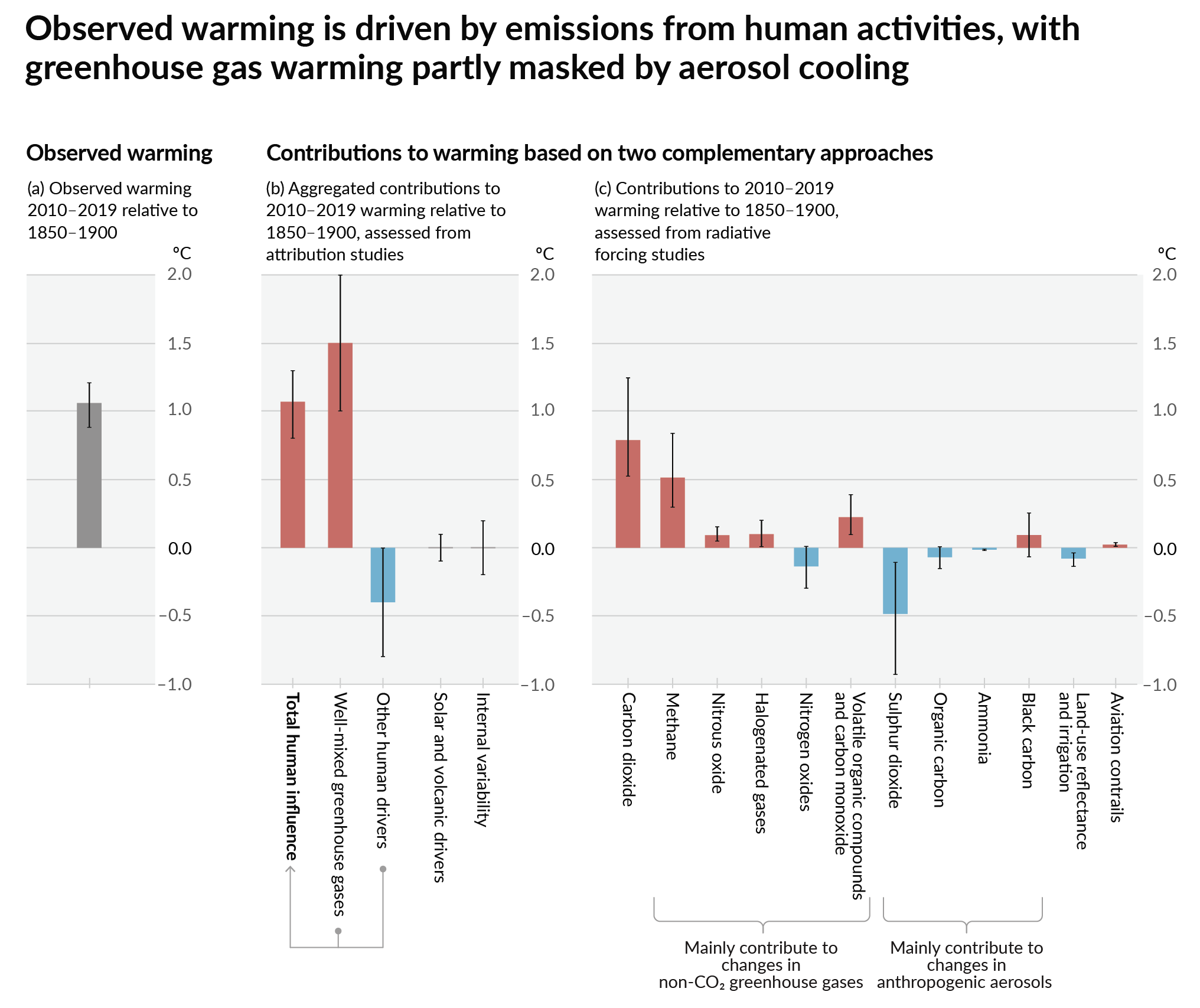
How much each change to the atmosphere has warmed the world:
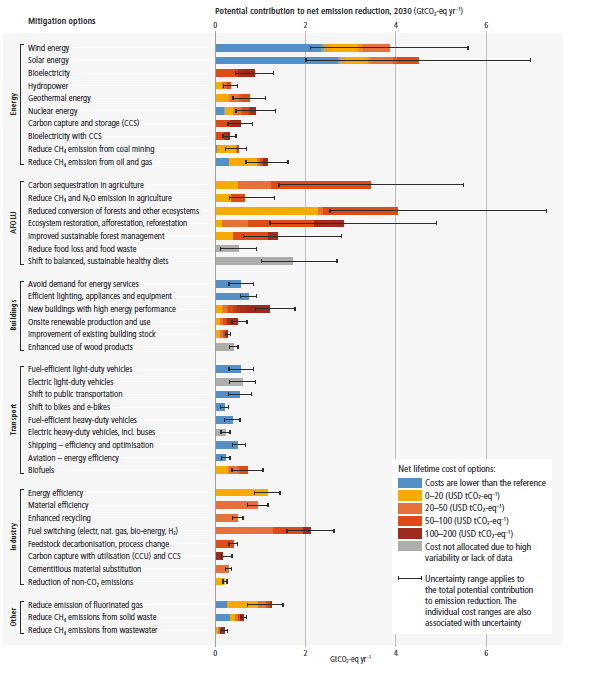
Recommended actions to cut greenhouse gas emissions in the near future:
Anti-science, inactivism, and unsupported conspiracy theories are not ok here.
Has anyone ever actually selected a flight based on it's carbon impact?
There's nearly a one to one correlation between carbon and distance and cost. So I rarely see it as a selling point that gets past the bottom line. Even then... do I think spending an extra $200 on a ticket is actually going to reduce the plane company's gross emissions? No. Of course not.
Yeah a carbon tax would be much more effective. Policy that only informs consumers is generally not very impactful.
I mean, alternative means of mass transit would be the most effective policy. But we can't even get a rail line between Houston and Dallas, despite the airspace maxing out and there existing an enormous profitable and general economic benefit to its construction.
Taxes keep the marginal participant out of the market. But the real goal should be to move people and cargo at maximal efficiency, not just to hobble lower income travelers with a consumption tax.
Why not both?
Isn't this article about UK?
You'd absolutely need to do both, unless you wanted all sorts of malformed incentives.
Generally speaking, the revenue from a pigouvian tax needs to be spent mitigating the problem that generates the revenue. Otherwise, you end up with something of a Cobra Problem, wherein excess consumption is seen as a revenue driver that the state subtly promotes.
I'm just speaking from personal experience.
If you want to talk shit about the UK, you can always point to HS2. Cancelled out of spite by the outgoing Conservative government. Chronic mismanagement of the rail network has been a lead weight around the British economy for decades.
People are avoiding flying at all over it, which is why airlines don't want to disclose. Long trips by plane dominate yearly emissions for people who travel like that
I think that's an oversimplification. Takeoff for one massively impacts carbon emissions, so direct flights are better than multiple transfers. Booking business class probably has an even larger effect. And the there's load averages and plane types.
It is a significant simplification, but people usually dont have many short flights on a trip. Its usually 1 or 2. Can be a huge improvement to get people onto electrified rail.
I guess heavy luggage might impact emissions marginally. But do you really believe the flight is staying on the tarmac because you didn't book a seat?
To me, this comment completely contradicts the arguments in your previous comment. I'm curious to learn your actual opinion on the matter.
If I have a choice between two flights A and B, based exclusively on CO~2~ emissions, the only thing my selection changes is my body weight/luggage added to the flight. But the emissions calculation (as I understand it) is the total anticipated CO~2~ of the flight divided by the number of seats. And the bulk of those emissions come from lifting the plane itself, not the individual passengers.
The plane still flies whether or not I'm on it, though. So my choice of flight does not really impact emitted carbon.
I personally might to be honest. but you are right, it would be only if the pricing was similar and one airline had a lower carbon print I would choose the lower carbon print. (people like me is probably why they don't supply this info normally). It doesn't make sense to spent a bunch more for it though.
Being said, if the pricing was similar, I expect there would be enough people like me though, they would start cancelling flight lanes like we are seeing with the tourist trade with Canada and Florida. Air Canada alone has canceled over 10% of its CA to FL based flights due to lack of flyers (only about 20 flight lanes though, but that's still a good start).
Price and emissions tend to track one another, as the price of fuel is heavily baked into the cost of the seat. And everyone flies the same aircraft models. It's not like there's a "Low Emissions Boeing" or "EV Airbus" you can select.
I agree with that on direct plans. I don't agree with that on indirect lanes. the emissions to passenger ratio should be lower on a full 130 passenger jet that is going to another more populated airport nearby, and then hopping to the destination port with a lower passenger count(this would raise ticket prices some, but I wouldn't expect game changing amounts), than a direct flight plan that has a full jet one direction, and then only 1/4 occupancy on the direct route back.
I don't actually care about full emission count though, I just want the emissions to be used responsibly. a low passenger to emission ratio would be what I find the most useful, but I doubt its what anyone would actually supply.