you are viewing a single comment's thread
view the rest of the comments
[–] 3 points 2 years ago* (2 children)

High maternal mortality meant that having more than about 7 children per woman was rare. Total fertility rate was about 4.5 to 7 in the pre modern era. Population growth was low due to infant and early childhood mortality though.

If you start having children at age 12, you can have a child every year and reach 7 children by age 20. Without contraceptives, people weren’t having such large multi-year gaps between children like we do now.

  • source
  • parent
  • hideshow 2 child comments
  • [–] 5 points 2 years ago (1 child)

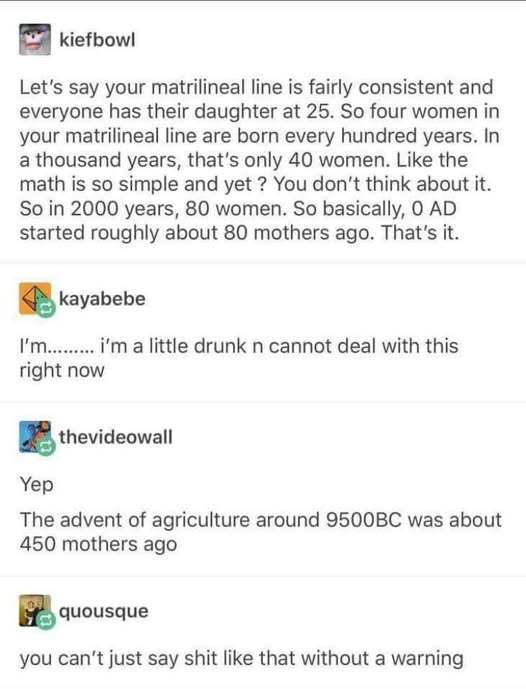
    Based on my own genealogical research, the trend I typically saw was 6-8 kids, between 18 and early 30s, about 20% of which died. Plus consider that some of those will be sons, and some daughters never become mothers, 25 is pretty spot on for the average age for a mother-to-mother generational gap.

  • source
  • parent
  • hideshow 1 child comment
  • [–] 4 points 2 years ago

    Yes abd the field of genealogy, the size of a generation is given as 25 years. I believe specialists of genealogy who had to defined this metric did think about the way couple had kids in the past.

  • source
  • parent