1
14

Epstein

This article contains graphic details of rape and sexual assault.

The latest tranche of Epstein documents have provided further evidence that he was not only a vile paedophile, he was also an appalling racist. We’ve previously covered Epstein’s sickening fantasies about using the supposedly “superior gene pool” of himself and the children he raped to create a “super-race”.

However, the new files provide further evidence of his eugenicist views. In an email to linguist and political dissident Noam Chomsky, the now-dead former financier suggested that Black people are less intelligent than others:

The test score gap amongst African-Americans is well documented. 20 years of testing. Many countries. James Watson had some of his private views made public and hence his dismissal from society. He told me that after one sentence he became an un-person. Making things better might require accepting some uncomfortable facts. You told me that.

Epstein – racist views and racist friends

James Watson was a Nobel Prize winner alongside Francis Crick, Maurice Wilkins, and Rosalind Franklin following their discovery of DNA. He was also a horrible racist. He said:

There’s a difference on the average between blacks and whites in IQ tests. I would say the difference is genetic.

Watson described himself as “gloomy” regarding Africa’s prospects due to his claim that:

…all our social policies are based on the fact that their intelligence is the same as ours — whereas all the testing says not really.

Epstein appeared to indicate in another email that he was meeting Watson for breakfast. A white supremacist podcaster called Jean-François Gariépy also says Epstein gave him $25,000.

Epstein was of course a major backer of the world’s leading racist endeavour, the genocidal land theft project that is so-called ‘Israel’. He was a likely Mossad spy and has been pictured wearing an Israeli Genocide Forces sweatshirt. He was also a close friend of former ‘Israeli’ prime minister Ehud Barak. It is alleged Barak was the man who Virginia Giuffre alleged raped her “more savagely than anyone had before”.

Former ‘Israeli’ PM bemoans “quality” of African and Arab people

Now, in a newly released audio recording, Barak can be heard in conversation with Epstein. Adding an extra layer of racism to his already racist desire to have new arrivals to ‘Israel’ steal Palestinian land, Barak talks of controlling the “quality” of these aspiring land thieves. He says:

…we can control the quality much more effectively than our ancestors, or the founding fathers of Israel, could deal with the waves. [It] was a kind of salvation wave from North Africa, from the Arabs, from wherever.

They took whatever came, just to save people. Now we can be selective.

Note the use of “whatever”, rather than “whoever”, as if Black and Arab people are just convenient objects to pad out the settler-colony’s demographics. Rather than what he clearly sees as sub-standard material, the Nazi instead wants another “one million Russians”.

A number similar to that came to invade historic Palestine in the immediate aftermath of the Soviet Union’s collapse. Given it’s a conversation with a child rapist, Barak – being the sickening creep he is – inevitably turns the conversation in a smutty direction, saying:

I think that many will prefer it to be Belorussians [who arrive]. Many young, handsome girls will come. Tall, thin.

This is the only moment Epstein can be heard in the recording, letting out a chuckle.

Zionism is a fundamentally racist ideology

Of course, this all makes sense, given Zionism is a fundamentally racist project at its core. It grants one ethnic group exclusive rights to land they have no claim on, as they exterminate the native inhabitants. The racism which Barak espouses has just been an additional stain on top of that underlying bigotry.

Historian Avi Shlaim has recounted his early experiences of racism as an Arab Jew upon his family’s arrival from Iraq. Ethiopian Jews who arrived in the Zionist pseudo-state were sterilised, so they couldn’t outnumber the preferred white population. Arab people in ‘Israel’ are denied the same provision of services as their Jewish counterparts, including access to bomb shelters.

It’s not only racism that the Zionist entity shares with Epstein. It is also a vehicle for mass sexual abuse. Paedophiles have used the apartheid colony as a means of evading justice elsewhere. The most senior figures in the Zionist government have refrained from deporting such individuals.

Palestinian children are routinely sexually assaulted in the brutal prison system run by the terrorists in West Jerusalem. Children are “hit or touched on the genitals”, with 69% being strip searched.

Palestinians have recounted systematic sexual abuse in the ‘Israeli’ system of torture camps. Those kidnapped describe being raped with dogs, iron bars and batons. Tamer Qarmut was kidnapped from Gaza in November 2023. He described his abuse:

He [the guard[ shoved a wooden stick up my anus, left it there for about a minute, and pulled it out. Then he shoved it back in, even harder, and I screamed at the top of my lungs. After a minute, he pulled the stick out again, told me to open my mouth, pushed the stick into my mouth and forced me to lick it.

Knesset members have defended the right to rape kidnapped Palestinians. They even staged a violent protest at a torture centre when it appeared rapists may be held to account for their crimes.

The Zionist entity is effectively Epstein in ‘state’ form. A project of massive racism, violence and sexual abuse, allowed to continue its crimes way beyond the time it should have been held to account.

Featured image via the Canary

By Robert Freeman


From Canary via This RSS Feed.

2
3

Members of Congress are demanding answers from Meta after it ran advertisements by U.S. Immigration and Customs Enforcement that they say included imagery and music intended to appeal to white nationalists and neo-Nazis.

In a letter sent to Meta CEO Mark Zuckerberg, Reps. Becca Balint, D-Vt., and Pramila Jayapal, D-Wash., questioned how the social media company approved an ad campaign from the Department of Homeland Security featuring the song “We’ll Have Our Home Again,” which is popular in neo-Nazi spaces. The lawmakers urged Meta to cease running the ad campaign on its social media platforms and asked whether the company would commit to ending its digital advertising partnership with DHS.

The Intercept was first to report ICE’s use of the song in a paid post recruiting for the agency, which published shortly after an ICE agent fatally shot Renee Good in Minneapolis.

[

Related

DHS Used Neo-Nazi Anthem for Recruitment After Fatal Minneapolis ICE Shooting](https://theintercept.com/2026/01/13/dhs-ice-white-nationalist-neo-nazi/)

The lawmakers also questioned imagery contained in the ads that extremism researchers said echoes far-right “reclamation” narratives long associated with racist violence and accelerationist ideology.

“Businesses are not on the sideline at this moment and it is important they also know how they are contributing to what is happening in Minnesota and across the country,” said Balint. “A lack of change is not neutrality but complicity.”

Meta did not respond to a request for comment. The Department of Homeland Security, which has not responded to the congressional letter, defended its recruitment messaging in a statement to The Intercept.

DHS spokesperson Tricia McLaughlin rejected comparisons between the ads and extremist propaganda, arguing that criticism of the campaign amounted to an attack on patriotic expression.

“By Reps. Becca Balint and Pramila Jayapal’s standards, every American who posts patriotic imagery on the Fourth of July should be cancelled and labeled a Nazi,” McLaughlin said. “Not everything you dislike is ‘Nazi propaganda.’ DHS will continue to use all tools to communicate with the American people and keep them informed on our historic effort to Make America Safe Again.”

McLaughlin also accused critics of “manufacturing outrage” and said the controversy had contributed to a rise in assaults against ICE personnel. “It’s because of garbage like this we’re seeing a 1,300% increase in assaults against our brave men and women of ICE,” she said.

[

Related

Judge Censored an ICE Agent’s Face Over “Threats.” His Info Was a Google Search Away.](https://theintercept.com/2026/02/03/ice-dox-unmask-safety/)

McLaughlin did not provide evidence to support the claim. Similar assertions by the Trump administration about sharp increases in assaults against immigration agents are not reflected in publicly available data.

The most controversial ad in the campaign was a paid DHS recruitment post that published less than two days after the fatal shooting in Minneapolis. It paired immigration enforcement footage with the song “We’ll Have Our Home Again” by Pine Tree Riots. Popular in neo-Nazi online spaces, the song includes lyrics about reclaiming “our home” by “blood or sweat.” In the ad, it played as a cowboy rode a horse with a B-2 Spirit bomber flying overhead.

The ad featured a scene of a B2 bomber flying over a man on horseback. Screenshot: @DHSgov/X.com

After publicly rebuking allegations that the song had neo-Nazi ties, DHS later removed the recruitment post from its official Instagram account, according to a review of the page and reporting by other outlets. The department did not announce the deletion or respond to questions about why it was taken down. DHS did not address the song’s documented circulation in white nationalist spaces or its appearance in the manifesto of a 2023 mass shooter.

The Southern Poverty Law Center’s Hatewatch project has separately documented the song’s origins and circulation within organized white nationalist networks. The song was written and performed by Pine Tree Riots, a group affiliated with the Männerbund, which the SPLC has previously identified as a white nationalist organization. Hatewatch also found that the song has circulated widely in extremist online spaces and appeared in recruitment efforts by far-right groups.

Balint and Jayapal framed the controversy as bigger than a single post. They accuse Meta of profiting from a large-scale digital recruitment campaign relying on themes that would stand out to white nationalists. They questioned what safeguards existed to prevent extremist-linked content from appearing in government advertising, and whether recent changes to Meta’s hate-speech policies allowed the company to run the ads.

The letter details the scale of the recruitment push. According to the lawmakers, DHS spent more than $2.8 million on recruitment ads across Facebook and Instagram between March and December of last year, and paid Meta an additional $500,000 beginning in August. During the first three weeks of last fall’s government shutdown, ICE spent $4.5 million on paid media campaigns, the lawmakers write. The letter also cites reporting showing DHS spent more than $1 million over a 90-day period on “self-deportation” ads targeted at users interested in Latin music, Spanish as a second language, and Mexican cuisine.

Balint and Jayapal argue that such spending has been made possible by an influx of funding for ICE. A decade ago, ICE’s annual budget totaled less than $6 billion. Under new federal appropriations enacted last year, the agency has roughly $85 billion at its disposal, making it the highest-funded law enforcement agency in the United States. According to analysts cited by lawmakers, its budget is bigger than all other federal law enforcement agencies combined.

The lawmakers pointed to what they described as a deterioration in internal oversight and hiring standards, including waived age limits, large signing bonuses, and reports of recruits being rushed into the field without adequate training. They argued that the combination of rapid expansion, aggressive recruitment, and weak platform safeguards poses risks to public safety.

“It is important that we scrutinize how that funding is being used, particularly if it is being used to attract certain demographics for hiring while pushing others to the periphery, or out of our society,” Balint said.

The letter asks Meta to disclose the scope and duration of its advertising agreement with DHS, provide any communications related to the recruitment ads, and explain what restrictions apply to paid government content under its policies.

Meta’s Community Standards prohibit content that promotes dehumanizing speech, harmful stereotypes, or calls for exclusion or segregation targeting people based on protected characteristics, including race, ethnicity, national origin, and immigration status.

The policies also state that Meta removes content historically linked to intimidation or offline violence and applies heightened scrutiny during periods of increased tension or recent violence involving targeted groups. The members of Congress questioned whether those standards were enforced consistently for paid government advertising tied to DHS recruitment.

“There are a whole host of safeguards that should be considered,” Balint said. “But at a minimum, they need to abide by their own community guidelines.”

[

Related

Deportation, Inc.](https://theintercept.com/2025/12/19/deportation-abrego-garcia-ice-immigration/)

Balint said the inquiry is ongoing and could expand beyond the recruitment campaign itself. “I am certainly going to continue looking into how private groups are profiting off of or contributing to the untenable dynamic with ICE that is putting our communities at risk,” she said.

Since the recruitment campaign became the subject of public scrutiny, DHS and ICE have not made additional posts using the same song, imagery, or music across their official social media accounts.

The post Lawmakers Call on Meta to Stop Running ICE Ad Featuring Neo-Nazi Anthem appeared first on The Intercept.


From The Intercept via This RSS Feed.

3
4

Democratic leaders in Congress are already backing down on one of their key demands in the fight to reform the federal immigration agencies terrorizing Minnesota and other parts of the country.

On Wednesday, Democrats laid out a list of 10 "guardrails" they said they wanted to see put in place to protect the public from abuses by Immigration and Customs Enforcement (ICE) and Customs and Border Protection (CBP) agents, before agreeing to a new round of funding for their parent agency, the Department of Homeland Security (DHS).

The list called to "prohibit ICE and immigration agents from wearing face coverings" to conceal their identities, which Democratic leaders have stressed as a key reform for weeks.

But during a press conference on Wednesday, House Minority Leader Hakeem Jeffries (D-NY) and Senate Minority Leader Chuck Schumer (D-NY) raised many eyebrows when they introduced a heap of caveats to their demand.

“I think there’s agreement that no masks should be deployed in an arbitrary and capricious fashion, as has been the case, horrifying the American people,” Jeffries said.

Schumer added that agents “need identification and no masks, except in extraordinary and unusual circumstances.”

When a HuffPost reporter attempted to ask Schumer if the party had changed its position on masks, Schumer sidestepped the question. But other top Democrats clarified that they were looking at certain exceptions.

Sen. Chris Murphy (D-Conn.) said that while masks should generally be "prohibited by law" as a part of everyday enforcement, there are "sometimes safety reasons why you may need a mask."

Rep. Rosa DeLauro (D-Conn.), who went against the majority of the party earlier this week to vote for two weeks of DHS funding to keep the government open, said they were discussing when to implement "narrow exceptions" with members of law enforcement and suggested that "dealing with a cartel" could be one of them.

Of course, the Trump administration has often asserted that all the immigrants they target are dangerous criminals—"the worst of the worst"—including cartel members, even when this is not the case, raising questions about who might be in charge of determining when masks are necessary.

Critics have been underwhelmed by many of the other demands on the list as well.

Journalist and commentator Adam Johnson said it was a collection of “mostly cosmetic, pointless, unenforceable, or actively harmful ‘reforms,’” with some—including the requirement for judicial warrants and a ban on racial profiling—already being mandated by the Constitution but flouted by agents regardless.

He described it as outrageous that Democrats were demanding "zero reduction in DHS’ obscene budget which... tripled, just 12 months ago."

Civil rights lawyer Alec Karakatsanis, the founder of the group Civil Rights Corps, called the list "one of the great political failures of our time" and said "it must be immediately denounced by all people of goodwill."

Meanwhile, Axios reported on Thursday that many rank-and-file members of the Democratic caucus are fuming over party leadership's refusal earlier this week to use the threat of a government shutdown to force reforms.

Rep. Pramila Jayapal, the CPC's chair emerita, pondered "'What are we going to get in 10 days that we didn't get?'"

"Every time that we are winning, we seem to somehow sabotage [it]," said Rep. Delia Ramirez (D-Ill.), a member of the Congressional Progressive Caucus (CPC).

She noted that House Speaker Mike Johnson (R-La.) has already ruled out several Democratic demands, including the requirement of judicial warrants.

ICE agents do not need a warrant to make arrests, but the Fourth Amendment prohibits them from entering private residences without a judicial warrant. An internal memo last month advised agents to ignore that law. Johnson said this week that requiring federal agents to obtain judicial warrants is "a road we cannot and should not go down.”

Other Democrats anonymously expressed their distrust in Schumer, who has caved in other hugely consequential fights in the second Trump era, most recently regarding the extension of Affordable Care Act subsidies during last fall’s record-breaking government shutdown, which left tens of millions of Americans facing doubled health insurance premiums.

"The main feeling among members is a lack of trust in his strength and ability to strike a hard bargain," one anonymous Democrat said.

Another said, “All those spending bills, that is the most leverage,” adding that “many folks in the [House] Democratic caucus wish that we had more confidence in Schumer’s ability to navigate a good, tough deal.”

Sixty votes will be required for a deal to pass the Senate, meaning at least seven Democrats will need to join Republicans for DHS to receive full funding and avoid shutting down on February 14.

While this still gives Democrats some leverage to push demands, Ramirez said previous fights give her zero confidence in Schumer's willingness to hold the line.

"I'm gonna continue to tell you that Schumer needs to get the hell out over and over and over until he does," Ramirez said. "He continues to demonstrate to us that he can't meet the moment."


From Common Dreams via This RSS Feed.

4
1

The skies over southern Lebanon have seen a significant increase in Israeli aerial attacks over the past month.


From Presstv via This RSS Feed.

5
5

reform

Reform UK and its leader Nigel Farage are no party of the people. Their emerging Epstein links show how their relationships with unaccountable transnational ruling elites let them play politics on easy mode. What has changed is that we’re starting to see more and more receipts.

If Farage’s outfit knows one thing it is money. A privately-educated banker himself, Farage has always played the tweed populist while making money moves behind the scenes. For example, this virulent critic of Muslims and Islam was in the Middle East last week ago courting UAE billionaire’s for donations.

But there is more. Property tycoon billionaire and Reform treasurer Nick Candy has now been revealed as an associate of late child-rapist, Zionist, and fascist Jeffrey Epstein.

Reform have an Epstein problem

As Skwawkbox reported recently, the Epstein files name Candy in relation to Epstein. There was even an email talking about Candy’s property firm selling a London flat for Epstein.

The emails appear to show, among other things, that Epstein was a fan of Candy, that Candy and Epstein appear to have swapped phone numbers through a third party, spoke directly – and that disgraced Labour grandee Peter Mandelson was also in the mix.

You should read the full report here.

A former Tory donor, Candy shifted to Reform UK in 2024 and now serves as their treasurer. He even promised the party a massive sum to support their bid for office. Even far-right tech baron Elon Musk – another Epstein associate – approved of the move.

Candy’s job is to elicit money for the nativist party whose officials have spent the last week dodging questions on Epstein. One even threatened to storm out of a TV interview when pushed on the party’s connections to Epstein.

Needless to say the full extent of Candy’s – and his financial dealings – with Epstein are still hazy. Yet the pair’s apparently rather collegiate relationship tells a story.

Questions to answer

Tax expert and economist Richard Murphy drew out some of the contradictions in the Reform UK/Epstein relationship.

Murphy wrote on 5 February:

In December 2024, Candy announced that he had quit the Conservatives and would “become the treasurer for Reform UK”. He then joined Nigel Farage and Elon Musk at a strategy meeting at Donald Trump’s Florida mansion, the latter two of whom also appear in the Epstein files.

Adding:

The trio’s names all appear in a tranche of three million documents released by the US Department of Justice last Friday

Murphy rightly noted:

Appearing in the Epstein files is not an indication of wrongdoing.

But as he pointed out questions remained. And that no Reform MP seemed to have attended the debate on Epstein and Mandelson on 4 February:

That is true, but questions still need to be asked about this and about why, apparently, no Reform MP thought it appropriate to be in the Commons yesterday. Why could that be?

But what are we to make of it all? Because treating Epstein as an aberration, rather than a product or expression of a system, rather misses the point.

Global transnational elites

Epstein was many things. And by all credible accounts every single one of those things was reprehensible. He was a prolific (and prolifically self-serving) operator in international affairs: connector, deal-maker, and schmoozer. Epstein was one figure in an amoral network of transnational elites, dealing in information and brokering power.

He traded in what he and his vile cohorts considered nothing more than property, be it human (his sex-trafficked victims seem to be regularly sidelined in all this) or inanimate. His own politics were clearly of the furthest right.

Ultimately men like these – and they are overwhelmingly men – want to make a world in their own image. With that in mind organisations like Reform UK  – led by people with bottomless reserves of base viciousness, bigotry and ambition –  are going to have a profound appeal for powerful, hyper-rich grotesques like Epstein.

The core truth is Reform UK aren’t popular, they’re just connected. They’re the electoral wing of a propertied global cartel. Underneath the pint-swilling, faux-populist trappings they represent an identifiable set of class interests. Those interests, as it happens, are the same values as tech barons, billionaires, bankers and property tycoons, petro-lords and bought-and-paid-for politicians and abusers whose names are all over Epstein’s gruesome files.

Featured image via the Canary

By Joe Glenton


From Canary via This RSS Feed.

6
2

venezuela

The Trump administration has returned $500 million in oil money from previous oil transactions with Venezuela. A US official said it was to keep the country’s services running. The US kidnapped Venezuela president Nicolas Maduro on 3 January. In his place, former oil minister deputy Delcy Rodriguez is running the oil-rich nation.

A US official told The New Arab on 4 February:

Venezuela has officially received all $500 million from the first Venezuelan oil sale.

The unnamed individual said the money would be:

disbursed for the benefit of the Venezuelan people at the discretion of the US government.

The cash seems to have been from an oil deal struck in January:

So in essence, we allowed Venezuela to use their own oil to generate revenue to pay teachers and firefighters and police officers and keep the function of government operating so we didn’t have systemic collapse.

The official said the money, which had been held in Qatar, was a:

temporary, short-term account to ensure Venezuela received the funds needed to operate.

Venezuela: agreed-upon procedures

The official even explained there were plans to move money from future oil sales:

into a fund located in the US and to authorise expenditures for any obligation or expense of the government of Venezuela or its agencies and instrumentalities upon instructions that are consistent with agreed-upon procedures. 

The New Arab also reported pro-Maduro street protests. Maduro’s son Nicolasito was in attendance. He told reporters of the demonstrators:

These people are not American.  We have achieved a profound anti-imperialist consciousness.

Maduro is in a New York jail. He claims he is a prisoner of war. The US has indicted him for drugs and weapon possession charges Yet whatever the balance of power in Venezuela is now – and whatever the anti-imperialist rhetoric on display – this seems to suggest that the Venezuelan government is not calling the shots any more.

Trump’s massive military build-up and eventual special forces raid on Venezuela seems to have done the job. The US seeks to dominate the Western hemisphere entirely. Trump has now moved onto bullying Iran. The Venezuelan revolution, whatever its merits and shortcomings, seems to have stalled for now.

Time will tell if it becomes another footnote in US imperial history.

Featured image via the Canary

By Joe Glenton


From Canary via This RSS Feed.

7
1

Sen. Bernie Sanders on Wednesday added his voice to those who categorically rejected the notion that "financial challenges" were behind the Washington Post's decision to slash more than 300 jobs, considering the venerated newspaper is owned by the world's fourth-richest person, Amazon founder Jeff Bezos.

The tech mogul, Sanders (I-Vt.) noted, spent tens of millions of dollars last year on his wedding in Italy, and owns a $500 million yacht. Bezos has a net worth of at least $235 billion.

Most notably, the senator pointed to the $75 million Bezos just spent purchasing the rights to and promoting a documentary film about First Lady Melania Trump—one that critics have condemned as a clear "bribe," and whose premiere was followed by a visit to Bezos' space tech company Blue Origin by Defense Secretary Pete Hegseth, who said the firm is likely to do “plenty of winning” as the Pentagon hands out new defense contracts.

In a grim play on the tagline Bezos emblazoned on the Post's masthead after he bought the paper in 2013 for $250 million, Sanders wrote, "Democracy dies in oligarchy."

Sanders spoke out as numerous Post journalists announced that they had been affected by the mass layoffs, which will hit all sections of the newspaper and entirely shut down its sports and book review pages.

The international news section was also heavily impacted by the layoffs, and Ukraine correspondent Lizzie Johnson announced on social media that she had been "laid off by the Washington Post in the middle of a war zone."

Martin Weil, a longtime local reporter who joined the Post in 1965 and contributed to the paper's historic Watergate coverage, was also among those who were laid off.

Sanders has long criticized Bezos' decision to take over the Post and suggested that the mogul would not ensure fair coverage of issues impacting working Americans. In 2019, he said that the newspaper appeared biased against his progressive politics as he sought the Democratic nomination to run for president.

At the time, then-executive editor Martin Baron countered that "Jeff Bezos allows our newsroom to operate with full independence, as our reporters and editors can attest."

Last year, months after Bezos pulled an endorsement for then-Vice President Kamala Harris' presidential campaign and following an announcement that the opinion page would focus on “personal liberties and free markets," opinion editor David Shipley announced his resignation. Columnist Ruth Marcus also stepped down weeks later after CEO Will Lewis allegedly refused to run a column critiquing Bezos' changes to the opinion section.

On Wednesday, Baron said the gutting of the Post's newsroom marked one of "the darkest days in the history of one of the world's greatest news organizations" and took aim at Bezos, whom he accused of "betraying the values he was supposed to uphold."

"The Post's challenges... were made infinitely worse by ill-conceived decisions that came from the very top," said Baron. "Bezos' sickening efforts to curry favor with President [Donald] Trump have left an especially ugly stain of their own."


From Common Dreams via This RSS Feed.

8
2

channel crossing

An inquiry into the deaths of at least 30 people who drowned while trying to cross the English Channel in 2021 has found that emergency services could have prevented the deaths.

On November 24, 2021, the dinghy they were travelling on started to fill with water and capsized. To date, it is the deadliest small boat disaster on record in the English Channel.

Only two of the people on board survived. Emergency services found them nearly 12 hours after they called for help.

In total, authorities found 27 bodies and confirmed another four people were missing.

Channel crossing: a damning inquiry.

The inquiry found that staff numbers across the national network at HM Coastguard were “above what was required”. However, the recommended seasonal staffing at MRCC Dover is three operational staff for search and rescue. Importantly, this number “was not satisfied”. The inquiry found:

 The only fully qualified staff member working in the search and rescue team at MRCC Dover that night was the Search and Rescue Mission Co-ordinator (SMC). The two others in the SMC’s team that night were trainees: one was partially qualified but deemed to be operational, and the other was non operational.

Shockingly, these staffing pressures meant that the SMC was unable to take a break. This:

unsurprisingly left him feeling overwhelmed and fatigued. The short staffing also resulted in an absence of appropriate supervision for the non-operational trainee, who was called on to undertake operational tasks.

Moreover, both Border Force Maritime and the RNLI lacked sufficient resources to deal with the situation.

Despite a seemingly healthy number of surface assets available on the night of 23 to 24 November 2021, HM Coastguard and Border Force were reluctant to deploy more than one, as this would have reduced the availability of an already insufficient number of assets on the following day.

A surveillance aircraft that should have provided “critical intelligence” also did not launch due to poor weather. Of course, there was no contingency plan.

Additionally, authorities missed calls and texts from the boat, or did not follow them up. This, combined with the widely held belief that the people on the boat were exaggerating their distress, meant that the coastguard underestimated the urgency of the situation.

To make matters worse, HM Coastguard did not inform the helicopter searching the area to look for people in the water. The report states:

There were problems with the search undertaken by the helicopter R163. Based on the drift analyses commissioned by the MAIB, it is likely that the area covered by R163’s search contained the swamped small boat. However, its search was not effective for locating a swamped small boat or people in the water. R163 was not tasked to incident ‘Charlie’ specifically and was not informed by HM Coastguard that it was to locate a sinking small boat or people in the water. The captain of R163 told the Inquiry that if he had been informed that there were people in the water, “that does change things”. Instead, R163 was tasked to look for the multiple small boats that were believed to be in a similar area.

Ultimately, authorities and emergency services could have prevented all of the deaths. The inquiry report concludes:

As the analysis makes clear, the flaws in HM Coastguard’s decision-making were systemic. In particular they are attributable to the inordinate pressure on HM Coastguard staff at MRCC Dover handling search and rescue for small boats, the absence of effective supervision of those staff, the limitations of the remote working model to assist them, and the belief which had developed among HM Coastguard personnel that callers from small boats regularly exaggerated their level of distress.

Featured image via Channel 4 News/ YouTube

By HG


From Canary via This RSS Feed.

9
1

ICE

Mass arrests by Immigrations and Customs Enforcement (ICE) are overwhelming the US court system in Minnesota.

The Trump administration’s massive deportation spree in Minnesota – pompously titled ‘Operation Metro Surge’ – created a corresponding surge in emergency legal cases. This left courts so short-staffed that several top lawyers quit outright. Still others have voiced their intention to follow suit in recent weeks.

The Minnesota US attorney’s office stated that:

The Civil Division of the U.S. Attorney’s Office in this district has been utterly overwhelmed by the number of recent habeas petitions in Minnesota, during a time when the Office is short staffed.

ICE flouting orders

Justice Department records show massive numbers of legal violations by ICE, including violations of judges’ orders, illegal arrests, and botched court filings.

Minnesota judges are particularly alarmed at defiance from Homeland Security and their Justice Department counterparts in Washington. In particular, ICE is regularly flouting orders to bring their detainees before a judge when ordered – a legal right and duty known as habeas corpus.

Politico described one situation in which:

In one recent case, ICE arrested a man with no criminal record who was residing legally in Minnesota on a rare “T” visa, meant for victims of a severe form of human trafficking or who aided law enforcement in a trafficking investigation. A day after a magistrate judge inquired about the case, the Justice Department said it should be dismissed because the man had been released. Four days later, however, DOJ sent a cryptic filing misidentifying the man as “she” and suggesting he had been relocated to a detention facility in El Paso.

DOJ then blew off the deadline to clarify what had occurred, leading the judge to conclude that “ICE transferred Petitioner from Minnesota to Texas without notice and indeed, from this record it appears that even [DOJ] may not have known about the transfer.”

‘Broken system’

Underscoring the depths of the crisis, on Tuesday 2 February, a judge asked prosecutor Julie Le why his federal court orders were being ignored by ICE. Le, in apparent distress, said:

The system sucks. This job sucks. And I am trying every breath that I have so that I can get you what you need.

She went on to add that:

Sometime I wish you would just hold me in contempt, your honor, so that I can have a full 24 hours of sleep.

Le argued that ICE officials simply ignore her and other Justice Department lawyers when they tell them to obey the courts. Even simple inquiries went completely unanswered, and Le’s threats of legal repercussions made no impact.

The prosecutor branded the situation a “broken system”, and even revealed that she’d tried to quit – but there was no-one ready to replace her.

Open authoritarianism

However, Trump’s team are denying their responsibility for the situation. Tricia McLaughlin, a spokesperson for the Department of Homeland Security (DHS), tried to blame the judges themselves for the crisis:

The Trump administration is more than prepared to handle the legal caseload necessary to deliver President Trump’s deportation agenda for the American people. It should come as no surprise that more habeas petitions are being filed by illegal aliens — especially after many activist judges have attempted to thwart President Trump from fulfilling the American people’s mandate for mass deportations.

This line of reasoning is severely faulty. It is a court’s role, when necessary, to determine the legality of an individual’s actions. If the state could ignore a habeas petition on the grounds of an individual being “illegal”, it could simply declare anybody illegal without trial.

This is both clearly a monstrous abuse of power, and precisely what the Trump administration is doing.

A Justice Department spokesperson likewise blamed “rogue judges” for the massive increase in detention cases. They argued that without the judges rulings, there wouldn’t be any “concern over DHS following orders.”

That is to say, if the judges didn’t demand that ICE follows the law, there would be no issue. Again, an openly authoritarian proclamation.

Shock and awe

The fact that Minnesota’s courts are overwhelmed is not a glitch in the system. It’s not a result of the Justice Department being understaffed, or – God forbid – ICE being under-resourced. Rather, this overwhelm is part of the plan.

Trump has always relied on shock and awe tactics. He perpetrates as many open crimes and heinous violations of basic human decency as quickly as possible, such that his opponents barely have time to muster a reaction before the next onslaught.

Because the courts are overwhelmed, ICE and the Trump administration can act with impunity. The administration has said outright that if it’s allowed to break the law, then there won’t be any issues. It intends to break the law; it intends to ignore basic legal rights; it intends to deport anyone it sees fit. This was always the plan.

Featured image via the Canary

By Alex/Rose Cocker


From Canary via This RSS Feed.

10
2

The Lebanese president has accused the Israeli government of committing "a crime against the environment and health" for allegedly spraying the herbicide glyphosate on agricultural lands in Lebanon and Syria.

As reported by Naharnet on Wednesday, Lebanon's agriculture and environmental ministries recently conducted analysis of soil near the site where Israel had sprayed a chemical substance and found glyphosate "20 to 30 times higher than the average" in the area.

The ministries said that this level of glyphosate in the soil could cause "damage to agricultural production," while also harming soil fertility.

Lebanese President Joseph Aoun denounced the spraying as a "flagrant violation of Lebanese sovereignty," and called on the United Nations (UN) and the international community at large to take action to stop future attacks.

Al-Jazeera reported on Tuesday that the UN Interim Force in Lebanon (UNIFIL) was warned by the Israel military on Monday to stay away from the border area because it planned to deploy a "nontoxic chemical substance" there, forcing the peacekeeping forces to cancel over a dozen planned activities.

Stephane Dujarric, a spokesperson for UN Secretary-General António Guterres, condemned Israel for preventing UNIFIL from conducting operations, emphasizing that "any activity that may put peacekeepers and civilians at risk is of serious concern."

Euro-Med Human Rights Monitor said on Wednesday that it has detected "Israeli aircraft spraying pesticides of unknown composition over farmland in the countryside of Quneitra in southern Syria" on January 26 and 27.

"This incident cannot be viewed in isolation from the scorched-earth policy pursued by the Israeli army," the human rights watchdog said. "It forms part of a pattern of systematic destruction of agricultural land, including the burning of approximately 9,000 hectares during recent military operations using white phosphorus and incendiary munitions."


From Common Dreams via This RSS Feed.

11
2

Three weeks after the Trump administration had announced the launch of phase two of the US-brokered Gaza ceasefire deal, Israel’s violence against the Palestinian people in Gaza continues.

At least 24 Palestinians, including seven children, were killed in multiple assaults waged by the Israeli Occupation Forces (IOF) in different parts of the Gaza Strip on Wednesday, February 4.

The massacre is not the first since the second phase of the truce agreement came into force, as it came a few days after the IOF had launched a series of airstrikes across the besieged enclave, killing over 30 people on Saturday, January 31.

Meanwhile, the United Nations revealed in a report on Wednesday that over 18,000 patients, including 4000 children and 4000 cancer patients, are still waiting for Israel to permit their departure from Gaza for medical treatment abroad.

Israel has insisted on blocking urgent medical cases from evacuating Gaza, despite the limited reopening of the Rafah border crossing on Sunday, February 1.

For its part, Hamas’s newly-formed special security force Rade’, said in a statement via its Telegram channel on Sunday, February 1, that its fighters carried out two separate ambush attacks in Gaza city, and the southern city of Khan Younis, leaving a number of Israeli-backed militia members dead or injured.

Rade’ added that its personnel confiscated the military equipment that some of the ambushed Israeli-recruited collaborators left behind before they ran away.

Read more: Trump threatens to “kill” Hamas over the execution of Israeli-backed gang members in Gaza

Recent developments indicate that the enthusiasm which US President Donald Trump demonstrated about the ability of the National Committee for the Administration of Gaza (NCAG) to run the daily affairs of the war-torn enclave in the near future, is a mere figment.

The post Israel continues to violate Gaza ceasefire after the US announced the launch of phase two appeared first on Peoples Dispatch.


From Peoples Dispatch via This RSS Feed.

12
1

The US Embassy in Haiti announced the arrival of three warships in the Caribbean country’s capital, Port-au-Prince. In a statement released on social media, the US diplomatic service said: “At the direction of the secretary of war, the USS Stockdale, USCGC Stone, and USCGC Diligence have arrived in the Bay of Port-au-Prince as part of Operation Southern Spear.”

Operation Southern Spear was publicly announced by Secretary of War Pete Hegseth in November 2025 and includes the deployment of military forces in Latin America to, according to the Pentagon, combat vessels used by drug traffickers and “narco-terrorist” cartels.

The US invasion of Venezuela on January 3, in which President Nicolás Maduro was taken prisoner and extradited to the United States called “Operation Absolute Resolve”, was made possible by Operation Southern Spear and the deployment of significant military resources to the Caribbean.

According to some estimates, the airstrikes on vessels in the Caribbean and the Pacific as part of Operation Southern Spear has already left more than a hundred people dead, not counting the nearly 100 killed during the US military incursion into Venezuelan territory.

According to the US Embassy in Haiti, the arrival of the US warships is related to security activities: “Their presence reflects the United States’ unwavering commitment to Haiti’s security, stability, and brighter future. The US Navy and US Coast Guard reaffirm their partnership and support to ensure a safer and more prosperous Haiti.”

Are US ships arriving to fight gangs in Haiti?

It is still unknown whether Washington has sent its warships to take direct action in Haiti or another country, or whether this is a new maneuver to continue its project of expanding its influence in the Caribbean.

It is important to remember that February 7 marks the end of the mandate of the Presidential Transition Council, a body created to govern the island in the face of political volatility. The end of the mandate has created a lot of internal tension in the country, and Washington’s move could be seen as a way to ensure a transition favorable to its interests.

The truth is that this move has not gone unnoticed by several analysts, who have pointed out that just a few days ago Washington warned that the Cuban government posed a threat to its national security.

Read more: The US is using “blackmail and coercion” to intensify the blockade, says Cuba

However, it is also true that the United States recently announced new visa restrictions on senior Haitian government officials who, according to Washington, are linked to gangs operating on the island.

The US authorities have yet to provide further clarification on the reasons behind this recent military move.

The ongoing crisis in Haiti

Haiti is currently experiencing a severe security crisis that has plunged the country into a maelstrom of violence in which rival gangs are fighting for control of the territory. In 2021, President Jovenel Moïse was assassinated by foreign mercenaries who, according to authorities, were almost entirely Colombian. Since then, Haiti has been in a political and security crisis that seems to have no end. According to some estimates, nearly 200,000 people have been displaced as a result of the violence.

In response to this, several UN countries launched the so-called Multinational Security Support Mission in Haiti, through which troops from various countries, especially Kenya, would carry out control tasks in collaboration with the Haitian police. This operation has been highly questioned for its lack of positive results, and some critics have pointed to a new scheme whereby rich countries (especially the United States, the main financier of the Mission) pay troops from poor countries to carry out security tasks.

The unfavorable results led the UN to decide to send a new multinational force to Haiti, called the Gang Elimination Force, which will replace the former mission. This new force will have more powers and capabilities, according to the UN, to confront the gangs, although many Haitians are skeptical.

The post US deploys three warships to Haiti appeared first on Peoples Dispatch.


From Peoples Dispatch via This RSS Feed.

13
6

Minneapolis Community Defense Is “Riding on the Learning Edge of a Whirlwind”

Minneapolis Community Defense Is “Riding on the Learning Edge of a Whirlwind”

0:00

/4209.55425

Minneapolis Community Defense Is “Riding on the Learning Edge of a Whirlwind”

"Our days are riding on the learning edge of a whirlwind — crisis management, harm mitigation, helping everyone come to terms with new conditions and new impossible choices that they’re faced with,” says Minneapolis organizer Andrew Fahlstrom. In this episode of Movement Memos, I talk with Andrew and local organizers Jordan and Susan Raffo about community defense in Minneapolis, the social fabric of collective care under federal occupation, and how people around the country should be gearing up for the long struggle ahead.

Music by Son Monarcas, Daniel Fridell, and Katori Walker.

TRANSCRIPT

Note: This transcript was originally published in Truthout. It is shared here with permission.

**Kelly Hayes:**Welcome to “Movement Memos,” a Truthoutpodcast about organizing, solidarity, and the work of making change. I’m your host, writer and organizer Kelly Hayes. Today we are talking about the federal occupation of Minneapolis, where three people have been shot by federal agents – two fatally – and thousands of immigrants have been detained. We’ll be hearing from writer and healing justice practitioner Susan Raffo; Andrew Fahlstrom, a rapid response organizer with Defend the 612; and Jordan, an immigrant organizer whose works includes digital security and mutual aid.

In the Twin Cities and surrounding areas, we have seen an escalation of fascist violence that reflects the race war fantasies of men like White House adviser Stephen Miller, who would see immigrants and their defenders ground under. However, Minneapolis is also the heart of another arc of escalation — a mass activation of care and community defense and resistance that signals hope for us all.

Last week, some observers welcomed news that Border Patrol commander Greg Bovino was reassigned out of Minneapolis. The move followed the fatal shooting of Alex Pretti by federal agents and a wave of public backlash. The conversation you’re about to hear was recorded the day after Pretti’s death, prior to the announcement about Bovino’s departure. Unfortunately, the issues we discuss here — the violence, the lack of accountability, and the urgent need for steady, strategic responses from movements and communities — remain as relevant in Minneapolis today as they were the day after Pretti’s killing. Activists on the ground in Minneapolis have described Bovino as a “sadist” and a “fascist abuser,” whose departure has been felt on a personal level, but note the character and intensity of their struggle has not changed in the wake of his departure. Brutal attacks on their communities are ongoing, while ICE attacks in other states continue to escalate as well.

This is a time to be strategic, and to learn all we can from each other, because all of our communities need to prepare for the kind of state violence that Minneapolis is facing right now.

If you appreciate this podcast, and you would like to support “Movement Memos,” you can subscribe to Truthout’s newsletter or make a donation at truthout.org. You can also support the show by subscribing to “Movement Memos” on Apple or Spotify, or wherever you get your podcasts, or by leaving a positive review on those platforms. Sharing episodes on social media is also a huge help.

Truthoutis an independent news organization, publishing stories that the craven corporate press won’t touch. We are a union shop with the best family and sick leave policies in the industry, and we could not do this work without the support of readers and listeners like you. So thank you for believing in us and for all that you do. And with that, I hope you enjoy the show.

[musical interlude]

**KH:**Jordan, Raffo, Andrew, welcome to “Movement Memos.”

Susan Raffo: Good to be here.

Jordan: Thanks for having us.

**Andrew:**It’s good to be here.

KH: To help frame this conversation for our audience, can each of you take a moment to introduce yourself and tell us a bit about the organizing work you’re involved with?

**Jordan:**So my name is Jordan. I’m an Ethiopian Eritrean immigrant from my mother and my father’s side. I am a transplant to Minnesota. I came here a few years ago. At this point, I feel like it’s my second home. I’m a two-culture kid in that way, but my family has been immigrating to Minnesota, but also the U.S. since the ’70s, the late ’70s and early ’80s.

My work, I feel like right now it’s shaped as a community organizer in 2026, but a lot of my work focuses on relationship building, setting up care infrastructures, capacity building, political education work. And most recently in the last three, four years, a lot of tech justice work with the heightened surveillance and just AI or production work. Yeah, that’s me. Nice to be here.

**SR:**I am Susan Raffo. I go by Raffo. I do a lot of my work through REP [Relationships Evolving Possibilities], which is a project that emerged in 2020 during the uprising. We do a lot of work around collective safety, both through political education and skills building.

In the moment that we’re in right now in the Twin Cities, there’s a lot of work that I’m doing that is about connecting people to care. So what are the things that we need that are going to make us sustainable for the long-term, recognizing that this is not stopping tomorrow. That includes everything from dealing with shock trauma, to grief circles, to supporting people who are doing on-the-ground work or frontline work in different ways. And that’s how I’m showing up in this conversation.

Andrew: My name’s Andrew. I have lived in Minnesota for almost 45 years now. And the work that I’m involved in, in this moment, besides parenting a teenager, trying to be in a healthy partnership, and live through occupation, has been in supporting the multitudes of community defense structures that have been blossoming and growing across Minneapolis, across the Twin Cities, across the entire state, inspiring each other, inspiring the country, inspiring the world.

And so that looks like being part of Defend the 612, which is a sort of entry point for people to get involved in their neighborhood work, whether that’s the local school patrols or their block groups, block captains, or the other patrols and monitoring that’s going on right now in the city of Minneapolis. And so I’ve been spending my time in that in addition to trying to live a life, have a day job, and survive under the conditions that Minneapolis is facing in this moment.

**KH:**Thank you all so much for being here and for making time during an incredibly difficult moment. We’re recording this conversation the day after Alex Pretti was shot and killed in the street by a federal agent in Minneapolis. As organizers and community members in this city, I know you’re all carrying a lot right now, so I want to begin by asking: how are you holding up?

SR: This is Raffo. The other two people on this call are people who are quite beloved to me. And I can feel in our voices and in the feel that we share the way that there’s a heaviness, and I don’t want to speak for Jordan and Andrew, but I know these two folks really well. I feel it in my own body.

So coming into this call, I had shared that I was excited, because in this moment there’s not a lot of space to just pause and reflect. And so I’ve been looking forward to that really straight up to listen to Jordan and Andrew as much as have time for my own, but I can feel it in my own body. There’s a tightness. My heart feels really heavy. I feel it between us. So thank you for naming that and starting it because, of course, it’s going to shape whatever we talk about today.

KH: Thanks, Raffo. Jordan, how are you feeling?

Jordan: Yeah, I definitely resonate with the heaviness. There’s this public escalation of the nervous system, but also there is so much like, “Okay, what is the strategy? How do we move?” And so I think we’re all holding a lot of that, but also I think sleep has been one of the hardest things that has been hard to come by. And so that’s where I am.

Andrew: Yeah, to be perfectly honest, I haven’t processed yesterday. I was on Nicollet Avenue not too long after the assassination of Alex Pretti with the crowds, with the people on the lines of Border Patrol and ICE agents, of anger at another killing in our neighborhood with the Minneapolis Police Department, Hennepin County Sheriff’s coming to support the presence of ICE after they killed another one of our neighbors. And I took a face full of pepper spray and the clouds of tear gas went for blocks.

So there’s both the physical trauma and the community trauma of so many people who are activated in this moment and so many people that want our conditions to change, the collective conditions that we’re living under. And so many of us searching for the moves and the processes and the togetherness and the hope that it can change and the hope that we can be part of that change and the fear that we may not be able to do all of the things that we want to see happen.

So I’m just sitting here with the enormity of that and the questions of what’s next, of where do we move together and how do we move? Yeah. So there’s some sadness, there’s some inspiration, there’s this line of courage that’s impossible to let go of because so many of us are holding it in this moment that even if you let go of it for a day or a week, it’s just always there because so many of us are holding it together. That’s how I’m arriving.

KH: Thank you all for your vulnerability and for helping our listeners understand what it means to live inside this moment in Minneapolis. Andrew, your words about that line of courage really resonated. Many of us felt a similar bond and sense of connection in our work here in Chicago during Midway Blitz, and I think a lot of us now feel that kinship with our siblings in struggle in Minneapolis.

To give our listeners some context, can you describe the arc of escalation you’ve seen in Minneapolis and the surrounding area? How did the current crisis take shape?

**Jordan:**I think the first point of escalation for me that I witnessed at least in Minneapolis was in October. There was a low-key arrest of, I think, four individuals from Central America. And neighbors definitely got in the way and investigated what went on. But to me, nothing is really isolated in the situation. Everything is a test to see how folks will respond, how neighbors will show up. And so they’ve been doing this test, honestly, for a while. I think the Twin Cities in general is a punk city and people resist. And I think people just know their neighbors a lot more than any place I’ve ever been in my life. I live in South Minneapolis in an area where it’s hugely, hugely immigrant and a lot of brown and Black people, but a lot of people that are not brown and Black people that know their neighbors pretty well.

In Minnesota winter, even if it’s negative-something [degrees], people are biking, people are walking, people are walking their dogs. People with kids and stuff usually are out playing in the snow, or when people shovel the snow, people are out in my neighborhood, so I think just the absence of people and the fact that the street is so empty except the people that are doing patrolling or they’re doing watch or legal observer, you don’t see as many people. When you go to the stores, it’s a lot more emptier because there’s this lingering fear and heaviness and grief that people don’t know what to do with.

I think the scale and the type of crisis is not necessarily new to me. I have a lot of family that has witnessed genocide in large ways, so even just talking about it, they’re like, “This is so familiar. This tastes so familiar. This feels so familiar.”

Andrew: Where to begin? Where do we start? I was actually talking with Raffo a few days ago about the Dakota conflict of 1862. Some people call it the Dakota Uprising or the Dakota War when the peoples who lived on this land rose up against the armies of the day in this place that we live. And sort of like the lineage of this place we call Minnesota, it doesn’t seem like an accident that the American Indian Movement was born on the streets of South Minneapolis, and the lines of continuity and connection between the ways our peoples came together when George Floyd was assassinated at 38th and Chicago, and what it meant for us to have to be our own fire department, be our own community protection services during that time when the police disappeared, when the fire department wasn’t responding on the streets.

We have escalated our togetherness and our community in the face of so many things. December 1st, all of a sudden, there were ICE everywhere in our neighborhoods. And the way I found out about that was a Subaru with an Uber light had taken two parents from a car and left a young child outside of a school in South Minneapolis in the cold. And from there, it has been, I think, 55 days of ramping up an escalation. And in a similar way, we thought it was bad the first four weeks, and then the next thousand came, and then the next thousand came.

And we know that they’re coming because we have been so organized. There have been so many people who already know their neighbors who are looking out and caring for each other, and we know they’re coming because they have been resourced by billions of dollars and that we are a testing ground and they’ll be coming for so many other places as they staff up their troops and their paramilitaries.

So it seems iterative and we learn and we practice and we try and we move with love and togetherness and more violence comes and we try to maneuver and they learn and we learn and they learn. It feels like we’re in this dance that can’t or won’t continue forever, but I don’t know how long it will go on. I would say, the escalation that I’m most grateful for has been the escalation of truth and vision of what’s being seen because of the courage of my neighbors.

SR: I’m totally going to pick up on that. And I actually want to use the word “exaltation” instead of “escalation.” And that sounds really silly, but it’s like I want to exalt for a second. There’s a story out there which is not untrue when you hear it in our voices about how we know our neighbors in the cities. And I know I just recently spent a bunch of time in other parts of the U.S. and really noticed how there is a neighborliness in Minneapolis that I don’t always find in other cities that I spend time in. And that doesn’t mean that the neighborliness didn’t have a hell of a lot of gaps before. So many gaps. That didn’t mean that we all talked to each other all the time.

During the uprising in 2020, we had massive fights about abolition, and there was a whole liberal sway of our community that really struggled with abolition. And in particular, I would say the fact that this was abolitionist organizing around the murder of a Black man. And so this is a different moment that builds on that. All of that organizing is there, absolutely, that has been said, but there’s something that’s happening with that organizing, which feels in … Kelly, you and I talked about this a little bit when we were talking about this podcast, is it feels like this dance between emergence and strategy is that there is something about this moment. And I think part of it is the story. To even call this moment “the story” makes me shudder, but the image is the story, the what is here, what it means to love our neighbors, all of those pieces. People are gathering around that on their own in a way that, in 2020, it was sometimes harder to get people to gather. And so there’s stuff where people are stepping forward.

I feel like every moment I keep hearing about a whole other sway, and what’s really different about this is that 2020 felt like this was … I don’t believe in “left” and “right” really that much anymore, but still for using that language, it was like a far-left narrative about abolition in a very specific kind of way, and there were boundaries around who was in and who was not. This moment, I keep seeing the circle widening. I keep seeing people who are stepping across gaps, stepping across separation, stepping across disconnections in ways that I’ve not seen before. And as a 60-year-old person who’s been in movement since I was 16, I’ve also not lived through it in this way before. So it is an escalation of what? Of neighborliness, of moral something. I don’t even know at this point how to talk about it, except that there is something that is emergent at the same time as there are things that are structurally organized.

And Andrew and I were talking, again, as Andrew referred to a couple days ago about what are the ways to communicate some of this to other cities that are in the process — hello, Maine — and other places that are facing it as both Jordan and Andrew just said, that this is other places. What are the pieces of this that are translatable? What are the pieces that are specific? That’s some of the stuff that I’ve been thinking about a lot as everybody who’s in Minnesota right now is getting a lot of phone calls from people who are in other places who are wanting to prepare and sorting through what is specific to hear, what is not, what can be replicated feels like it’s getting into that emergence and strategy structure and the difference between them.

**KH:**Thank you all so much for that. I really hear you, Raffo, on the question of what’s specific to a place and what’s useful to share — and how we give away what’s useful. We did a lot of that kind of thinking here in Chicago as well.

And I think there’s something really powerful, amid the horror of how different cities have been attacked, about the way we keep reaching for each other. When Chicago was targeted, people in LA and D.C. were incredibly generous in talking with us about their experiences. Near the end of Midway Blitz, when ICE was beginning to pivot to other cities, there was a lot of communication between Chicago activists and folks in those cities.

When you talk about people showing up who you wouldn’t ordinarily expect — which is something we definitely experienced here as well, a sort of broadening of the “we” in struggle — I think that’s also reflected in the way that people are reaching across geographies to help each other. I think our sense of who “we” are is broadening in our own cities, and from city to city, as this movement grows. And I think that’s so hopeful.

Now, I want to talk a bit about the day-to-day experience of this struggle. From one day to the next, what does the work look like for you right now — as much as you’re able to share safely.

Jordan, would you like to start?

**Jordan:**Sure. I think that day-to-day is different. Every day is different. I think one of the things is digital security is a big thing that has come up a lot. And so just being very, very curious and attentive around how we would communicate with each other also has been something that I’ve been working on. How are we communicating? How is our conversations, our information being tracked and surveilled in different ways?

Then around midday, we do some supply drop-offs if people need them, usually people that are not able to leave their houses. And if there’s any mutual aid need, there is a group that I’m a part of. We do just mutual aid pods and we just support people in that way, like food. If there’s any pharmacy pickup, there’s a lot of people that are not able to go out even for, not necessarily for documentation reasons, but because of mental health stuff or they’re just fearful of being outside at this moment. So there’s also some of those folks that just need some of that support.

And I also actually have some off times where I just don’t do any sort of rapid response, and that is because of longevity and sustainability reasons. I have off-time for two hours in the middle of the day, I just don’t do that. I’m off the clock, and that is because I saw a lot of burnout in myself in 2020, too, when I was on the go, go, go. I also saw myself doing that in 2018. And so I’m just learning from other folks that are much older than me, that is probably not the most sustainable way to do this.

Another thing that I’ve been working on for a few weeks is trying to organize a safe house for people that just need a place to stay. Another thing that we were thinking about is the risk assessment of all of this, the people that are facilitating this whole thing for the people that are hosting and setting up the safe houses, but also the people that are being hosted, what is the default risk and just some of the repercussions around that. So I have a lot of beloveds and generous people that are like, “We are willing to do this,” but also, we are in this learning phase because I’ve never done this.

And so it’s just a matter of figuring out how to find alternative ways of keeping people physically safe as a retreat moment while things are adjusting and moving as they need to. So it’s just a lot of that. And there’s also a lot of digital security work because how are we conducting ourselves even when we’re doing that, as well?

**KH:**Thank you, Jordan. I deeply appreciate the work you’re doing. Andrew?

Andrew: Our days are riding on the learning edge of a whirlwind — crisis management, harm mitigation, helping everyone come to terms with new conditions and new impossible choices that they’re faced with. So that might look like helping folks think through plans, transportation plans, connecting folks who want to give rides with those that need rides or that need groceries that want to support on that.

It looks like helping other people tell their stories, the millions of stories that are happening and the intense scrutiny of the press as we are once again in the national spotlight, navigating the risk of saying your name and attaching yourself in a time when there’s immense right-wing interest and pressure and danger on people’s lives just for appearing in the media, just for telling their story. It has looked like trying to get a two-year-old baby returned who was taken two blocks from my house and then just breaking down crying when I heard that she was on a flight home. And it really looks like in these moments of activity, taking time with the so many loved ones and beloveds who are doing so much and on whose back, so much of this moves to just hold each other and cry and feel as much as possible, as much as we can let ourselves in the middle of emergency, feel the beauty and feel the terror of this time.

SR: I’ll say a little thing about my days. They’re really a mix of what are the things that people need right this second? What is the short-term strategy that’s available and what’s the long-term strategy that’s available? And it goes between those. So a lot of immediate … Some definitely mutual aid rapid response, but also just a lot of care work. Somebody who’s about to crack, who’s holding more than they can. So that’s immediate. And then the short term is I’ve really been looking to reach out to people while this is a very emergent moment and it is, there are also multiple bodies who are holding a lot because they are organizers, they are positioned, they’ve built things that have caught fire and been reaching a lot doing safety planning and safety planning, not just digital sec and just basic safety planning, but also that part of safety planning that is about sustainability. We actually need you to be okay for the next five months to a year. And so we need to be in that right now. So I’m doing a lot of reaching out. This is based on 35, 40 years of relationship in the cities of reaching out to folks to sort of help get that in place.

And then other things that are, as you know from Chicago, as Minneapolis as the city’s experienced during the uprising is because there’s a lot nationally that’s resting on what happens here. There’s also a lot of places where there’s local national partnerships that are happening that are a little bit more mid- and long-term strategy. And that’s everything from care networks, grief rituals, supporting faith-based folks to continue organizing and doing direct action.

So again, involved in a lot of those pieces that are long-term strategy. And as they both said, every day is different. And then I think the way the three of us grieve and hold this is, every single person holds this is different. I’ll have a day where I’ll say to my partner, “I love you so much. You need to not be in the house today because I need to grieve really loudly and really messily and not have anybody around. So I just need two or three hours. Just leave and then come back and I’ll be able to grieve with you.”

So I think we’re all noticing moment by moment. And I’ll say one of the things I feel fierce about is supporting those beloveds who are holding so much. Everybody is holding so much. It’s amazing. And there are some people who are pivotal holding so much, is that they get the chance to break. Because we know that from the uprising from all the different places that usually the folks who are holding lots aren’t the ones who go and ask for care until it’s super late. Thank God for everybody who goes to those care circles. So awesome. But I’m feeling a particular ferocity about those who are leading us in 101 non-hierarchical, highly relational, deeply humble ways.

**KH:**Thank you so much for that, Raffo. What you’re saying makes me think about how seriously I saw people taking trauma, and the need for healing spaces, here in Chicago, during Midway Blitz, and how important that felt. It honestly felt like a really important sign of progress in our movements, and it was definitely needed. I am grateful to everyone who organized somatic healing and PTSD prevention workshops, and to the folks who attend Understory, the spiritual and emotional support group for activists that I’ve co-facilitated for the last couple of years. I don’t know how I would have navigated those months without that wonderful group of people. So, I am so grateful to everyone who is organizing space for healing, and everyone who is taking seriously the need to participate in those spaces, because this is all part of how we’re going to survive together — and as Mariame [Kaba] says, we can only survive together.

Now, I want to circle back to something that came up earlier in our conversation: the legacy of the 2020 uprisings. We’ve heard a lot about how the protests following the murder of George Floyd created networks that have been reactivated during the current crisis. Can you talk a bit about the connections between 2020 and this moment, including the uprisings and the mutual aid that sprung up during that time and other organizing legacies or traditions that you feel have been important?

**Jordan:**Yeah, I can go first. I kept going back to the word “rigor.” Rigor, rigor. So I met a lot of my political home during the 2020 uprisings.

I think that spring and summer of 2020 built a lot of my organizing toolbox around this thing of longevity and rigor. And I think we’re seeing, I feel like the ripples of that now because I think Andrew said this and Raffo said this too, neighbors are showing up that we’ve never seen show up before. It’s almost like a given. It’s very default. They’re like, “Of course we’re going to show up.” There’s a lot of Know Your Rights that Andrew actually leads. I feel like y’all, I’ve been hearing a lot of people showing up over 600, 500 people just showing up. And to me, that’s incredible. That’s a blueprint of, of course I’m going to show up.

People also started, I think, craving community. There was this like, “Let’s not outsource our safety so much to these elected officials that we have no relationships with, but let’s actually rely on each other.” And that was a lot of what I heard actually from REP. That was a language that came from REP in the early days of, how do we not outsource our safety to someone we have no relationship with? And to me, neighbors seems like the most very basic answer.

I think in crisis, seeing people not even blink twice and just show up. When people were being dismissed at Roosevelt High School, which had a tear gas situation about a week and a half [ago], people were out there. People were out there doing patrolling beforehand. And then when the actual kidnapping and just fearmongering was happening, people were still there. People just showed up because they knew that something was going to go down.

So just even the mere fact of people just showing up, and I think that is all a ripple and a blueprint of 2020. And also, I think people just even being able to reach out without knowing who is going to reach back in is such something that I’ve also seen a lot. People saying like, “We’re about to have a dismissal at this school. We’re not sure who’s around. Can you send a few folks?” It’s incredible just people just show up even at the schools that their kids are not going to, but they just show up because they’re like, “This is something that I must do because I live in Corcoran, I live in Phillips.” And so that’s something that I’ve witnessed is I definitely think it’s built up definitely pre-2020, but 2020 for me was a moment of, it cemented a lot of that, I think, structure of care.

Andrew: Yeah. This isn’t baby’s first uprising in Minneapolis and we have had some chances to practice over time. And I think in the tradition of the American Indian Movement, the AIM patrols that would patrol South Minneapolis, now we have rapid response ICE watch patrols that are out on the streets of South Minneapolis.

In 2020, during the height of things, the Minneapolis Fire Department and Police Department would not respond to any 911 calls in South Minneapolis. And so the neighborhoods came together in one of our main parks and we chose our geographies and we said, “These are your neighbors. Go back to your blocks and say, ‘This is the plan.’” And then there was a group of people who were committed to breaking the curfew and saying, “Hey, if there is an emergency, this is how you contact us and we will come to you.”

And then REP, which I know Susan has been part of and co-founded, added that and then continued it. And there was a phone line where we have a sense of we do call each other when there’s emergencies, we do turn out. And now, here we are in another state of emergency and the need for community togetherness. And there’s sort of like this muscle memory and practice that of course we would do this. Of course, we would come together and just do this ourselves because we know that that is the only thing that we can count on in this moment is whatever we put into motion.

And in the same way, we’re not confused. The initial story, official story, of George Floyd being killed was he suffered a medical emergency. No one is confused that the first thing is a lie. No one is confused if the Vances and the Stephen Millers and the Trumps and the Kristi Noems come out and say whatever wild thing they’re going to do to spin things, no one in Minneapolis is going to buy any of that.

We’ve already seen it all play out. We know how that works. And so we also know what we have to do, and that is show the world that what actually happened is drastically different. That our neighbors, our family members, our children are being harmed. Go out and repeat that over and over again as much as we can so that more and more people can join us, more and more people can have that change in view and they see what the truth is, and then we practice.

We practice with each other based on our relationships, our longtime relationships, and then we start to practice with all the other folks that want to come join us. And we have a certain, I’m not sure what you would call it, but we have this way of saying, “Yeah, welcome. We really missed you, but we know that we need each other right now. So come on home, come join us. This is what we’re doing together.” And it’s been amazing.

**SR:**Where Andrew was going was where my brain was going, so I wanted to come in right away after his words because there’s structural stuff for sure. Places like REP and other kinds of places have kept alive over the last five years, this concept of rapid response of turning towards each other in small ways, but in significant ways. Because Minneapolis and St. Paul, but Minneapolis in particular really is a series of small towns within a city where everybody kind of knows each other’s small towns. That’s true of a lot of cities, but not all cities.

But there’s something about … I’m hearing this from, in particular right now, faith leaders who are working with congregations who in 2020, where they were willing to stretch because they were first going, “Oh, abolition. Oh, uprising, this is intense.” So they were catching up because they’d never seen themselves as people who would do direct action and take those risks.

Well, that’s now in their imagination. So it was much easier to step forward five years later because they’ve already practiced seeing themself in that role. And so there’s a lot of people who for different reasons have already been … And things have happened between 2020 to now that carries the opportunity to imagine, Trump’s second administration just being one of them.

So there’s a piece about imagination, but I also want to honor the wisdom of the long-term organizers who were heavily involved in 2020. In 2020, sometimes, however much we don’t want to be those people, we did fight with each other over how abolitionist people were. Is that sometimes we struggled to trust each other in different elements, not in the first couple of weeks when it was really hot, but after those first couple of weeks. We were precious. There were chunks of us that were just being super precious. I have not seen that at all. At all.

So some of the practice, which to me is holding that contradiction of “we have got this together and we might not be fully aligned in all of these other things. And at one point I want to have those conversations with you. And right now we are showing up because we have each other’s back.” The capacity to hold both of those things rather than needing somebody to fit really clearly in a particular story of alignment. I think that’s a wisdom that these last five years have brought into the cities that, in particularly, I feel really proud of, because I think that opens the space for the people who are just imagining themselves at this level of resistance to truly come in and be welcomed. Massive hats off to long-term organizers right now as well.

KH: I really appreciate what you’re saying, Raffo, about being less precious this time around. I think it’s so important, and it’s something I’ve seen in Chicago as well. Over the years, I think many of us have participated in conflicts over whether people were, in our estimation, really down for the struggle — and some of those conflicts just weren’t helpful. I think we’re doing a much better job in this moment of basing our judgment about whether someone is down for the struggle on what they are showing up to do. And a whole lot of people, including people I never would have expected, are showing up to create as much safety and justice as they can, without involving cops, and that is abolitionist work — whatever people call themselves. And I think more and more of our leftist co-strugglers are recognizing that what people are doing by showing up in that way is much more important than how they talk about it, and that political transformation, if it happens for people, is much more likely to occur in the process of waging struggle, than the process of arguing about it.

So, we’ve been talking a bit about what this looks like from the inside, for people who’ve been engaged in organizing for some time. Let’s zoom out a bit and talk about how this crisis is being presented at the national level. What do you think the media is failing to capture about what’s happening on the ground in Minneapolis right now?

Jordan: Oh my God, I have so much. So one of my big things that I do outside of organizing, maybe with organizing, is archivism work. And so I feel like podcasting is also a type of archivism work, so I appreciate a lot of what you do. But I think the media has a lot of this language of like, “Whoa, I can’t believe Minnesota does this, or I can’t believe things like this happened.”

There’s a lot of surprise and awe around as if there’s not a lineage of resistance that has been built by Black folks and Indigenous folks for the last many, many, many years before I was born, before any of us were born, probably. And so I just feel like that is one of the things that I feel incredibly like, “Well, I don’t know if you’ve actually read up or even….”

And I mean, it’s very strategic. The media frames things in the way that it does because the narrative needs to be built in a specific way. So that really bothers me. Also, it’s really, really cold in Minnesota right now. People are outside in this… two days ago was -22 degrees. I saw my friend’s beard freeze. Yeah, our eyebrows… and my glasses were so fogged up. It’s very cold and people are still outside. Some people don’t have cars. I don’t have a car. We do just walking patrolling.

A lot of these people are not organizers. I don’t even know what an organizer is at this point, but it’s people that are just showing up. And so there’s also missing that. There’s also a lot of fear. There’s so much rage and anger, but I feel like anger is always framed as this negative thing in the media like, there’s this purity conversation that’s happening.

Even I think with Alex [Pretti] and with Renee [Good], there’s this trying to present them as these people that are incredible. They don’t deserve this. Nobody deserves this. Nobody deserves to be assassinated.

I also think that there’s a lot of dismemory. I learned this from a mentor of mine. In real time, there is a dismemory like this actually didn’t happen. There’s a fragmentation of what is real. A lot of people are planting doubts in people’s mind [about] what we are seeing with our eyes. It also doesn’t help that there’s so much AI reproduction and using those specific texts to produce a specific narrative of who is on the streets, how are they reacting?

So memory is being suppressed in real time and really confusing the masses, especially for folks that are not politically engaged or may not have the context of what’s happening. So that, all of that is very scary. And that’s why it’s really important to have these alternative medias that are not mainstream to shape some of these stories of lineage-based work that’s been happening for a while. And there’s also a lot of nuances and context that are not addressed in mainstream media that loves black and white framing of things. So I would say it’s missing a lot.

**Andrew:**I think the thing that stands out to me is the obsession actually on some level with the rapid response groups and what plays out on the streets of Minneapolis when what is happening, the fundamental policy of family separation of taking children from their parents, of an entire community that is being terrorized and hidden and in hiding, I think it makes probably in this moment, strategic sense that those stories aren’t at the forefront because our people are hidden, our people are scared.

But the rapid responders are only part of the story. They’re not the main character. There is incredible work happening right now behind the scenes. It’s like a whole underground railroad conditions that we’re operating in right now where immigrant communities set the groundwork because they knew that this was coming. They absolutely saw this and a bunch of us, a bunch of rapid response folks are catching up to the conditions that we find ourselves in. But the amount of mutual aid that moves on the ground through relationships and family networks and schools and your kid goes to school with this other person, and all of a sudden that white parent is coordinating 27 rides to school the next day. It’s just like the immensity of love that is pouring forth in tactically hidden ways. Of course, the media is going to miss that story. And that is at least as inspiring, if not more inspiring, that we will show up for each other in every single way possible day after day and build the same kind of systems of care and support that are going into the rapid response realm.

RS: I really appreciated Jordan naming the alternative media that’s coming in. I do want to say one thing about… Because I know this happened in Chicago, the hundreds of influencers, podcasters flocking to the Twin Cities. There’s some where I’m like, thank God. Occasionally there are people who operate with humility when they come in, where they actually take the time to really learn about who the people are, what is really happening, what’s the history behind this moment. But my goodness, the number of people flocking in for their two minutes of fame, this happened during the [2020] uprising, but it’s like that on steroids. It’s so much more than I’ve ever seen.

And this is a media moment, but it is a place where so many of us are getting our information from there because we don’t trust the mainstream media anymore for very good reason where the story focuses on what’s happening in Minnesota, so it’s a protest. There’s moments of protest, but this whole arcing thing is not a protest. This is about people caring for each other. This is about surviving. This is about resisting occupation where there are multiple strategies. Protest is one of them, feeding each other is another one, on-the-ground health care is another one. And every single helping infrastructure right now, teachers, social workers, nurses, doctors has a complete and total shadow ecosystem where they are taking care of people on the ground in ways that the structures don’t allow. That’s everywhere. And that’s not protest, that’s living. That’s living in the ways that we’re supposed to live and take care of each other.

And unfortunately, the folks flocking in who sometimes are doing citizen journalism on the ground “unedited” are often as much a part of the inflammation as they are a part of the storytelling. My appreciation for “Movement Memos” reaching out to somebody who you know and saying, “Who do you know on the ground who can have a conversation?” And then thinking thoughtfully about how that should be done. I’m so grateful for that because the respect in that action is one that if I had a magic wand, I’d be like, “Thank you for your phones, outsiders. Can you bring in a level of respect and care for the local people who you are filming?” Because we need that to be woven through your witness as much as the fact that you are wearing a bulletproof vest and you’re putting yourself in front of pepper spray.

[musical interlude]

KH: Raffo, you’ve shared some really thoughtful reflections on social media about the social fabric of solidarity and mutual support that’s become more visible and stronger in Minneapolis during this time. I’d love to hear from each of you about that infrastructure: what it represents, what it looks and feels like on the ground, and what it means for our collective efforts to get free.

SR: I just suddenly feel really emotional. In moments of high activation like this, it is so clear that there is so much to do and there is no ending in how much there is to do. And sometimes what we don’t have… I don’t know if we don’t have as much time for, depending on who your people are, depending on how you are culturally shaped, depending on whether or not you have access to family memory about times like these, maybe you have this, but for people for whom what is happening right now is “not their normal,” there isn’t always as much thoughtfulness about what we do as also about who we are, that we are not just responding to a moment. This is about actually remembering what our ancestors have always known and what at its core is the only way that we actually survive. We are all always interconnected. That is the core truth. I think both Jordan and Andrew have spoken to that in multiple different ways. It is always here, whether we are feeling it, witnessing it, nourishing it, remembering it, claiming it, deepening it, whether we do that or not, it is just always here.

And so there’s a moment like this where the fact of that… Because, as both of my comrades have said, the police and the fire department are gone. People cannot leave their houses. It’s not safe. Children cannot go to school. Folks are showing up. That is not just about crisis, that is how we take care of each other in ways that are intimate and relational. And it goes directly against the strategies of colonization, of racial capitalism, et cetera, to remember this, to be this, who we are meant to be.

What I am so curious about… And curious, it’s such an abstract, distancing word. I’m going to use the word curious because I’ll start sobbing. What I fear so fiercely in each moment here is stopping violence every moment that we can. That is what we are here… We are stopping violence. But woven through that is that every moment is also something that can arc to imagining and building something that is longer term that is just a different normal.

This is the story of who we are, which is why your question about the media was like, what protest? Yes, abso-god-damn-lutely, lots of moments of protest, but also can you see the resistance and the remembering? Something that, for far more of our history, this is who we were. It’s such a blip, this separated individualized isolation. And depending on who your people are, you’re probably turning around to everybody else and saying, “It’s about bloody time you remembered.” Because of course, depending on who you are, this is still how you live.

It’s like I cannot honor the deaths that we’ve witnessed, the kidnappings we’ve witnessed, and say, “Oh God, what an opportunity this is,” because who the hell wants this to be happening? But as it is happening, there are things here that are more up than about this moment. There are things here that give us a… I’ll stop there. I think I’ve already said myself. I’m now repeating myself, so I’ll just stop there and hand off to somebody else. Thanks, Kelly.

**Jordan:**I’ll jump on that briefly. Yeah. For me, this moment is also about more than this moment. I have a favorite thing that I always say, and it’s informed by someone I love in community. It’s that it didn’t start with us, it doesn’t end with us. And I think it sounds very nihilistic when you hear it, but I think it’s a very grounding way of thinking about ancestral knowledge. And also, I don’t know, our place and our role in what we’re doing. I think for me, it’s always been outside of crisis, outside of emergencies — I think the care infrastructure has never been a choice because it’s something that has helped my family for generations and generations survive, whether that’s economically, whether that is to hop from one country to another, whether it is lived through a very hard time, let me just say.

And so I think my biggest objective has always been I think what any empire that is trying to destroy our dignity, what they want is isolation, what they want is so we don’t turn toward each other. The infrastructure and the collective thing for me is who are the people I can turn to within my life relationally, my loved ones? Who are the people that may need me? And I think that itself gives a lot of purpose. It’s anchoring in a lot of ways. It lets me see outside of this moment. I don’t feel apathetic or complacent, and to me, that is because of those infrastructures that have been built long before I was born. And so I have to be like, okay, what’s next? But also, are we all good? Have you been fed? And that’s, I guess, the point.

**Andrew:**It just becomes so clear in these moments that the dominant culture and narrative makes absolutely no sense in the slightest. And when everything’s shaken up and you can’t depend on all of your comforts and conveniences and there’s troops rolling down your block, there’s an ability to think differently. There’s a collective consciousness that emerges where we would do what any community would do if they are under occupat

14
2

On January 29, the White House issued an official statement declaring a national emergency in the United States because, it claims, “the policies, practices, and actions of the Government of Cuba constitute an unusual and extraordinary threat, which has its source in whole or substantial part outside the United States, to the national security and foreign policy of the United States.”

According to the statement, the Cuban government “aligns” itself with hostile countries, terrorist groups, and “malign actors adverse to the United States,” which the White House considers to include Russia, China, Iran, Hamas, and Hezbollah. Several analysts believe that these justifications do not imply that Cuba is a threat to US national security.

However, beyond the reality behind this or that suspicion, the Trump administration, based on these justifications, has decided to economically suffocate the Cuban government, which, since 1959, the year the Revolution triumphed, has been considered by Washington a fundamental target to be eliminated.

Cuba is currently subject to the longest economic and commercial blockade in contemporary history, imposed unilaterally by the United States. It has been condemned and rejected dozens of times by the almost absolute majority of the world’s countries in the United Nations.

Now Washington seeks to further suffocate Cuba’s small economy, which, in its own way, has managed to withstand punishment from the most powerful country on the planet for more than 60 years. According to the statement, the alleged threat from the small Caribbean country authorizes US authorities to impose new tariffs (the amount is not specified) on products from countries that sell or offer oil to Cuba.

Trump’s goal is clear: to overthrow the government in Havana. Following the White House announcement, Trump told the press: “It looks like it won’t be able to survive. Cuba won’t be able to survive.”

Rejection and condemnation by Cuban authorities

The measure has been strongly rejected by the Cuban authorities. The country’s president, Miguel Díaz-Canel, said: “Under a false and empty pretext, sold by those who make politics and enrich themselves at the expense of our people’s suffering, President Trump intends to suffocate the Cuban economy by imposing tariffs on countries that sovereignly trade oil with Cuba. Didn’t the Secretary of State and his harlequins say that the blockade did not exist? Where are those who bore us with their false stories that it is simply an ‘embargo on bilateral trade’?”

He added: “This new measure highlights the fascist, criminal, and genocidal nature of a clique that has hijacked the interests of the American people for purely personal gain.”

For his part, Cuban Foreign Minister Bruno Rodríguez posted on X that Cuba does not pose a threat to the United States: “To justify [the new measures, the United States] relies on a long list of lies that seek to portray Cuba as a threat that it is not. Every day, there is new evidence that the only threat to peace, security, and stability in the region, and the only malign influence, is that exerted by the US government against the nations and peoples of Our America, which it seeks to subjugate to its dictates, strip of their resources, mutilate their sovereignty, and deprive them of their independence.”

Rodríguez also pointed out: “The US also resorts to blackmail and coercion to try to get other countries to join its universally condemned policy of blockade against Cuba, threatening those that refuse with the imposition of arbitrary and abusive tariffs, in violation of all free trade rules. We denounce before the world this brutal act of aggression against Cuba and its people, who for more than 65 years have been subjected to the longest and cruelest economic blockade ever imposed on an entire nation and who are now promised to be subjected to extreme living conditions.”

A new economic threat to Cuba’s partners

The measure seeks to encourage countries that still offer aid to the blockaded island to reconsider their position regarding the revolutionary government. Even prior to the invasion of Venezuela on January 3, Cuba had lost its main energy partner when Washington imposed a naval blockade on Venezuela. Cuba is now experiencing an energy crisis as a result of the US economic blockade, which has intensified after Washington forced the Venezuelan authorities to cut off the supply of hydrocarbons to Cuba.

Read more: Trump’s ultimatum to Cuba: no fuel until surrender!

Among the countries that collaborate with Cuba on energy matters is Mexico, which many analysts believe is the main target of Washington’s “warning”. Russia and China could also be affected if they decide to continue their collaboration with Cuba.

For now, Claudia Sheinbaum, president of Mexico, has said that aid to Cuba will continue in such a way that it does not “put Mexico at risk”. She said she will request more information from the US State Department on the scope of this measure, but that she will not abandon the “tradition of solidarity and respect” that Mexico has maintained with all Latin American countries. “The application of tariffs could trigger a far-reaching crisis, affecting hospitals and food supplies, a situation that must be avoided in accordance with international law,” said the president.

Indeed, within the framework of this new form of US foreign policy, Cubans will undoubtedly be the most affected. The civilian population could find itself in dire straits without transportation and electricity, which compromise the most fundamental aspects of people’s lives.

This was stated by Jorge Legañoa, president of Prensa Latina: “What is the goal? The goal is genocide of the Cuban people, and if the tariffs are implemented, the effect would be to paralyze electricity generation, transportation, industrial production, agricultural production, the availability of health services, water supply … in short, all spheres of life.” 

The post The US is using “blackmail and coercion” to intensify the blockade, says Cuba appeared first on Peoples Dispatch.


From Peoples Dispatch via This RSS Feed.

15
2

Starmer’s future lies in the balance following sordid revelations about his Blairite ally, Peter Mandelson. The fallout from the Epstein scandal could drag down this crisis-ridden government, opening up a new chapter of instability in British politics.


From In Defence of Marxism via This RSS Feed.

16
2

Russia's efforts to negotiate a New START treaty were 'left unanswered' by Washington


From thecradle.co via This RSS Feed.

17
2

Piers Corbyn superimposed in front of the Your Party conference

Piers Corbyn, brother of Jeremy Corbyn, is officially on the ballot for the Your Party Central Executive Committee (CEC) in elections ending 5 January. This is despite Piers’s links to various conspiracy theories.

A pale imitation of his younger brother

Corbyn passed the ballot with 103 votes as an independent yesterday. Since then, people have raised their concerns:

Piers Corbyn is a climate change denier who has been protesting outside refugee hotels alongside fascists of late. The fact that he’s allowed to be in YourParty, nevermind that he has been endorsed for its CEC by 102 London members, is shocking. https://t.co/jZBIpwk87p

— Adam Ramsay (@AdamRamsay) February 4, 2026

Piers has a long history of controversial beliefs, having been very active in the anti-vax movement, leading to his arrest on several occasions. He didn’t stop there, going on to harass NHS workers, accusing them of murder. He also turned up at a drag story time in Brighton screaming “Your parents were straight!”

To be fair, some of the above is kind of tame compared to the time Piers was arrested on suspicion of inciting arson.

Observers have also clocked Piers holding signs saying ‘Stop the Boats’ outside of migrant hotels:

🇬🇧🚨 PIERS CORBYN, brother of JEREMY CORBYN, has arrived at the Bell MIGRANT Hotel in Epping to offer his support.

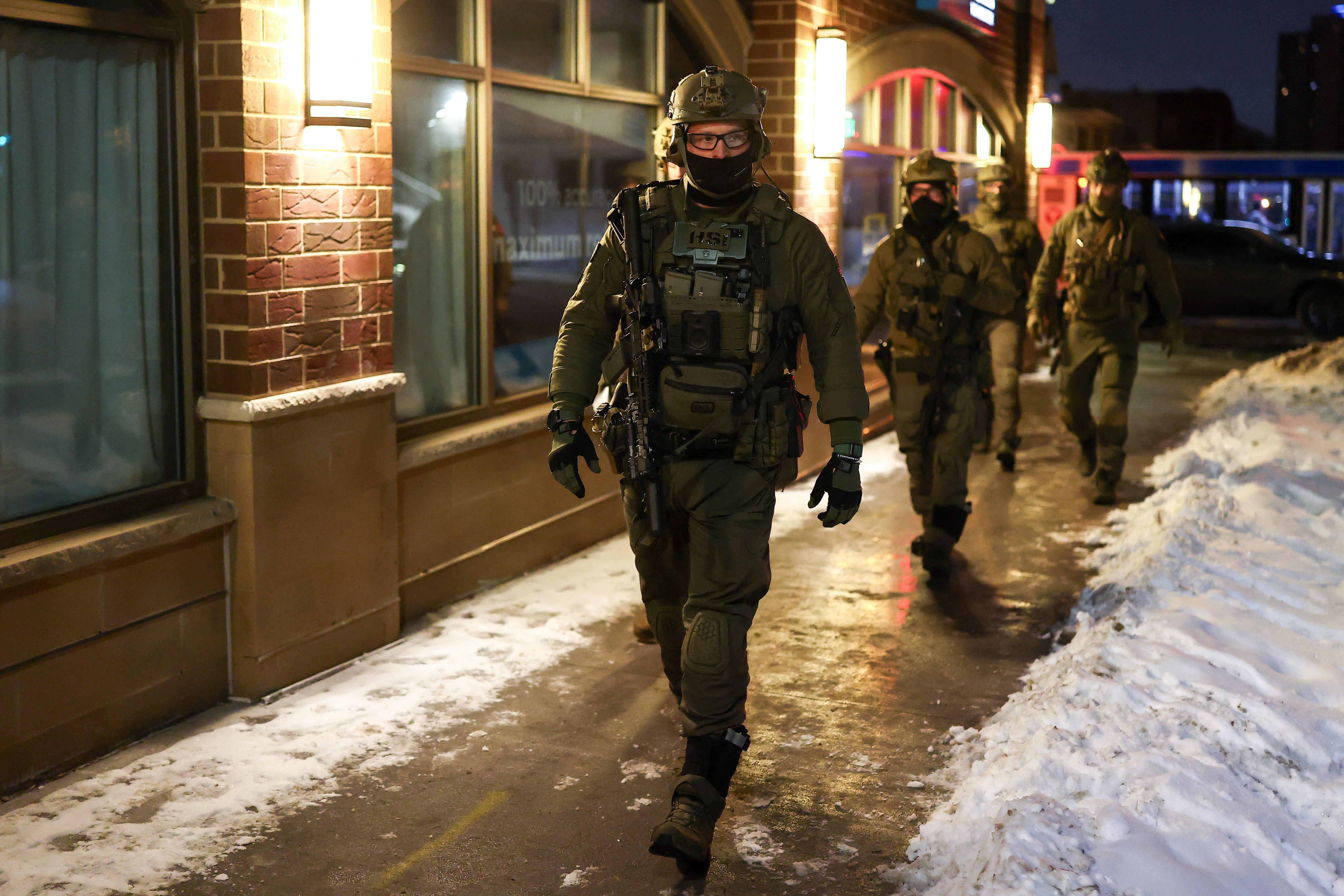

"I'm here to support the campaign to close this hotel. The boats should be STOPPED. The government is using this CRISIS to bring in DIGITAL ID. We don't need… https://t.co/536Yj9lkek pic.twitter.com/O7rqq12SVK

— VoxPopuli (@vpopulimedia) August 8, 2025

Just yesterday, he tweeted this:

AND now:
Zach Polanski the conman.
Fact: Man-Made ClimateChange does Not Exist – Download https://t.co/qXisckHYmJ https://t.co/OsYEcRbTUO pic.twitter.com/xulHiKnylA

— Piers Corbyn (@Piers_Corbyn) February 3, 2026

Do you see what we’re getting at here?

Is this really who Your Party wants?

The presence of Piers on the ballot poses a significant question for Your Party members.

Will the membership reject his toxic brand of conspiracy-led politics?

Or, will Piers find a powerful new platform for his controversial views?

It all feels a bit ‘nepo sibling’ to us.

Featured image via Daily Record

By Antifabot


From Canary via This RSS Feed.

18
3

A Gavin Newsom rap sheet, starting with his fake progressiveness.


From naked capitalism via This RSS Feed.

19
3

The focus of U.S. imperialism and much of the world has partially shifted away from Palestine as Trump targets Latin America and Greenland. But dynamics in the Middle East and the question of Palestinian liberation remain unresolved, despite Trump’s claim to have “ended the war in Gaza.” Palestinians in Gaza are facing their third winter under Israel’s genocidal campaign without adequate shelter, food, or safety. Israel continues to violate the terms of the U.S.-imposed ceasefire by obstructing aid entry and conducting daily killings.

Since the ceasefire began on October 10, 2025, Israel has directly killed more than 450 Palestinians through airstrikes and shootings while creating conditions that lead to further deaths from lack of food, medicine, and shelter. Nearly all of Gaza’s 2 million residents are forced to live in tents or makeshift shelters, enduring freezing nights and frequent storms, which have led to at least 24 deaths from cold exposure alone. Meanwhile, residents often go hungry as Israel turns away aid trucks and prevents organizations from delivering humanitarian aid. The ceasefire stipulates the entry of 600 aid trucks each day, but only 145 have been allowed to enter on average.

In the occupied West Bank, Israel persists in its assault on human rights, demolishing the UNRWA headquarters in East Jerusalem while settler attacks escalate. In the town of Ras Ein al-Auja, 450 out of 650 Palestinian residents have fled because of violence and theft by nearby settlers. Settler violence increased by 27 percent in 2025 and took a particularly heavy toll on olive farmers in the fall. Masked settlers roamed towns with Molotov cocktails, burning cars, houses, and olive groves, and forcing farmers to leave their fruit to rot on the trees to avoid lynch mobs.

Across the world in Davos, Switzerland, Jared Kushner promised Western investors “amazing investment opportunities” during a presentation by Trump’s newly unveiled “Board of Peace.” The board was established as part of the Trump-brokered ceasefire deal in October and is framed as an “internationally verified” overseer, cynically presented to the world as a “Palestinian-led” initiative to rehabilitate Gaza.

Despite the board’s stated intentions of peace and rehabilitation, it was created to perpetuate the genocidal war on Gaza and further cleanse Palestinians from their land at a time when traditional imperial means of slash-and-burn colonialism had failed to force their capitulation. The board has also opened opportunities for various vested parties in the region to exert influence through the imperial symposium. As new members of the board are invited (and disinvited) every day, its precise political stance remains unclear.

Netanyahu seeks to leverage the board to preempt any diplomatic pressure that might force the IDF to withdraw from Gaza or limit his ability to bomb at will. Turkey and the Gulf states aim to use the board to project regional power while inserting vague references to a “future Palestinian state” in hopes of placating their restless citizens. Yet this diplomatic association with Israel could easily backfire, further tarnishing the reputation of Arab states as collaborators in genocide. The Egyptian government, in particular, has long faced criticism for allowing Israel to control the Rafah border crossing and for its violent repression of activists participating in the grassroots-led Samud Land Convoy.

Meanwhile, Trump and his Western allies seek lucrative business deals from the reconstruction of Gaza while avoiding any fallout should the project run aground as many Western-led nation-building exercises do.

The New and Unstable Balance of Forces

The genocide continues to reshape the balance of forces in the Middle East, as Israel has failed to impose a decisive military victory, and the war has instead spread instability across the region. Rather than resolving the Palestinian question, the conflict has multiplied points of tension and crisis. This is already evident on Israel’s northern front. Israel failed to achieve a decisive military victory over Hezbollah in Lebanon, despite heavy losses. Instead, military action against Lebanon has only created a more fragile and volatile situation.

The collapse of state authority in Syria points in the same direction. After 14 years of civil war, the country remains shattered by sectarian violence and social collapse. The recomposition of state power under authorities seeking recognition from Western governments does not represent stabilization but rather a new layer of dependence and repression. Minorities in the country face an uncertain future; Alawites in particular have suffered dozens of brutal massacres at the hands of Sunni forces, with more than 1,500 killed in 2025.

Iran is reeling from a wave of large protests in which thousands have been killed by state forces, attracting the attention of Western governments, who see a ripe opportunity to undermine a regional competitor with regime change. The protests were fueled largely by the deterioration of living conditions brought about by the heavy Western sanctions regime. The government has responded to these protests with a heavy hand, opening fire on civilians and jailing thousands of dissidents, while tensions with imperialism have resulted in an ongoing military standoff that could generate even more regional instability.

Taken together, these developments reveal a stark reality: the war has destabilized the region without resolving the structures of occupation. The October ceasefire in Gaza changed the daily landscape of the conflict, but the Strip remains a killing field. Even the terms of the ceasefire, however loosely followed by Israel, were forced by international pressure from below, including working-class action. The most advanced expression of this struggle is the Global Samud Flotilla and the Block Everything movement in Italy, which raised the political and economic cost of the war and forced temporary concessions, highlighting the potential of an independent working-class response.

The fragility of the ceasefire underscores that negotiations between imperialist and regional capitalist powers cannot resolve the war in the interests of Palestinians. For the pro-Palestine movement, every failed ceasefire reaffirms the same reality: Palestine will not be liberated through negotiations between states but through struggle from below. The decisive force is the regional working class, whose independent action can shift the balance of forces against Israel and its imperialist backers.

The post Israel Continues to Strangle Palestine under the Auspices of the “Board of Peace” appeared first on Left Voice.


From Left Voice via This RSS Feed.

20
2

Newborn among women, children, and doctors killed in surge of Israeli attacks. Limited numbers of Palestinians cross Rafah in and out of Gaza as Israel throttles passage. Al-Shifa receives dozens of bodies and remains released by Israeli authorities. Israeli forces bulldoze historic war cemetery in eastern Gaza City. Donors hesitate to fund U.S.-backed reconstruction plan. Dozens of organizations urge DOJ to probe Canary Mission under foreign agent law. U.S. returns full $500 million from Venezuelan oil sale to Caracas after holding $200 million in Qatar. Senate talks on extending ACA subsidies collapse as abortion dispute stalls deal. Federal judge blocks warrantless immigration arrests in Oregon enforcement sweeps. Iran talks confirmed for Friday. RSF bombing of Al-Kuweik Hospital kills senior doctor and medical staff in South Kordofan. Emails show Epstein pitching himself as financial power broker to Saudi leadership ahead of Vision 2030. U.S. launched wave of airstrikes on ISIS targets in Syria. Israel sprays chemicals in southern Lebanon. Pakistan claims over 200 fighters killed in weeklong counterinsurgency operation in Balochistan. Russia-Ukraine peace talks continue in Abu Dhabi as fighting intensifies. WFP suspends operations in South Sudan after armed attacks and looting of major river aid convoy.

This is Drop Site Daily, our new, free daily news recap. We send it Monday through Friday.

Subscribe now

Federal agents with Homeland Security Investigations seeking to detain a protestor in Minneapolis, Minnesota, on February 5, 2026. Photo by CHARLY TRIBALLEAU / AFP via Getty Images.

The Gaza Genocide, West Bank, and Israel

  • Israeli attacks in Gaza continue on a routine basis: Israeli troops shot and killed a Palestinian man east of Khan Younis on Thursday, according to Al Jazeera.
  • Casualty counts: At least 27 Palestinians were killed and 18 injured in Israeli attacks over the past 24 hours, according to Gaza’s Health Ministry. The total recorded toll since October 7, 2023 is now 71,851 killed and 171,626 injured. Since October 11, the first full day of the ceasefire, Israel has killed at least 574 Palestinians in Gaza and wounded 1,518, while 717 bodies have been recovered from under the rubble, according to the Ministry of Health.
  • Newborn among women and children killed in surge of Israeli attacks: Among those killed in Wednesday’s attacks was a four-day-old Palestinian baby who died after she was struck by shrapnel from a bomb dropped by Israeli forces. The strike on the Al-Tuffah neighborhood of Gaza City also killed her parents, grandmother, and five-month-old cousin.
  • Limited numbers of Palestinians cross Rafah in and out of Gaza as Israel throttles passage: Twenty-five Palestinians returned to Gaza through the Rafah crossing overnight. The group entered at around 3 a.m. local time, arriving in Khan Younis more than 20 hours after they left El Arish in Egypt, according to Al Jazeera. The crossing was partially reopened earlier this week and returnees describe being harshly interrogated and humiliated by Israeli troops as they pass through security checkpoints. Meanwhile, 13 Palestinians were transferred out of Gaza for urgent medical treatment abroad, according to Al Jazeera, along with their family members. While an agreement had been struck for at least 50 patients being evacuated each day, accompanied by two family members or companions each, only about 30 patients have been evacuated so far all week. Health officials in Gaza have said that some 20,000 patients are in need of medical treatment abroad.
  • Al-Shifa receives dozens of bodies and remains returned by Israeli authorities: Al-Shifa Medical Complex on Wednesday received the bodies of 54 Palestinians, along with 66 boxes of human remains, returned by Israeli authorities through the International Committee of the Red Cross, according to the Ministry of Health in Gaza. The ministry said medical teams are processing the remains under approved protocols. This brings the total number of bodies returned by Israel since the so-called ceasefire to over 400, nearly all of them unidentified.
  • Israeli forces bulldoze historic war cemetery in eastern Gaza City: Israeli forces destroyed large sections of the Gaza War Cemetery in eastern Gaza City, flattening grave areas containing the remains of more than 100 British, Australian, Polish, and other Allied soldiers from the first and second world wars, according to The Guardian. Israel said the site was an active combat zone and claimed the destruction was “defensive” while the Commonwealth War Graves Commission confirmed extensive damage to memorials and grave sections, calling it “deeply troubling.” Over the course of the war, Israel has bulldozed multiple Palestinian graveyards in Gaza, most recently, the al-Batsh cemetery in the Al-Tuffah neighborhood of Gaza City, which was excavated and desecrated last week by the Israeli military as they worked to recover the remains of the last Israeli captive. Drop Site covered Israel’s bulldozing of a cemetery in Gaza City located opposite the Al-Ahli Baptist Hospital here.
  • Donors hesitate to fund U.S.-backed reconstruction plan amid disarmament dispute and ceasefire fragility: Potential donors have yet to commit funding to Washington’s Gaza reconstruction plan over concerns that disagreements about the disarmament of Hamas could prompt Israel to resume full-scale war, sources told Reuters, leaving rebuilding efforts in limbo despite the limited reopening of the Rafah border crossing. “Countries want to see the funding will go for reconstruction within demilitarized places, and not to throw the money into another war zone,” one of the sources told Reuters.
  • Islamic Jihad leader says Israel escalating assassinations and strikes under U.S. cover: Palestinian Islamic Jihad deputy secretary-general Mohammad al-Hindi said Israel has imposed a new reality in Gaza through repeated assassinations and air strikes in an interview with Al Jazeera Wednesday. Al-Hindi said Israel has simply shifted its justifications in phase two without changing its conduct. In the first phase, he said, Israel invoked the issue of missing bodies while continuing attacks; in the second, it shifted to weapons. “With or without excuses, Israel will continue,” he said, adding that Israel’s ceasefire violations are enabled by U.S. backing.

U.S. News

  • Iran talks confirmed, U.S. and Iran signal priorities: U.S. Secretary of State Marco Rubio said Wednesday that Washington is “ready to go” for talks with Iran originally scheduled for February 6, though he noted that the location of the summit is still being discussed; Turkey was floated in some earlier reporting. Rubio said any agreement must permanently curb Iran’s nuclear program, address Tehran’s ballistic missile capabilities, halt regional backing of armed groups, and confront the regime’s treatment of its own population. Iranian Foreign Minister Seyed Abbas Araghchi also confirmed on Wednesday that “nuclear talks” with the United States are scheduled for 10:00 a.m. Friday in Muscat, Oman. Tehran is reportedly seeking to confine discussions to the nuclear program and sanctions relief, while officials aligned with Israel within President Donald Trump’s administration are pushing to broaden the agenda to include Iran’s ballistic missile program and its regional alliances.A State Department spokesman told Fox News summarized the administration’s priorities ahead of the talks, saying that Trump “has a very clear message for the regime: no nuclear weapons, stop killing protesters.” That’s what Trump is “looking for from the regime,” he said.

  • 700 immigration agents withdrawn from Minnesota: The Trump administration is reducing the number of federal immigration officers in Minnesota by 700—around a quarter of the total deployed to the state, White House border czar announced on Wednesday. The ICE operation in Minnesota led to the fatal shootings of U.S. citizens Renee Good and Alex Pretti in Minneapolis and sparked widespread protests. About 2,000 federal officers will remain in Minnesota after the drawdown, Homan said.

  • Dozens of organizations urge DOJ to probe Canary Mission under foreign agent law: Seventy religious, civil rights, academic, legal, peace, and human rights groups submitted a formal request to the U.S. Department of Justice National Security Division seeking a Foreign Agents Registration Act investigation into Canary Mission. The filing cited a January report by Drop Site News that showed the group is operated in Israel by a large Israeli team.

  • U.S. returns full $500 million from Venezuelan oil sale to Caracas after holding $200 million in Qatar: A U.S. official told Reuters that Washington has now transferred the remaining $200 million of $500 million in oil revenue to the Venezuelan government, completing the return of proceeds from the first sale under a deal struck last month. Secretary of State Marco Rubio claimed during a congressional hearing last week that the funds, which had been temporarily held in a bank account in Qatar to shield them from creditor seizure, would be used to stabilize Venezuela’s economy and support essential services such as teachers, firefighters, and police.

  • Senate talks on extending ACA subsidies collapse as abortion dispute stalls deal: Negotiations to revive expanded health insurance tax credits under the Affordable Care Act effectively collapsed as of Thursday morning, with senators saying disagreements over abortion funding and program structure derailed a bipartisan proposal led by Republican Sens. Bernie Moreno and Susan Collins. The impasse could leave roughly 20 million Americans facing higher premiums, as the previous subsidies expired last year.

  • Federal judge in Oregon blocks warrantless immigration arrests: A federal court in Portland ordered the Department of Homeland Security to stop arresting immigrants without warrants unless agents can show a real likelihood of escape. U.S. District Judge Mustafa Kasubhai found that the practice violated due process, and issued a preliminary injunction to this effect. His decision follows similar ones in Colorado and Washington, D.C. and came after testimony that U.S. Immigration and Customs Enforcement agents detained people in Oregon without proper warrants, including Victor Cruz Gamez, who was held for weeks despite having a valid work permit and pending visa application.

  • Bill would divert TBI care from VA to billionaire-backed private networks: Reps. Jack Bergman and Sarah Elfreth have introduced the BEACON Act, which would steer $60 million in grants for traumatic brain injury treatment and research away from the Department of Veterans Affairs toward private entities, despite the VA operating what clinicians widely consider the world’s most advanced TBI care system. The push mirrors broader VA privatization efforts backed by billionaires (including Steve Cohen). The VA itself has warned the bill would drain funds from evidence-based care and research with uncertain benefit. Read more about the privatization of veterans’ healthcare from The American Prospect.

  • Republican Sen. Pete Ricketts told Drop Site News’s Julian Andreone that he stands behind the legality of Tyson’s decision to close its Lexington, Nebraska beef-processing plant, despite the Packers and Stockyards Act barring plant closures aimed at price manipulation. The plant employed 3,200 Nebraskans in a town of 10,000 people before it shuttered on January 20. “They are not violating the Stockers Packyards [sic],” Ricketts told Drop Site’s Julian Andreone. Ricketts had previously told reporters he was “taking a look at” whether Tyson violated the law after his independent opponent, Dan Osborn, alleged. Watch the video here.

Sudan

  • Drone strike hits hospital in Kadugli, clashes spread in Blue Nile State: The Sudan Doctors Network said a Rapid Support Forces drone strike on a hospital in Kadugli, South Kordofan, killed one person and injured eight others. Separately, fighting was reported south of Alkurmuk in Blue Nile State between the Sudanese Armed Forces and Sudan People’s Liberation Movement-North (al-Hilu faction) alongside the RSF.
  • RSF bombing of Al-Kuweik Hospital kills senior doctor and medical staff in South Kordofan: At least 22 people were killed—including the medical director and three other medical staff—and eight health workers injured after the Rapid Support Forces bombed Al-Kuweik Military Hospital in South Kordofan, according to the Sudan Doctors Network.
  • UN reports deadly drone strikes in Kadugli amid collapsing health services and aid blockade: United Nations officials said drone strikes on residential neighborhoods in Kadugli, in South Kordofan, killed at least 15 civilians, including seven children, and hit a health center while patients were inside. The United Nations Office for the Coordination of Humanitarian Affairs warned that repeated attacks have left more than half the city’s health services non-functional. The UN also said famine conditions are emerging in the region, where food prices are surging, and humanitarian access remains blocked. Officials noted that billions of dollars are required this year to address the crisis.

Jeffrey Epstein

  • Jeffrey Epstein pitched himself as financial power broker to Saudi leadership ahead of Vision 2030: In late 2016, Epstein sent messages intended for Mohammed bin Salman proposing that he become a top financial advisor to the Saudi court and a key architect of Vision 2030, months before bin Salman formally consolidated power in the country. In the exchange, Epstein pitched personal control over the country’s financial planning, influence over the selection of its ministers and consultants, direct access to the prince, and oversight of the Public Investment Fund, and offered to work without pay for the first year.
  • Emails link Epstein to film studio proposal in Somaliland: Newly released show convicted sex offender Jeffrey Epstein being copied on a 2012 proposal to build “Somaliwood Studios” as a hub to professionalize African filmmaking, promote religiously restricted content, and develop advanced CGI capabilities. Years later, Epstein was also looped into political correspondence when Emirati port magnate Sultan bin Sulayem—chairman of DP World—sent him a briefing on Somaliland’s international recognition efforts, which we reported on at Drop Site News (full report available here).
  • Epstein purportedly shipped sacred Kaaba cloth to his private island compound: The recent batch of emails also show that Epstein arranging for pieces of the Kiswah—the sacred black cloth that covers the Kaaba inside the Grand Mosque in Mecca in Mecca—to be shipped to his compound in the U.S. Virgin Islands, with a senior Emirati official included on the correspondence. In 2017 exchanges with Epstein associate Daphne Wallace, individuals identified as Abdullah Al Maari and Aziza Alahmadi stressed the cloth’s religious significance—touched by millions of pilgrims—while discussing customs concerns and delivery to what was described as Epstein’s “mosque.”

Other International News

  • U.S. launched wave of airstrikes on ISIS targets in Syria: The United States Central Command said American aircraft carried out five separate strikes across Syria between January 27 and February 2, hitting what it described as Islamic State communications, logistics, and weapons facilities while continuing to transfer high-risk detainees to Iraq. U.S. officials said recent operations have increasingly been coordinated with Syria’s central government under President Ahmed al-Sharaa, marking a pivot away from partnership with the Kurdish-led SDF. CENTCOM said more than 50 ISIS fighters have been killed or captured in recent weeks, including senior figure Bilal Hasan al-Jasim in Idlib.
  • Israel sprays chemicals over south Lebanon: Lebanese President Joseph Aoun accused Israel on Wednesday of committing an environmental crime after Israeli forces sprayed an unknown substance over towns in southern Lebanon. “These dangerous practices that target agricultural lands and the livelihoods of citizens and threaten their health and environment require the international community and relevant United Nations organisations to assume their responsibilities to stop these attacks,” Aoun said, according to Lebanon’s National News Agency. UN peacekeepers in south Lebanon said they were informed on Monday by the Israeli military that it would spray a “non-toxic chemical substance” over areas near the border. Lebanon’s foreign ministry said in a statement on Wednesday it has started documenting Israel’s spraying of “toxic materials and pesticides” over farmland and orchards in multiple Lebanese villages.
  • Israeli drones intimidate civilians and violate ceasefire near Kfar Kila: Video shows an Israeli military drone harassing a Lebanese family inside a cemetery in Kfar Kila, part of what residents describe as daily drone surveillance in southern Lebanon. Similarly, the United Nations Interim Force in Lebanon described two Israeli drones threatening them on a routine patrol on Monday, with one dropping a stun grenade about 50 meters from peacekeepers. Lebanon’s National News Agency also reported that a quadcopter released a stun explosive near a gathering of locals the same day.
  • Pakistan claims over 200 fighters killed in weeklong counterinsurgency operation in Balochistan: Pakistan’s armed forces said they killed 216 fighters across Balochistan, following reported attacks by the Balochistan Liberation Army on schools, markets, banks, and security installations late last month. The military said the operation dismantled militant networks and recovered weapons caches, while acknowledging that 36 civilians and 22 security personnel were also killed. Chief Minister Sarfraz Bugti vowed more offensives against the separatist group.
  • Russia-Ukraine peace talks continue in Abu Dhabi as fighting intensifies: Ukrainian and Russian officials concluded the first day of United States-mediated negotiations in Abu Dhabi, with Ukraine’s chief negotiator Rustem Umerov calling the discussions “substantive and productive” as the sides prepare to reconvene Thursday. The talks proceeded amid fresh Russian strikes that killed civilians and further damaged energy infrastructure in Kyiv.
  • Colombian military kills ELN fighters as Gustavo Petro and Trump launch joint crackdown on narco leaders: Colombian forces killed seven members of the National Liberation Army on Wednesday, according to the AFP. The attacks follow an agreement struck by President Gustavo Petro and President Donald Trump at the White House earlier this week, which will reportedly lead to the coordination of military and intelligence actions against major drug figures in the country, including dissident rebel leader Iván Mordisco and Gulf Clan commander Chiquito Malo. The announced agreement prompted the Gulf Clan to temporarily withdraw from peace talks with the government in Qatar.
  • Worshippers abducted in Kurmin Wali church attack released in Nigeria: All 166 people kidnapped during last month’s assault on a village and churches in Kurmin Wali in northern Kaduna State have been freed, the Christian Association of Nigeria said, according to Reuters. Reverend John Hayab and Kaduna CAN leader Reverend Caleb Maaji confirmed the releases, though officials have not said whether a ransom was paid, after gunmen abducted 177 villagers in January—11 of whom escaped—during raids on homes and churches.
  • MSF hospital hit by government air strike in Jonglei amid renewed fighting: Doctors Without Borders (MSF) said one of its hospitals in Lankien, in the Jonglei region of South Sudan, was struck by a government air attack Tuesday, marking the tenth assault on an MSF-run medical facility in the country in the past year. MSF said the hospital had been evacuated hours earlier, upon warnings of a possible strike, but noted that its main warehouse was destroyed and a staff member was injured. A separate MSF facility in Pieri, also in Jonglei, was looted on Tuesday.
  • WFP suspends operations in South Sudan after armed attacks and looting of major river aid convoy: The World Food Programme said a 12-boat river convoy carrying more than 1,500 metric tonnes of food aid was repeatedly attacked by armed youth in the Upper Nile State of South Sudan, before its supplies were looted, prompting the agency to suspend all activities in the area until staff safety is guaranteed and stolen aid is recovered. The WFP warned that growing insecurity is now threatening assistance to more than 4.2 million vulnerable people and has already forced a halt to plans to pre-position 12,000 metric tonnes of food in Jonglei ahead of the rainy season, raising fears of worsening shortages in coming months.
  • U.S. threatens oil revenue access to block al-Maliki’s return as prime minister: The United States is pressuring Iraqi political leaders to prevent Nouri al-Maliki from securing a third term as prime minister, warning it could restrict Iraq’s access to vital oil revenues, Bloomberg reported. President Donald Trump echoed the threat, posting that the U.S. would “no longer help Iraq” if al-Maliki is chosen. U.S. officials conveyed a similar message during talks with Iraq’s central bank governor in Turkey, citing Washington’s view that al-Maliki is too closely aligned with Iran. Al-Maliki has denounced the warnings as “blatant American interference,” but signaled in a February 3 interview that he would accept being replaced as the bloc’s nominee if leaders ultimately chose another candidate.

More from Drop Site

  • Israeli strikes kill dozens as bodies flood Al-Shifa and ceasefire violations intensify: Over 20 Palestinians were killed and dozens wounded in Israeli attacks across Gaza City on Wednesday, with bodies arriving in quick succession at Al-Shifa Medical Complex after strikes hit residential buildings in the Tuffah neighborhood and killed multiple members of the Haboush family.. A doctor with the Palestinian Medical Relief Society and a paramedic with the Palestinian Red Crescent Society were also among the dead, as officials said Israeli forces have killed at least 566 Palestinians since the so-called ceasefire took effect on October 10. “They said there was a truce, a ceasefire—this is not a ceasefire. This is extermination, genocide,” Abu Mohammed Haboush told Drop Site outside Al-Shifa. Gaza’s Government Media Office said Israel has violated the agreement more than 1,500 times even as President Donald Trump declared in October that the war was over. Read Abdel Qader Sabbah’s latest for Drop Site here.

Programming note: You can sign up here to get updates from us on our WhatsApp channel.

If you want to continue getting this newsletter, you don’t have to do anything. But if this is too much—we do try to be mindful of your inbox—you can unsubscribe from this newsletter while continuing to get the rest of our reporting. Just go into your account here at this link, scroll down, and toggle the button next to “Drop Site Daily” to the off setting. It looks like this:

Subscribe now

Leave a comment


From Drop Site News via This RSS Feed.

21
8

The report comes amid major concerns of a US war on Iran and a potential Iranian retaliation targeting Israel


From thecradle.co via This RSS Feed.

22
2

Bullets:

China's central bank has currency swap agreements with dozens of countries, and trillions of dollars in goods trade are now settled in Chinese renminbi.

The US Dollar remains the dominant reserve currency globally. But a severe shortage of dollars in many systems opens the door to Chinese companies, who can transact business outside the USD.

BRICS expansion is another driver of the internationalization of the RMB, along with the urge of many countries to de-risk from Western banking systems.

Inside China / Business is a reader-supported publication. To receive new posts and support my work, consider becoming a free or paid subscriber.

Report:

Good morning.

Last month, we visited an elevator manufacturing company in Foshan. Hassan Ablajan is Global Sales Director for Siglen Elevator, and he told us that 30% of his company’s sales outside China are settled in renminbi, the Chinese currency.

That is far more significant that it sounds, because it means that this company can operate in markets, and compete against American and European and Japanese elevator companies for customers who otherwise would need to have a lot of dollars or euro or yen, to buy their models.

As an international payment and settlement currency, the Chinese yuan is growing very fast. These data are for China’s trade with its partners, and settlements in renminbi went from zero fifteen years ago, to over half by 2024. In 2025, the trend continued: nearly $2 trillion US dollars’ worth of trade were settled in RMB, up 11% over 2024. Renminbi are used for 39% of China’s goods trade, a quadrupling in eight years.

These data are annual settlement volumes using renminbi, measured in dollars: with Russia, over $225 billion US. Brazil, at $150 billion per year. Saudi Arabia, $70 billion.

A score of countries here on this table that are considering switching, and those are some of the reasons why. Countries under sanction by Western governments, obviously, who cannot access US dollar markets or go through SWIFT banks are top of the list. BRICS expansion is another driver, as Global Majority countries are building a new financial system, outside the dollar.

Countries in Africa are looking to move, because of dollar shortages in their systems. The United States runs massive fiscal deficits, which need to be financed, and that is draining dollars from banking systems across the world. The US government offers far higher borrowing rates than other developed countries, especially compared to China, to attract those dollars back to Washington, to be spent there.

This is the definition of “reserve currency”. It’s a foreign currency held by central banks, and used primarily to settle global trade, stabilize the currency at home, and pay for imports. They are considered “safe havens, highly liquid and stable. Used to buy and sell, and pay debts. Central banks use them to reduce exchange rate risk. The dollar has been the world’s dominant reserve currency since 1945.

With that definition there in mind, consider news features like these. Zambia: China operates mines in Zambia, who has agreed to collect taxes and royalty payments in renminbi—not dollars—and will then use the renminbi to buy products and pay loans from China. The country has a shortage of US dollars, so the question begs itself: why doesn’t Zambia insist on payment in USD? China’s got a lot of dollars too, and Zambia doesn’t have enough. So why use Chinese yuan? What’s more, analysts realize that what just happened in Zambia is a template for other African countries who do a lot of trade with China, who also can’t get dollars.

It’s “a practical solution”, to them, to replace US dollars--the world’s dominant reserve currency--with Chinese renminbi. By doing so, African governments – or for that matter, any of the other governments on that table – can cut transaction costs, more easily service debt, and do so without the risk of having sovereign assets seized by Western regulators. Saying that in a different way: Zambia is short of dollars, and China is a buyer of what comes out of Zambian mines. It’s easier for all involved just to use RMB instead of dollars.

Given the definition of “reserve currency” our question becomes, is the Chinese renminbi not already functioning as a reserve currency? The very first condition is that a reserve currency is held by central banks, in large volumes. They do not do so as a store of value, but primarily for trade settlement.

As of two years ago, the People’s Bank of China had signed 40 currency swap agreements with foreign central banks. These allow for central banks, on either side, to immediately convert domestic currency to foreign. Over half a trillion dollars were in force at that time. Saying that differently, over $500 billion in renminbi FX reserves can be created, on demand, by 40 central banks using these currency swap windows.

Back to Siglen Elevator, then. Accepting payment in Renminbi is a powerful driver of sales at Siglen elevator, today, and for thousands of other Chinese companies doing business across the world. Dozens of countries in Africa, like Zambia, and here in Asia, and in South America, are developing fast. They’ve got the same problems the Zambians have—US dollars are hard to get, so it’s difficult for their local companies to buy products denominated in USD. But if their country does a lot of trade with China, they can use RMB instead, to buy elevators—and cars and tractors and power stations and 5G equipment—from China.

These countries are not merely replacing dollars with RMB for international trade and settlement finance. They’re replacing western vendors with Chinese ones.

Be good.

Resources and links:

Bilateral Currency Swap Agreements and Local Currency Trade Settlements
https://www.newscentralasia.net/2026/01/26/bilateral-currency-swap-agreements-and-local-currency-trade-settlements/

Comments on the use of the Chinese yuan as an international payment currency
https://www.stonex.com/en/market-intelligence/use-of-the-chinese-yuan-as-an-international-payment-currency-1508767/

China’s plan to internationalise yuan quietly takes a step forward as Zambia gets on board
https://www.scmp.com/news/china/diplomacy/article/3341799/chinas-plan-internationalise-yuan-quietly-takes-step-forward-zambia-gets-board

What China’s yuan internationalisation push looks like – and what may hold it back
https://www.scmp.com/economy/china-economy/article/3337438/what-chinas-yuan-internationalisation-push-looks-and-what-may-hold-it-back

China's central bank signs 40 currency swap agreements with foreign counterparts
https://english.www.gov.cn/news/202402/16/content/_WS65cef3efc6d0868f4e8e40d3.html

WATCH HOW: China has taken over the elevator manufacturing industry

Inside China / Business is a reader-supported publication. To receive new posts and support my work, consider becoming a free or paid subscriber.


From Inside China / Business via This RSS Feed.

23
4

Trump in front of the ICE killers

As we’ve reported, Donald Trump has been deploying masked goons to terrorise US cities. These anonymous thugs work for the US Immigration and Customs Enforcement agency, and yet the Trump regime is using them to intimidate all Americans – not just those who were born outside the states. This recently saw ICE agents murder Renee Nicole Good and Alex Pretti.

Now, Trump has offered the most self-pitying response when asked about their murders:

Trump on ICE: I hate even talking about it. 2 people out of tens of thousands and you get bad publicity.

Llamas: But they were Americans who died.

Trump: They don’t talk about that we have small trucks. We have been very tough on the waters.

Llamas: The waters?

Trump: Where… pic.twitter.com/eO8juwpY4v

— Republicans against Trump (@RpsAgainstTrump) February 5, 2026

Pitiful Trump

To Trump, the great unfairness isn’t that his goons shot an American in the back; it’s that he’s getting bad publicity as a result.

Truly, he’s the least self-aware and most self-centred man to have ever existed. As such, it makes sense he’d end up as the US president. Trump is the embodiment of the past 80 years of the American Empire without any of the pretence.

In other news, Trump has defended Bill Clinton:

Trump: It bothers that they’re going after Bill Clinton. I like Bill Clinton.

Reporter: What do you like about him?

Trump: He got me. He understood me. pic.twitter.com/wNowPvORka

— Acyn (@Acyn) February 5, 2026

If you’re wondering why they’re “going after” Clinton, it’s because – like Trump himself – he features heavily in the Epstein Files. Once again, it’s a case of ‘poor me‘ from Trump, although this time he’s extended his definition of ‘self’ to include the other degenerates who enjoyed Epstein’s company.

It’s obvious Trump isn’t thinking about Epstein’s victims at all. Sadly, he isn’t alone in this, as Maddison Wheeldon wrote for the Canary:

“flawed redactions” of the Epstein Files have made nearly 100 survivors vulnerable, with the women’s lives “turned upside down.” However, the mainstream media circus around the release of the files is conveniently diminishing both the horror and scrutiny of these atrocious crimes, as well as the accountability of the powerful figures responsible for them.

Yet another lawsuit

In this clip, Trump is defending his decision to sue the US Inland Revenue Service:

Trump: Essentially, the lawsuit has been won. I guess I won a lot of money. I’ll give 100% to charity.

Reporter: You’re taking it out of the system.

Trump: No, I’m putting it back into the system. I’m giving it to charity.

Reporter: 38 trillion in debt and we’re taking 10… pic.twitter.com/ylhbRG4Vg1

— Acyn (@Acyn) February 5, 2026

On this topic, AP reported:

In 2024, former IRS contractor Charles Edward Littlejohn, of Washington, D.C. — who worked for Booz Allen Hamilton, a defense and national security tech firm — was sentenced to five years in prison after pleading guilty to leaking tax information about Trump and others to two news outlets between 2018 and 2020.

The outlets were not named in the charging documents, but the description and time frame align with stories about Trump’s tax returns in The New York Times and reporting about wealthy Americans’ taxes in the nonprofit investigative journalism organization ProPublica. The 2020 New York Times report found Trump paid $750 in federal income tax the year he first entered the White House and no income tax at all some years thanks to reported colossal losses.

Regardless of the precise details, it’s obviously not sustainable to have a country in which the leader is suing his own governmental departments.

ICE


For readers in the UK, it’s worth bearing in mind that both Nigel Farage and Kemi Badenoch have both spoken about importing ICE-style policing to the UK. These same leaders have also done more than their fair share of sucking up to the US president. As such, we need to ask ourselves: is this pathetic, declining mess of a country really what we want to emulate in the UK?

Featured image via NBC

By Willem Moore


From Canary via This RSS Feed.

24
6

Three of the US Senate's top critics of corporate greed and anticompetitive behavior are investigating a scheme by credit report firm Equifax that they say will allow the company to profit from Republican policies that are set to rip away healthcare coverage and food assistance from millions of Americans.

Sens. Elizabeth Warren (D-Mass.), Ron Wyden (D-Ore.), and Bernie Sanders (I-Vt.) wrote to Equifax CEO Mark Begor on Tuesday with several questions about the company's anticipated profits from provisions in the One Big Beautiful Bill Act (OBBBA) that imposed work requirements on recipients of Medicaid and Supplemental Nutrition Assistance Program (SNAP) benefits.

Begor told investors last summer that the policy presented a "massive" business opportunity for Equifax, as a product owned by the company called the Work Number is used by many states to instantly verify the wages and work hours of Medicaid applicants.

At least 99 million workers across the country are covered by Equifax's database, which the company has filled with data through exclusive contracts with employers and payroll firms. Equifax has frequently imposed steep price hikes on the product and has been accused of having a monopoly on providing income data to state agencies.

North Carolina's Medicaid program was hit with a 24% price increase in 2022 and a 36% hike in 2024.

"We have very little leverage and recourse to back out," state Medicaid director Jay Ludlam told the New York Times in November.

Luke Farrell, a former employee of the US Digital Service under the Biden administration, told the Times that Equifax owns "a product that has become a core piece of the safety net. I’ve never seen another vendor do such price hikes across public benefits.”

With the new work requirements set to go into effect in January 2027, states will be required to check the database more frequently.

The OBBBA's $1 trillion in cuts to SNAP and Medicaid are projected to cause "over 5 million people to lose their health insurance and over 3 million people to pay higher grocery prices within the next few years," wrote the senators this week.

"But for Equifax, these new threats to Americans’ food assistance and health insurance coverage 'represent the chance to become a lot richer,'" they wrote, quoting the Times' article from November about Equifax's plan to price-gouge states.

The senators continued:

Because Equifax is already dominant in this market, the law’s new red tape requirements allow the company to consolidate power even further, using extractive contracts to price-gouge states, squeeze competitors, and drive up profits. In fact, Equifax is laying the groundwork to cash in by proactively building out a platform called “TotalVerify,” which is specifically marketed as a tool to help “Prepare Your Agency For H.R.1.” Equifax also pitched the platform as a “single-source” for states and government agencies to be able to verify employment, income, incarceration status, consumer address, and phone number history and claims to “help state and government agencies manage the complexities of SNAP and Medicaid programs.” Given that Equifax’s tight grip on this business has “border[ed] on a monopoly,” Equifax stands to gain even more as OBBBA’s red-tape requirements take effect nationwide.

The lawmakers noted that judging from history, the work requirements are unlikely to "be effective at anything but increasing red tape," as the vast majority of Medicaid and SNAP recipients who are eligible to work already do and states have already run "failed" experiments with Medicaid work requirements.

In 2018, Arkansas' program resulted in 18,000 low-income people losing coverage in under a year, with people who had no home internet access and those who qualified for an exemption from the work requirement most likely to lose their benefits.

"Now, President Trump and Republicans in Congress have expanded this policy in a move that will ensure more Americans get tangled up in red tape and lose essential healthcare coverage and food assistance as a result," wrote Warren, Wyden, and Sanders. "That these requirements could allow Equifax to profiteer off of this ‘solution’ [makes] them even more egregious."

Adam Gaffney, former president of Physicians for a National Health Program, summarized the senators' objections to Equifax's price-gouging practices: "Corporate consultants and vendors are getting to make a killing off of Medicaid work requirements' administration machinery while our patients will lose healthcare and suffer. Meanwhile taxpayers will fund the bureaucratic lard."

The senators demanded to know Equifax's per-query costs for each state contract for the Work Number, the number of OBBBA-related contracts it expects to bid for in 2026 and 2027, the company's lobbying expenditures over the past five years for federal, state, and local governments, and whether Equifax plans to retain a clause in its contracts that allows it the “categorical right” to change prices with 30 days’ notice.

"Equifax’s long history of anti-competitive behavior," said the senators, "raises serious concerns about the company’s potential moves to price gouge states and taxpayers."


From Common Dreams via This RSS Feed.

25
2

“Our days are riding on the learning edge of a whirlwind — crisis management, harm mitigation, helping everyone come to terms with new conditions and new impossible choices that they’re faced with,” says Minneapolis organizer Andrew Fahlstrom. In this episode of Movement Memos, Fahlstrom and local organizers Jordan and Susan Raffo talk with host Kelly Hayes about community defense in Minneapolis…

Source


From Truthout via This RSS Feed.

view more: next ›

Pravda News!

227 readers
462 users here now

founded 3 months ago
MODERATORS