3
With the horse
(thelemmy.club)

Ok, so, here it is: If you just want to cut stuff, without much fanfare, then these four are your best bet:
If you want to do a tiny bit more stuff, like subtitles and blurring, you MUST use a full video editor, like Shotcut and Kdenlive. These features aren't simple to implement so they're part of a full editing experience.
As both a trekie and a leftie, I must say that the conservatives who complain about modern Trek are not 100% wrong. Yes, Trek was always about social justice, but the episodes were about exploring why something was right or ethical. The new Trek takes this for granted, while half the population is not in agreement, or in a state of confusion. Instead of showing WHY something is good and just and explore it within an episode, they just present it as fact, and then they go off to some random adventure. This rubs off badly half the population. Yes, you can go all out and say that it's the conservatives' fault, and it is, but the reality is, the delivery HAS changed. New trek is not the same as old trek.
The Orville was a much more old trek-style show, and people universally loved it more than the new trek, despite being progressive.
You essentially have 3 options with open source audio apps (there are some good closed source options too, like the great Reaper, Tracktion Waveform, and BitWig Studio, but I will focus on foss solutions here):
Ardour. This is the premier foss app. In fact, a fork of it is closed source used by a big audio manufacturer. So it's the best tested foss audio software out there. It can do both midi and recording sessions, but it's best for recording stuff. However, the new version, expected by end of this year, will have major midi updates that probably will put it on top of the king of midi in foss:
LMMS. Best for Midi. If you're doing electronic music through and through, this works great. The only downside it has it does not support vst3 plugins (soon enough, this can become an issue, even if you say that you don't care about plugins). You can still get vst3 support by loading them via the Clara plugin (basically, it acts as a plugin for other plugins), but that can be unstable. Make sure you download the latest daily appimage, because the stable version is too old.
QTractor. This one is an odd one out. It's a bit hard to get it going (it requires external synths and some patchwork to connect audio devices), but it is very powerful and I'd say, a more sane UI when editing. It comes with no plugins at all, but it supports all plugin standards for linux. Basically, this one requires more setup, but once you set it up, it gets going easier.
Alternatively, if you're actually interested only in rec. audio editing (basically cutting, pasting etc), simple stuff, there's Audacity.
If you're using Ubuntu or Linux Mint, Zorin, PopOS, install the ubuntustudio package for pipewire (can't remember how it's called you need to search for it). It sets up pipewire audio correctly, so more plugins/apps work out of the box (without it, for example, Bitwig studio doesn't even make a peep...).
Yes, it is, for two reasons:
Your best bet is to run Gimp3 (which is excellent), or Photopea online. Learn Photopea so you can know Photoshop if in the future a future employer requires it, while for your own projects, learn Gimp3. I run the official Appimage without any issue.
Here are your choices to try out yourself and see if they can do what you need:
And for Android:
That is normal in software development. System76 thinks that they will reach v1.0 early next year, but in reality, this won't mature for another 2 years or so.
I use Gnome, and I'm not a hater, but if you're expecting some harsh criticism for it, here it is: Extensions breaking so easily should not happen. It's an extreme pain in the butt every 6 months. They should establish an allowed API that's frozen, while extensions that use private api calls, don't get posted on the gnome website/extensions app, so they're harder to find. Simple.
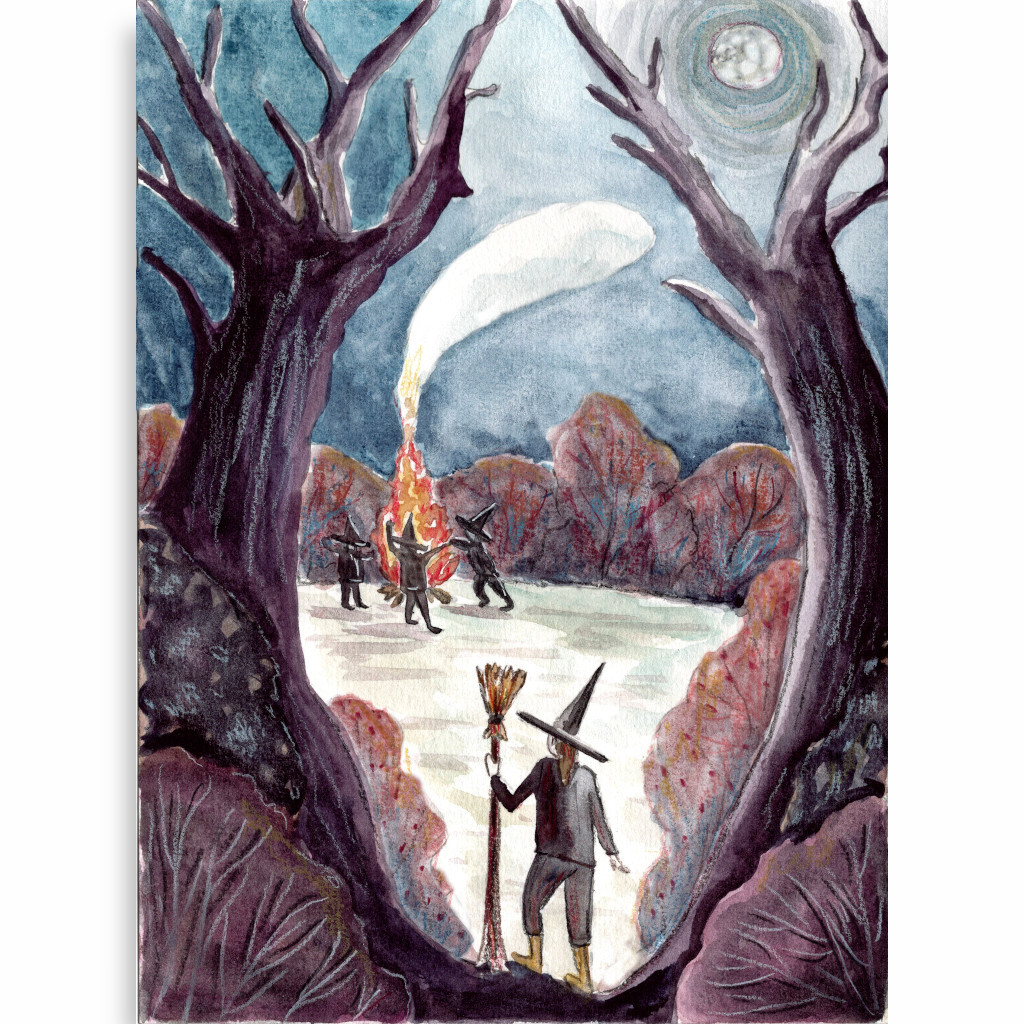
Painted with gouache and some watercolors, colored pencils.

This is my rule of thumb and process to choose DE and distro:
Using these rules, I've converted many laptops and computers for my family here in Greece, installing the most appropriate each time. The least powerful computer was my mom's old laptop, with 16 GB internal, 2 GB of RAM, 600 passmark points. As long as she's only opening 1 tab on Chrome (Debian/XFce), she fits in the 2 GB RAM without swapping (most of the time). I use Chrome and not Firefox for these older laptops because Chrome uses LESS memory than Firefox (there's an additional setting for it in the settings to help the matters more), and its youtube playback speed is much better too. I use firefox on more powerful computers, and it's my default too, just not for underpowered computers.
You need to make sure first that the MrChromebox.tech uefi firmware works with the chromebook model you are going to buy. Otherwise, you will just end up with an old chromebook.
1959 mechanical cameras. An electronic camera from 1969. Polaroid SX-70 from 1976. A calculator from 1988: FX85P from Casio. And then the Atari Lynx from 1991.
Traditional painting and illustration! While I now know that I never needed to spend more than $250 for professional-grade tools, I've spent about $18,000. As for sales in 3.5 years, they don't account for more than $800. For that I mostly blame Instagram where it's not possible to grow anymore organically and get an audience & potential customers. So I moved to the federated open source PixelFed now, if anyone's interested in my book-style illustration: https://pixelfed.social/EugeniaLoli
Also, as a word of advice for anyone who wants to also do illustration and don't want to do the same mistakes that I did. All you need is:
I included various mediums above in white color because highlights are king in illustration, and each provides a different look and feel, depending on the painting. Happy painting!









I like this, because I'm on a slow line here in Greece, and pretty much every time there's an update, the linux-firmware package is 600 MB, which is massive to download.