[-] arbilp3@aussie.zone 1 points 5 hours ago

Excellent! But let’s hope the lights don’t go out. Some landlords are ok with tenants creating veg patches. If you or one of your friends have a reasonable landlord, you might be able to start now and get the benefits sooner rather than later. Another alternative that I’ve read about is to see if there is an older person or someone who owns their place but can’t look after it properly and offer to grow vegs in their backyard. You get some, they get some, and the garden doesn’t go to waste.

30

"Australia’s native birds, wildlife, and even family pets are being poisoned by Second-generation Anticoagulant Rodenticides (SGARs), a dangerous class of chemicals which are still readily available in supermarkets and online. BirdLife Australia is calling for all SGARs to be removed from public sale and restricted to licensed professionals." https://birdlife.org.au/protect-aussie-birds-from-deadly-sgar-rat-poisons?srsltid=AfmBOop30sK2-YxDNedeluKzgdySjRZmGcjrBrAHWLhYqMp9S4RuoMSb

[-] arbilp3@aussie.zone 4 points 9 hours ago

Again, this is not just the case for Glossy BCs but for many species of our native birds for whom caring people have put up nest boxes given the growing destruction of older trees with natural hollows. Many of our bird and mammal species need hollows for shelter and reproduction. These hollows take upwards of one hundred years to form so there has been an increase of nest boxes being put up by individuals and organisations alike to ensure these species have a place in which to raise young. The problem is, however, that with global warming if nest boxes are not positioned correctly or constructed adequately eggs and chicks can overheat and die so we have to be very careful. We must not stop putting up nest boxes, just make sure that we do it properly wherever we are. Thank you for putting this topic up. I'll see if I can find another that provides more detail.

6
submitted 13 hours ago* (last edited 12 hours ago) by arbilp3@aussie.zone to c/environment@aussie.zone

Another great book,* Garden on the Verge* by Gayle Dallaston who could be seen as a 'verge activist' and has done much to increase the development of verges in Qld and elsewhere. The book covers just about all you need to know about creating a native verge or native strip in your street (including dealing with local council rules). Let's make our verges useful and beautiful AND save many native animals particularly our insects, lizards, birds and small mammals.

[-] arbilp3@aussie.zone 2 points 13 hours ago

😪 And this is no just happening in SA. It's happening all over the country, perhaps not to the same degree (yet) due to heatwaves and also their habitat being razed to make way for development. This has happened in the regional area where I live. It's so important that we speak up or all these unique Australian species which are diminishing in leaps and bounds in some areas but gradually though relentlessly in others. Let's focus on conservation as much as on renewable energy.

14
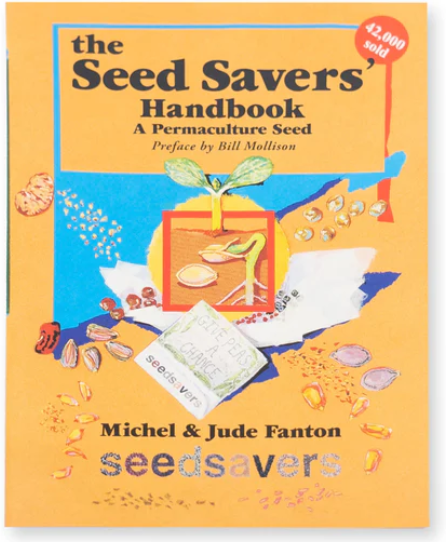
Seed Savers Handbook (thelemmy.club)

With the instability in the world and the rising price of food as more and more climate disasters affect our farming land, it is worth thinking about growing some of our own produce and/or starting or taking part in community gardens. Permaculture, biodiversity, organics and companion planting are the principles that underlie the contents of this book which is highly respected. It can be bought from various outlets.

[-] arbilp3@aussie.zone 1 points 1 day ago

Best to roll out your care for our native wildlife without which we have no natural pollination, maintaining soil and water health, just to start with, and without which we reduce our own physical and mental health.

6

Details "Across Australia, devastating bushfires, floods, a marine heatwave and enormous harmful algal bloom are affecting communities and wildlife. While natural disasters have long shaped this country, climate change is increasing their frequency and intensity, creating a more volatile future...

In this interactive webinar, experts will share practical insights on what the future holds and how Australia can strengthen disaster readiness and response - drawing on lessons from events such as bushfires and marine heatwaves - while also addressing the often-overlooked mental health impacts of these events. The webinar will include a Q&A session." https://events.teams.microsoft.com/event/22c8e5c4-ca2e-4603-b15d-01e44f15116f@fea0918e-fa13-41bf-affb-5f7ef42ce0c6

[-] arbilp3@aussie.zone 2 points 3 days ago

Damn what? Just do a search and you'll find many articles and resources on this topic, e.g. https://www.sgaonline.org.au/wp-content/uploads/2020/06/200603-SGA-Webinar-Habitat-Gardening-Notes.pdf

32
submitted 3 days ago* (last edited 3 days ago) by arbilp3@aussie.zone to c/environment@aussie.zone

With all the horrific climate-relate events happening in many parts of our country and the toll this is taking on our native animals and plants it is more important than ever (and as a small safeguard for the future) that we offer shelter and food sources in our gardens, backyards and verges.
"Whether you’re a seasoned gardener or just starting out, by the end of the course you’ll be equipped to design, establish and maintain a habitat garden to attract and support a diverse array of local birds, as we guide you through each step of the way." - https://birdlife.org.au/habitat-gardening-for-birds-online/

What ever you do to attract native birds will also attract other wildlife.

9
Recycling your old solar panels (www.solarcitizens.org.au)
7

Interesting article showing the need for greater research and investment in protecting them yet more money goes to honey bee research.

9
submitted 3 weeks ago* (last edited 3 weeks ago) by arbilp3@aussie.zone to c/environment@aussie.zone

If you live in an area impacted by natural disaster or you drive frequently near bushland or in regional / rural areas you can be part of wildlife rescue by carrying your own rescue kit. If the diagram makes you feel a bit overwhelmed, please ask what some of the items are for. For example, the line marking paint is to mark a dead female marsupial to show that her pouch has been checked for a joey.
Very young joeys with no fur, called pinkies, attached to teats should NOT be pulled off as it can do their mouths great damage. Most everyday people don't feel confident with rescuing pinkies so it's best if you call a trained, registered wildlife carer. Sometimes that's not possible and I'm happy to provide more details if you are interested. For older joeys and all other animals it's best to keep them warm, in a darkened container lined with towels, blankets, etc, and get them to a vet or a wildlife carer asap.

[-] arbilp3@aussie.zone 3 points 3 weeks ago

Excellent! 😂

[-] arbilp3@aussie.zone 3 points 3 weeks ago

Just a tad pedantic? 😂

30
20

🔥 🦎 🥺 WILDLIFE BUSHFIRE SAFETY TIPS 🥵 🦘 🔥

  • Take domestic animals with you if you evacuate, or keep pets indoors so that wildlife can flee safely through your property.
  • Leave out shallow bowls of water for animals and birds escaping fires, and add a few sticks or stones on one side to allow smaller animals to escape if they fall in.
  • Keep a cardboard box, gloves, personal protective equipment and a towel in the boot of your car in case you find an injured animal that you can safely contain without putting yourself in any danger.

If you own a swimming pool and live near where fires are burning, there are some simple things you can do to assist wildlife that may be seeking water:

  • Cover the pool edge to provide animals with a gripping surface.
  • Use thick rope or a bodyboard anchored outside the pool for exhausted animals to rest on.
  • Place bricks or large stones next to pool steps to help animals climb out easily.
  • Regularly check the pool, including the skimmer box, at least twice a day.

  • If you rescue an animal that has burns, do not attempt to feed it. Please wrap it loosely, ideally in 100% cotton fabric, place it in a ventilated box with a lid and keep it in a dark and quiet place whilst waiting for a rescuer or for transport to the nearest vet. Water should not be poured from a water bottle above the animal.
  • Keep all wildlife away from children and pets. Handling wild animals should only occur in the course of containing the animal to reduce additional stress.
  • Take injured animals to your nearest vet if you can safely, as they will require urgent vet assessment. Because fire conditions can change rapidly, please make sure you are informed about what is happening in your area before transporting an animal to care.
  • Do not approach injured snakes, flying-foxes & bats, large kangaroos, raptors or monitors, as these must be rescued by trained specialists.
  • No one should enter active or seemingly dormant fire grounds to rescue wildlife: leave this to trained, licensed wildlife carers who are authorised to work with first responder agencies. Do not hinder firefighters or emergency services during this time.
32

This is from a post from Minton Farm Animal Rescue Centre found on another platform. Please keep a look out.

"Another fledgling sulphur crest has arrived today with spinal injuries. We are currently being inundated with heat stressed wildlife. Birds and marsupials will throw out their babies when stressed so we are seeing juveniles thrown from nests and they sustain spinal injuries causing their legs to be paralyzed. Large parrot species, rosellas, magpies and lorikeets are suffering badly. Possums are going to ground under verandas in shopping centres trying to escape the heat. We are advising people to have sprinklers on under trees to cool koalas, possums and birds and putting out trays of water for them to drink and stand in. Thankyou. Bev Langley."

9
[-] arbilp3@aussie.zone 3 points 1 month ago

It was just our Bureau of Meteorology doing the forecast for the whole continent, so it's not an exciting video but see if you can make it work. Thank you. https://www.bom.gov.au/video/severe-weather-update-widespread-severe-heatwave-this-week

[-] arbilp3@aussie.zone 3 points 1 month ago

Thank you for the extended response. Bit by bit I'll learn about this new space (to me).

[-] arbilp3@aussie.zone 4 points 1 month ago* (last edited 1 month ago)

I don't have a smartphone so on my laptop it's not a mess at all. I put up the food for wildlife post up first because right now we are in the midst of major events (fires, floods, droughts, heatwaves) all happening at the same time. When it comes to wildlife, we can ALL take action (or not - this is really important too) to protect and increase (particularly our smallest pollinators and soil organisms without which we can not have a healthy world).
I'm new to these alternative social media sites and had never heard of the solarpunk one. Would you have a link?

[-] arbilp3@aussie.zone 5 points 1 month ago* (last edited 1 month ago)

Thank you. I intend to put up posts on actions we can take to help counter the challenges faced by our wildlife (plant and animal) as a result of what we're doing to the planet. Your trigger warning clarified it for me. I will include posts in the future on not only what we can do in our own patch but also on more 'political' actions we can take such as the signing of petitions if it's ok with the moderators. I've even come up with a motto 😆. Don't despair, REPAIR! 🦘

view more: next ›

arbilp3

0 post score
0 comment score
joined 1 month ago