top 50 comments

sorted by: hot top controversial new old
[–] 69 points 2 years ago

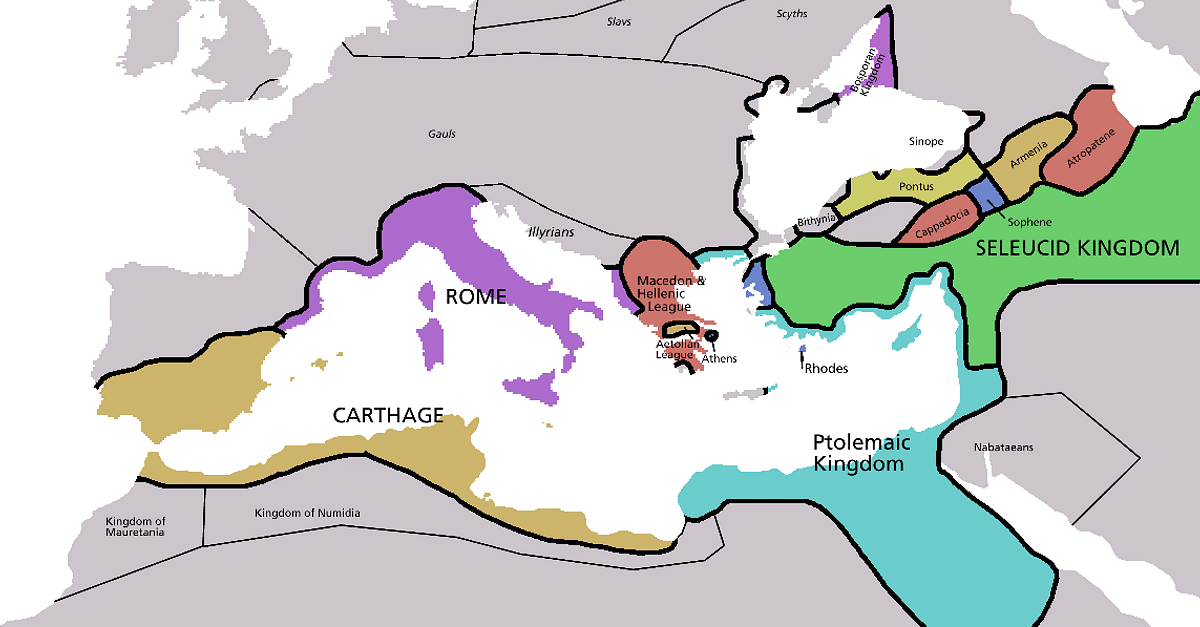
Ancient Germanic and Celtic tribes, famous for having no unjustifiable social hierarchies

Is this a joke? I thought anarchists were in agreement that anarchy is more than just statelessness. You may as well have posted a picture of Somalia c. 2010

  • source
  • [–] 59 points 2 years ago (2 children)
  • [–] 54 points 2 years ago (4 children)

    I hope it isn't sectarianism to say that I'm pretty sure Anarchists of today are not advocating for the small kingdoms and land barons of 220 BC Europe, but trying to build Anarchism based on the foundations of today.

  • source
  • hideshow 4 child comments
  • [–] 18 points 2 years ago (3 children)

    It is not sectarian and this post is bad but the discussion and comments are good so I'm leaving it up for now.

  • source
  • parent
  • hideshow 3 child comments
  • [–] 11 points 2 years ago (2 children)
  • [–] 48 points 2 years ago

    Small kingdoms ruled over by petty hereditary rulers

  • source
  • [–] 37 points 2 years ago (7 children)

    This is a good argument with a bad example. The Mediterranean in 220 BC was definitely not anarchist in most places, just because a society isn't a "state" does not mean it was an anarchist society where people were free to determine the course of their own lives. If you roll this map back ~3000 years then yes, a lot of Neolithic societies were pretty close to anarchist ideals, where there were no "leaders" except for specific situations based on expertise, there was mass migration and tons of villages all with their own pottery styles and even languages mere miles from one another, a kind of veritable explosion of different ways of life all made possible by the recent spread of farming. States have only been around for roughly 5,000 years or so. Humans are millions of years old.

  • source
  • hideshow 7 child comments
  • [–] 13 points 2 years ago (6 children)

    Homo sapie s are about 300 000 years old

  • source
  • parent
  • hideshow 6 child comments
  • [–] 4 points 2 years ago (5 children)

    phylogenetically "human" does not specifically refer to homo sapiens, but the 'homo' genus as a whole

  • source
  • parent
  • hideshow 5 child comments
  • [–] 11 points 2 years ago (1 child)

    So we're going to include the entire genus when discussing social formations? That seems uselessly broad

  • source
  • parent
  • hideshow 1 child comment
  • [–] 10 points 2 years ago

    Many different species of the homo genus adopted the same "technology set" of the Acheulean stone making packet, including Homo erectus, Neanderthals, and other early archaic human species. That's a widespread tool set that probably resulted in similar social formations across different human species, and we have lots of archeological evidence for this tool set. Given that such technology is shared across species, I don't think it's uselessly broad to assume there was also shared social formations.

  • source
  • parent
  • load more comments (1 reply)
  • [–] 37 points 2 years ago (2 children)

    Two grey sections are explicitly labeled as kingdoms.

  • source
  • hideshow 2 child comments
  • [–] 23 points 2 years ago

    using your own example, the statists are correct

  • source
  • [–] 19 points 2 years ago (14 children)

    graeber

    The dice are loaded. You can’t win. Because when the skeptic says “society,” what he really means is “state,” even “nation-state.” Since no one is going to produce an example of an anarchist state—that would be a contradiction in terms—what we’re really being asked for is an example of a modern nation-state with the government somehow plucked away: a situation in which the government of Canada, to take a random example, has been overthrown, or for some reason abolished itself, and no new one has taken its place but instead all former Canadian citizens begin to organize themselves into libertarian collectives. Obviously this would never be allowed to happen. In the past, whenever it even looked like it might—here, the Paris commune and Spanish civil war are excellent examples—the politicians running pretty much every state in the vicinity have been willing to put their differences on hold until those trying to bring such a situation about had been rounded up and shot.

    Fragments of an Anarchist Anthropology

  • source
  • hideshow 14 child comments
  • [–] 30 points 2 years ago (11 children)

    I think this is somewhat overblown. Aside from the regrettable instance of the Spanish Civil War Communists have generally supported Anarchist revolts, even if they've had (usually proto) states, as long as it isn't happening to them.

    Lenin thought the Anarchists were not ready and supported the revolt anyway. Mao, in what should be famous but isn't, was a strong supporter of the ill-fated KPAM, the largest and longest lasting Anarchist experiment ever, and supplied it as much as possible. Refugees from its destruction fled to the CPC and had their hands in developing large sections of Maoist doctrine. The Great Leap Forward, in particular, tried to incorporate many anarchist ideas.

  • source
  • parent
  • hideshow 11 child comments
  • [+] 12 points 2 years ago* (last edited 3 months ago) (10 children)
  • [–] 12 points 2 years ago* (9 children)

    Just, the whole May Days shitfest...Stalin should have openly supported the CNT/FAI as well as the Republican government (I can understand him not wanting to back POUM) and to hell with the protests of the PF government in France. The Anarchists should probably have been a bit more compromising especially about military integration.

  • source
  • parent
  • hideshow 9 child comments
  • [–] 14 points 2 years ago* (last edited 2 years ago) (8 children)

    Stalin should have openly supported the CNT/FAI as well as the Republican government

    I guess Stalin should've deployed Soviet armor and airforces to help fight Spanish fascism, maybe even send Soviet armaments and training cadres.

    Wait no he actually did that.

    The actual blame, yet again, rests on France and England chosing "neutrality" while the Italian and German fascists were running hog wild in Spain before Soviet intervention.

    There can be arguments made that there could've been more done by the Soviets, if we ignore historical conditions that the Soviets faced a very real possibility of a two-front war against the Japanese imperialists in Asia and the German-Italian fascists in Europe thus having to prepare for such events, yet insofar as I've seen the Soviets did the best they could in the limited capacity that they could afford.

  • source
  • parent
  • hideshow 8 child comments
  • [–] 4 points 2 years ago (3 children)

    I'm not talking about the material support which was good and cool and I am in fact more sympathetic to Stalin in this.

    But I think he does open himself to critique on his support of the USPC's position of compromise with bourgeois Republican forces and their political position of not establishing a DOtP and, more damningly, rolling back the collectivisation established by the CCMA before it's dissolution.

    It is my opinion that this lack of left unity fatally weakened Republican forces on a key front and moreover robbed us of a Western European Socialist experiment.

    There were good reasons for these actions, but in hindsight, I feel left unity would have been more productive.

  • source
  • parent
  • hideshow 3 child comments
  • load more comments (3 replies)
  • [–] 4 points 2 years ago (1 child)

    I guess Stalin should've deployed Soviet armor and airforces to help fight Spanish fascism, maybe even send Soviet armaments and training cadres.

    https://en.wikipedia.org/wiki/List_of_tanks_in_the_Spanish_Civil_War#Tanks_supplied_by_foreign_powers

  • source
  • parent
  • hideshow 1 child comment
  • [–] 17 points 2 years ago* (last edited 2 years ago) (4 children)

    advocating for primitive european tribalism in which everyone disabled will die and slavery was okay

  • source
  • hideshow 4 child comments
  • [–] 4 points 2 years ago (3 children)

    This is garbage. These societies likley treated the disabled with more dignity than we know today. There is evidence of people living with severe disabilities and living a full live. It is just developmentalist chuavanism to make the claims you assert.

  • source
  • parent
  • hideshow 3 child comments
  • [–] 9 points 2 years ago (2 children)

    I was trying to reference access to far less developed medical technology, not that they were just murdering disabled people. Also uh the slavery is a point you didn't touch on.

  • source
  • parent
  • hideshow 2 child comments
  • [–] 15 points 2 years ago

    Is the white shit fog of war?

  • source
  • [–] 14 points 2 years ago
    [+] 9 points 2 years ago* (last edited 2 years ago) (11 children)
  • [+] 40 points 2 years ago* (last edited 1 year ago) (2 children)
  • [–] 32 points 2 years ago

    At least by the Marxist definition, these societies virtually all did have states, they were just very small states. They enforced the oppression of women by men (patriarchy) along with other class relations.

  • source
  • parent
  • [–] 7 points 2 years ago

    not having a state isn't the same thing as anarchism. anarchism is an actual and fairly refined philosophy that has to account for material conditions, social and economic reality and shape them with anarchist thought. it isn't just when no state.

    yall are giving em toooo much credit but yeah. The marxist leninists are the best anarchists at the end of the day.

  • source
  • parent
  • [–] 23 points 2 years ago (7 children)

    Patriarchal* agrarian societies were brutal, though, and have nothing to do with anarchism if anarchism is worth anything. The "forced to barter bc no money" is a myth made up by capitalists though, since all of these societies were either self-sufficient or simply pillaged from other societies. The telling in which theses societies were reliant on trade between each other is so silly it doesn't even rise to the level of Adam Smith's "barter myth," which itself is discredited.

    *in the old sense of men literally ruling as a rule, with all the women being in a condition not meaningfully distinguishable from slavery.

  • source
  • parent
  • hideshow 7 child comments
  • [–] 13 points 2 years ago (6 children)

    since all of these societies were either self-sufficient or simply pillaged from other societies. The telling in which theses societies were reliant on trade between each other is so silly it doesn't even rise to the level of Adam Smith's "barter myth," which itself is discredited

    the hell are you talking about, trade is very well documented in the medditerrean since the bronze age

  • source
  • parent
  • hideshow 6 child comments
  • [–] 6 points 2 years ago (4 children)

    I'm talking about the tribal societies

  • source
  • parent
  • hideshow 4 child comments
  • [–] 17 points 2 years ago (1 child)

    Most societies for thousands of years did not barter. Bartering is a myth, but that does not mean trade itself is a myth. Most had some form of money and accounting. The complexity of ancient civilizations should not be underestimated.

  • source
  • parent
  • hideshow 1 child comment
  • [–] 6 points 2 years ago

    Trade is arguably a lot earlier, too. In the Mediterranean region obsidian (from volcanic regions) was highly prized during the neolithic for making sharp blades, and even though there are only a few sources of it in the entire region obsidian blades can be found all over the Med. Speaks to some kind of trading network operating during the neolithic, if not earlier.

  • source
  • parent
  • [+] 4 points 2 years ago
    [removed by mod]
  • source
  • load more comments
    view more: next ›