5
The Strategic Imperative of Expanding Domestic Demand
(en.qstheory.cn)
Yep, it's self a destructive.
Honestly not sure, the US seems to be one of the only countries to think decapitation strikes work. That's why they do them so much, and Trump might believe it too. Then again, we know he's hamming up how unreasonable Iran is (they have been incredibly restrained), so you might be right!
The "Iron Rule of Oligarchy" was created by an Italian socialist-turned-fascist (literally went from German SPD to eventually Italian fascism). It isn't a real law, it's an idealist argument against democratic institutions.
A Marxist saying that class is more important than idealist notions of power is not at all contradictory.
Once you get hit with the ol’ tankie wall of links, consider clicking on some of them. It’s easy to see someone posting a mess of links in response to you as an argumentation strategy, but it’s actually an education strategy.
As someone guilty of this, I actually disagree. The wall of links is more for argumentation, as you want as much supporting evidence as possible. For education, the person you're talking to has to want to learn, in which case fewer, specific links tends to be remarkably more effective.
Now, there's always hope that onlookers will see and click the many links, especially ones they are curious about. However, when there are many in a comment, the hope generally is in persuading the audience to agree with me, which then turns to them either checking the links directly (always fantastic) or deliberately trying to educate themselves.
Marxist pedagogy is an understudied area I'm trying to work on improving in my own life.
It's actually pretty accurate, lmao. The meme is saying dark green is the best, not light green, though RSF treats light green as the best. That's the source of the misalignment. The meme puts Canada and the Nordics at the top, same as RSF (generally).
All clocks are "broken," then. They all serve their own interests, that means we have to identify what they are to figure out how to read them. The fact that Ukrainians are struggling, many are fighting back against conscription vans, etc. is both convenient to Russia and actually true. That doesn't mean everything RT says is correct 100%, but it does mean that not everything pro-Russia or anti-Ukraine from Russian media is wrong.
For example, I know BBC frequently outright lies and fabricates information about China. This is well-documented, they even add gray or yellow filters to video to make it seem scarier. That doesn't mean they are never correct.
As much as BBC is pure British propaganda, sure. "Press freedom indexes" generally measure how privatized the press is, it doesn't actually measure how truthful the press is. Russian press is fully capable of presenting true accounts.
I don't think it would change much, considering decapitation strikes rarely change the material base. JD Vance would carry on as usual. That being said, it would be enormously funny and I would bust out the crab rave.
No, invading Iran has been a decades long goal and project for the US.
I don't really think it's a secret that this is a Russian POV, that doesn't mean it's worthless.
It's actually rather tame as far as pictures of Statesian war crimes go.
cross-posted from: https://lemmy.ml/post/45041279
Stolen from r/Marxism_Memes

cross-posted from: https://lemmy.ml/post/45041279
Stolen from r/Marxism_Memes
cross-posted from: https://lemmy.ml/post/43729189
Stolen from r/marxism_memes
1936: The Rights the U.S. Still Won't Guarantee - Lady Izdihar (3 min 51 sex)
Constitution of the Soviet Union - 8th All-Union Congress of Soviets
This Soviet World / (Audiobook) - Anna Louise Strong (1936)

cross-posted from: https://lemmy.ml/post/43730786
Often times, Marxists use the term "material conditions," and "dialectics." What does this mean? Why do Marxists care so much about material conditions? The answer is that Marxists seek materialist explanations for observed processes as opposed to idealist, and do so dialectically, as opposed to metaphysically. In other words, Marxists apply dialectical analysis to find materialist explanations for phenomena. Dialectical materialism is the world outlook of the proletariat as a class, and serves as the most vital ideological tool for overthrowing capitalism.
In order to understand dialectical materialism, we need to understand its component parts, materialism and dialectics, and their historical predecessors, idealism and metaphysics.
Idealism is, in short, to put ideas prior to matter. Idealism has been used by feudal lords to justify their position above the serfs, forming the ideological basis for feudalism. The 3 major assertions of idealism are as follows:
Idealism asserts that the material world is dependent on the spiritual
Idealism asserts that spirit, or mind, or idea, can and does exist in separation from matter. (The most extreme form of this assertion is subjective idealism, which asserts that matter does not exist at all but is pure illusion.)
Idealism asserts that there exists a realm of the mysterious and unknowable, "above," or "beyond," or "behind" what can be ascertained and known by perception, experience, and science.
Common idealist arguments are appealing to a supernatural "human nature," or "good vs. evil" explanations for processes. Materialism arose over time, as people grew to understand the world more deeply, and especially as a tool to overthrow the feudal aristocracy that justified its existence via the church. In other words, materialism rose to help the bourgeoisie. The 3 basic teachings of materialism as counterposed to idealism are:
Materialism teaches that the world is by its very nature material, that everything which exists comes into being on the basis of material causes, arises and develops in accordance with the laws of motion of matter.
Materialism teaches that matter is objective reality existing outside and independent of the mind; and that far from the mental existing in separation from the material, everything mental or spiritual is a product of material processes.
Materialism teaches that the world and its laws are fully knowable, and that while much may not be known there is nothing which is by nature unknowable.
The type of materialism that overthrew the feudal lords was still underdeveloped, and metaphysical. The bourgeoisie needed an explanation for why the feudal lords were illegitimate, but still needed to support their own static, permanent rule. This was called mechanistic materialism, for the bourgeois scientists saw the world as a grand machine repeating simple motions forever. Mechanistic materialism, therefore, makes certain dogmatic assumptions:
That the world consists of permanent and stable things or particles, with definite, fixed properties;
That the particles of matter are by nature inert and no change ever happens except by the action of some external cause;
That all motion, all change can be reduced to the mechanical interaction of the separate particles of matter;
That each particle has its own fixed nature independent of everything else, and that the relationships between separate things are merely external relationships.
This, of course, has proven false. History did not end with the dissolution of the USSR, despite what modern mechanistic materialists claim. Mechanistic materialism relies on metaphysics, seeing everything as a static abstraction, devoid of its context. It has no explanation for how new qualities emerge, and ultimately fell to idealism to explain the "first mover," ie "God." Dialectical materialism holds instead:
The world is not a complex of things but of processes;
That matter is inseperable from motion;
That the motion of matter comprehends an infinite diversity of forms which arise one from another and pass into one another;
That things exist not as separate individual units but in essential relation and interconnection.
This became remarkable for the proletariat, as it sees nothing as static, and therefore marks the eventual downfall of the bourgeoisie. Putting it all together, we get the following:
- Dialectical materialism understands the world, not as a complex of ready-made things, but as a complex of processes, in which all things go through an uninterrupted change of coming into being and passing away.
In other words, when analyzing events and contextualizing them, we must always viee them as a struggle between the rising and the falling, the old and the new, for example the concentration of capital in markets and the rise in socialize labor.
- Dialectical materialism considers that matter is always in motion, that motion is the mode of existence of matter, so that there can no more be matter without motion than motion without matter. Motion does not have to be impressed upon matter by some outside force, but above all it is necessary to look for the inner impulses of development, the self-motion, inherent in all processes.
In other words, all movement is a result of contradiction. Your foot presses on the Earth, and the Earth presses back on you.
- Dialectical materialism understands the motion of matter as comprehending all changes and processes in the universe, from mere changes of place right to thinking. It recognizes, therefore, the infinite diversity of the forms of motion of matter from the simple to the complex, from the lower to the higher.
In other words, dialectical materialism recognizes that development exists as a change of quantity into quality. Addition or subtraction gives way to qualitative change. A balloon is filled with air, until at a given point it pops due to pressure buildup. Water goes from liquid to gas at its boiling point, and back into liquid when cooling down to said point.
- Dialectical materialism considers that, in the manifold processes taking place in the universe, things come into being, change and pass out of being, not as separate individual units, but in essential relation and interconnection, so that they cannot be understood each separately and by itself but only in their relation and interconnection.
In other words, everything is connected, and must be analyzed in context to truly understand it. A worker isn't just an individual, but instead part of a social class of many workers. Wages are not something invented brand new every time, but instead are set by societal standards, controlled by the ruling capitalist class.
Karl Marx created dialectical materialism by turning Hegel's idealist dialectic into a materialist one. Then, he applied it to the progression of society, creating historical matetialism. By analyzing social structures and progress as a dialectical process based in materialism, we can learn from history and analyze where it's going. This is scientific socialism in progress.
If you keep these in mind, you can do your own dialectical materialist analysis. Always seek explanations based on the material, not the ideal, and always do so by contextualizing the processes, analyzing their contradictions, the unity and struggle of opposing tendencies. Quantitative changes lead to qualitative development, and progresses as a result of the conflict or struggle of opposite tendencies. There's much more to dialectical materialism, but this should help serve as a simple overview!

cross-posted from: https://lemmy.ml/post/43732471
Rest in peace, comrade.
For those who haven't read or seen Parenti speak, I highly recommend both the "Yellow Parenti" Speech and Blackshirts and Reds | Audiobook both litanies against anti-communist mythos, an examination of the real successes and struggles in the USSR, and an analysis of fascism.
Michael Parenti's Inventing Reality: The Politics of News Media has always been better than Manufacturing Consent. Considering Chomsky's appearance in the Epstein files as being good friends with billionaire pedophiles, On Chomsky is also a fantastic read for why the left should reject him.
Parenti has turned countless westerners into Marxists, and was vital in my own journey to the left. May we carry on his legacy.

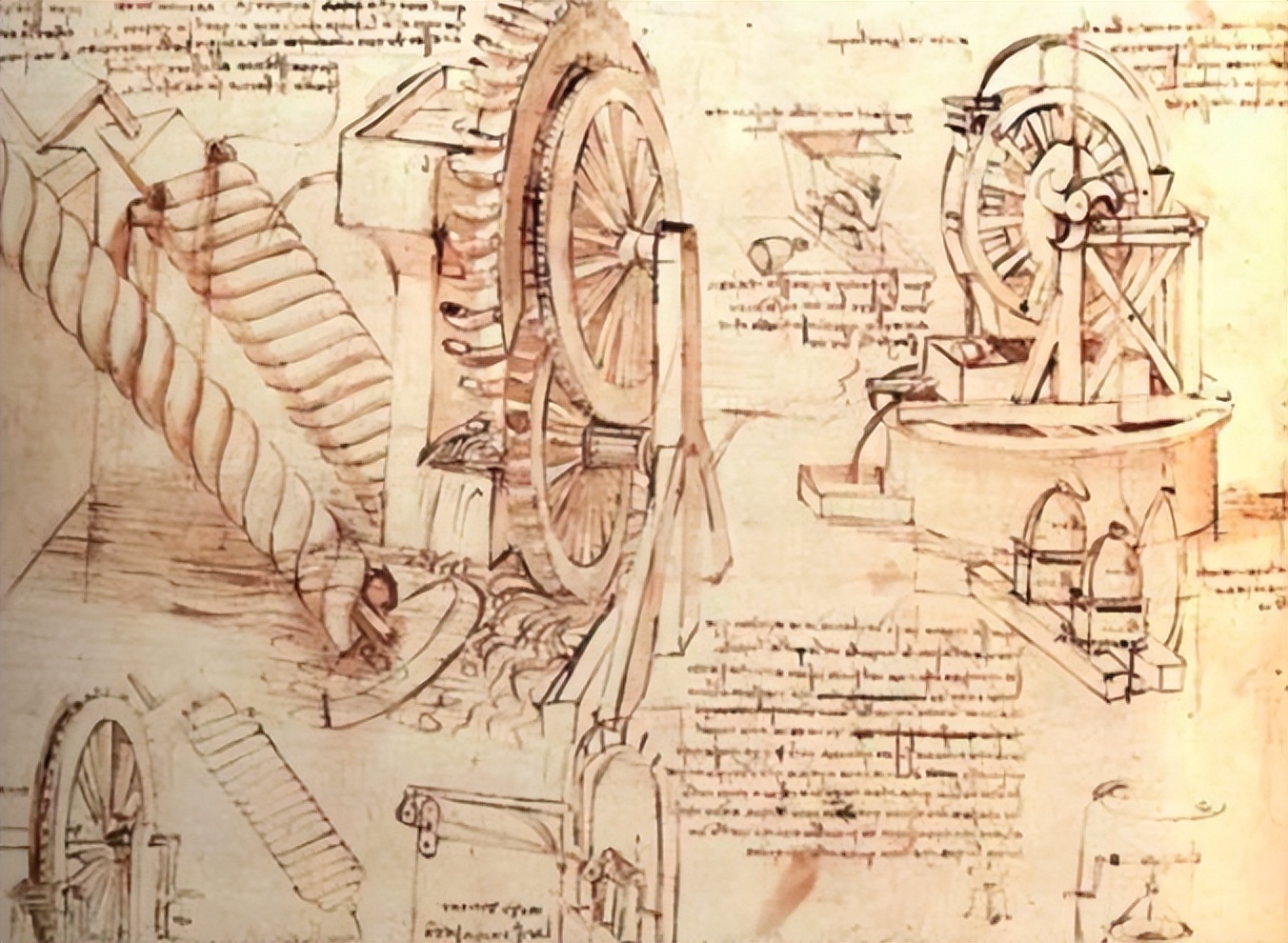
Thumbnail is Marx's manuscript for The German Ideology. Summary below is a compilation of my notes I wrote when reading Materialism and the Dialectical Method by Maurice Cornforth, along with general knowledge from reading various Marxist authors.
Often times, Marxists use the term "material conditions," and "dialectics." What does this mean? Why do Marxists care so much about material conditions? The answer is that Marxists seek materialist explanations for observed processes as opposed to idealist, and do so dialectically, as opposed to metaphysically. In other words, Marxists apply dialectical analysis to find materialist explanations for phenomena. Dialectical materialism is the world outlook of the proletariat as a class, and serves as the most vital ideological tool for overthrowing capitalism.
In order to understand dialectical materialism, we need to understand its component parts, materialism and dialectics, and their historical predecessors, idealism and metaphysics.

Idealism is, in short, to put ideas prior to matter. Idealism has been used by feudal lords to justify their position above the serfs, forming the ideological basis for feudalism. The 3 major assertions of idealism are as follows:
Idealism asserts that the material world is dependent on the spiritual
Idealism asserts that spirit, or mind, or idea, can and does exist in separation from matter. (The most extreme form of this assertion is subjective idealism, which asserts that matter does not exist at all but is pure illusion.)
Idealism asserts that there exists a realm of the mysterious and unknowable, "above," or "beyond," or "behind" what can be ascertained and known by perception, experience, and science.
Common idealist arguments are appealing to a supernatural "human nature," or "good vs. evil" explanations for processes. Materialism arose over time, as people grew to understand the world more deeply, and especially as a tool to overthrow the feudal aristocracy that justified its existence via the church. In other words, materialism rose to help the bourgeoisie. The 3 basic teachings of materialism as counterposed to idealism are:
Materialism teaches that the world is by its very nature material, that everything which exists comes into being on the basis of material causes, arises and develops in accordance with the laws of motion of matter.
Materialism teaches that matter is objective reality existing outside and independent of the mind; and that far from the mental existing in separation from the material, everything mental or spiritual is a product of material processes.
Materialism teaches that the world and its laws are fully knowable, and that while much may not be known there is nothing which is by nature unknowable.

The type of materialism that overthrew the feudal lords was still underdeveloped, and metaphysical. The bourgeoisie needed an explanation for why the feudal lords were illegitimate, but still needed to support their own static, permanent rule. This was called mechanistic materialism, for the bourgeois scientists saw the world as a grand machine repeating simple motions forever. Mechanistic materialism, therefore, makes certain dogmatic assumptions:
That the world consists of permanent and stable things or particles, with definite, fixed properties;
That the particles of matter are by nature inert and no change ever happens except by the action of some external cause;
That all motion, all change can be reduced to the mechanical interaction of the separate particles of matter;
That each particle has its own fixed nature independent of everything else, and that the relationships between separate things are merely external relationships.

This, of course, has proven false. History did not end with the dissolution of the USSR, despite what modern mechanistic materialists claim. Mechanistic materialism relies on metaphysics, seeing everything as a static abstraction, devoid of its context. It has no explanation for how new qualities emerge, and ultimately fell to idealism to explain the "first mover," ie "God." Dialectical materialism holds instead:
The world is not a complex of things but of processes;
That matter is inseperable from motion;
That the motion of matter comprehends an infinite diversity of forms which arise one from another and pass into one another;
That things exist not as separate individual units but in essential relation and interconnection.

This became remarkable for the proletariat, as it sees nothing as static, and therefore marks the eventual downfall of the bourgeoisie. Putting it all together, we get the following:
In other words, when analyzing events and contextualizing them, we must always viee them as a struggle between the rising and the falling, the old and the new, for example the concentration of capital in markets and the rise in socialize labor.

In other words, all movement is a result of contradiction. Your foot presses on the Earth, and the Earth presses back on you.

In other words, dialectical materialism recognizes that development exists as a change of quantity into quality. Addition or subtraction gives way to qualitative change. A balloon is filled with air, until at a given point it pops due to pressure buildup. Water goes from liquid to gas at its boiling point, and back into liquid when cooling down to said point.

In other words, everything is connected, and must be analyzed in context to truly understand it. A worker isn't just an individual, but instead part of a social class of many workers. Wages are not something invented brand new every time, but instead are set by societal standards, controlled by the ruling capitalist class.

Karl Marx created dialectical materialism by turning Hegel's idealist dialectic into a materialist one. Then, he applied it to the progression of society, creating historical materialism. By analyzing social structures and progress as a dialectical process based in materialism, we can learn from history and analyze where it's going. This is scientific socialism in progress. Human thought is shaped by our social experience, forming class consciousness and ideology. How we produce and distribute determines our ways of thinking.
Socialism and communism also have their own contradictions as well, and just because we progress on to socialism does not mean we cannot fall back to capitalism. The dialectical materialist world outlook understands that nothing is static, and there is always new contradiction and new movement from that.
If you keep these in mind, you can do your own dialectical materialist analysis. Always seek explanations based on the material, not the ideal, and always do so by contextualizing the processes, analyzing their contradictions, the unity and struggle of opposing tendencies. Quantitative changes lead to qualitative development, and progresses as a result of the conflict or struggle of opposite tendencies. There's much more to dialectical materialism, but this should help serve as a simple overview!
cross-posted from: https://lemmy.ml/post/43729189
Stolen from r/marxism_memes
1936: The Rights the U.S. Still Won't Guarantee - Lady Izdihar (3 min 51 sex)
Constitution of the Soviet Union - 8th All-Union Congress of Soviets
This Soviet World / (Audiobook) - Anna Louise Strong (1936)
cross-posted from: https://lemmy.ml/post/43729189
Stolen from r/marxism_memes
1936: The Rights the U.S. Still Won't Guarantee - Lady Izdihar (3 min 51 sex)
Constitution of the Soviet Union - 8th All-Union Congress of Soviets
This Soviet World / (Audiobook) - Anna Louise Strong (1936)
cross-posted from: https://lemmy.ml/post/43728612
Stolen from r/Marxism_memes

cross-posted from: https://lemmy.ml/post/43728612
Stolen from r/Marxism_memes
cross-posted from: https://lemmy.ml/post/43726548
Stolen from r/Marxism_memes

Nah, accelerationism would be supporting the DNC. Accelerationism isn't "ruin everything," it's a strategy that says that if capitalism continuing results in crisis, we should have the most competent managers of empire in the front seat. This accelerates capital accumulation and crisis. I also said I am not in favor of the "ruin everything" tactic either.
That's why I am a revolutionary, and I don't support the DNC nor GOP. I told you why I wouldn't vote for the GOP nor DNC. Sacrificing minority groups is unnacceptable, and climate change is an ever-present danger. That's why revolution is necessary.
You're probably referencing the Nazi bar that stalks communists at the end there, for what reason I don't know.