1385
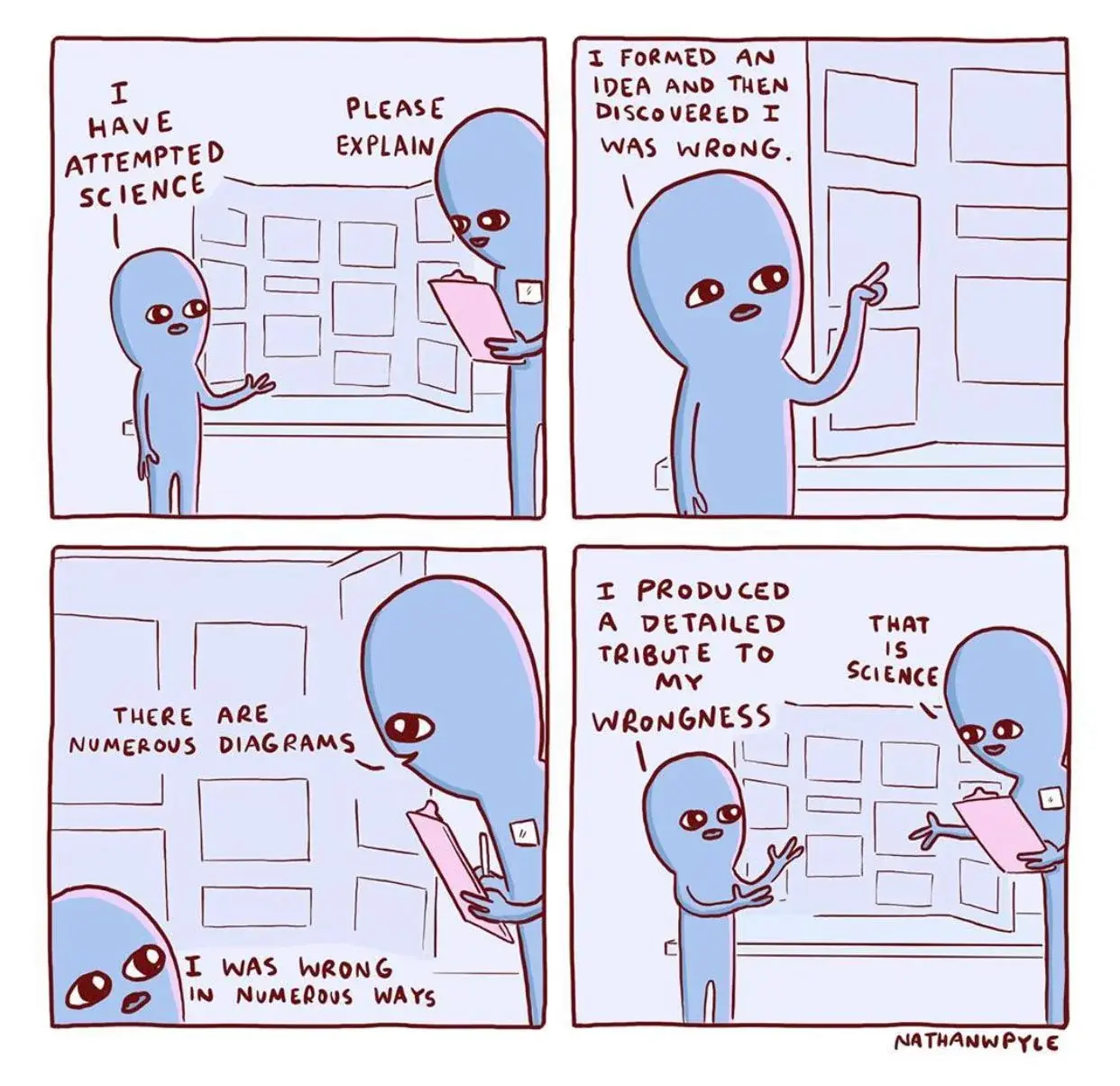
I have attempted science.
(mander.xyz)
A place for majestic STEMLORD peacocking, as well as memes about the realities of working in a lab.

Meta Post Tags
Rules
If you are here asking: "Is this a science meme?"
Probably, yes. We use the Dawkins definition of meme: a replicating idea, not just an image macro with a fact on it. A good post here doesn't need to teach you something. It needs to make you ask something: who, what, where, when, and especially why or how.
Science isn't a filing cabinet of facts, it's a conversation. For example, a photo of an eel or other localized wildlife counts because most people never see one, and wonder is the first step of inquiry. A car meme counts if it makes you curious about what's under the bonnet. If you want to talk about something you noticed in the world, chances are someone else wants to talk about it too.
We moderate for vibe, not category. Pruning is light, especially where a post creates interesting discussion. Experimenting is encouraged.
See the pinned paper on Shitposting as Public Pedagogy if you want the academic case for why this works.
That's ideally science but you're gonna have low-impact papers if you don't do the "look at this new thing I 'proved'" song and dance. Publishing culture and self-promotion in academia make everything worse.
Incidentally, I know someone that tried publishing a paper to explain why a very common method actually led to bad results very often. It showed methodology and had verification from another group using independent materials. The paper was rejected because, "everyone knows that method X works great you must've done something wrong".
There's a lot of myth-making in how science works, following prescriptive announcements of "the scientific method". In reality it's just humans trying things out and using "good enough" ideas regardless of how well they are investigated. If the ideas are truly 100% wrong in a way that precludes further work, they'll get discarded. But wrong ideas can still persist for decades or more so long as they don't disrupt other things working well enough. That methodology earlier was "good enough" despite major flaws so the academy said, "it's actually 100% right" right up until they abandoned the method (which they did for unrelated reasons).
Like Carl Sagan wrote, we should probably teach how messy science can be to show why it is the best method. Despite setbacks, human nature, persisting wrong ideas, and whatever else, the entire process of science eventually overcomes and on average, we inch ever closer to truth.
The anti-science people make arguments that clearly show they have neither a concept of how science works nor a sufficiently flexible mind to accommodate (let alone seek) updated information.
I am just a student and this makes me worry. How the heck can be scientific papers evaluated by some publishers? How should we make this paper and give it to publishers for the citations only and publishers make money off it? What about the unpublished but correct paper? What does publishing has to do anything with science and scientific growth? I can't use a sentence from my older paper again in the new one and they accuse it for plagarism?(Please keep bs copyright laws away in science because that could possibly hurt developement of science itself(i guess))
Sorry i'm just stressed at this thing
Publishers generally use free labor from professors and postdocs to do peer review. The only work the publisher really does is basic editing and marketing (to foster "prestige", really just building demand to publish there).
The issue of the actual epistemology of science in practice is much more widespread and is a wider social issue rooted in the structure of the academy, particularly the way it promotes competition and has a marriage with practice that brings pressures of capitalism to bear on it.
Yeah I think we need some more detail chief. Ive never heard of a paper being rejected because "everyone knows X" ever in my life...
With what you said all I am hearing is someone saying "here is why we live on a pancake earth with incredible detail and multiple homebrew tests/sources to back it up"