view the rest of the comments
Mildly Infuriating
Home to all things "Mildly Infuriating" Not infuriating, not enraging. Mildly Infuriating. All posts should reflect that. Please post actually infuriating posts to !actually_infuriating@lemmy.world
I want my day mildly ruined, not completely ruined. Please remember to refrain from reposting old content. If you post a post from reddit it is good practice to include a link and credit the OP. I'm not about stealing content!
It's just good to get something in this website for casual viewing whilst refreshing original content is added overtime.
Rules:
1. Be Respectful
Refrain from using harmful language pertaining to a protected characteristic: e.g. race, gender, sexuality, disability or religion.
Refrain from being argumentative when responding or commenting to posts/replies. Personal attacks are not welcome here.
...
2. No Illegal Content
Content that violates the law. Any post/comment found to be in breach of common law will be removed and given to the authorities if required.
That means: -No promoting violence/threats against any individuals
-No CSA content or Revenge Porn
-No sharing private/personal information (Doxxing)
...
3. No Spam
Posting the same post, no matter the intent is against the rules.
-If you have posted content, please refrain from re-posting said content within this community.
-Do not spam posts with intent to harass, annoy, bully, advertise, scam or harm this community.
-No posting Scams/Advertisements/Phishing Links/IP Grabbers
-No Bots, Bots will be banned from the community.
...
4. No Porn/Explicit
Content
-Do not post explicit content. Lemmy.World is not the instance for NSFW content.
-Do not post Gore or Shock Content.
...
5. No Enciting Harassment,
Brigading, Doxxing or Witch Hunts
-Do not Brigade other Communities
-No calls to action against other communities/users within Lemmy or outside of Lemmy.
-No Witch Hunts against users/communities.
-No content that harasses members within or outside of the community.
...
6. NSFW should be behind NSFW tags.
-Content that is NSFW should be behind NSFW tags.
-Content that might be distressing should be kept behind NSFW tags.
...
7. Content should match the theme of this community.
-Content should be Mildly infuriating. If your post better fits !Actually_Infuriating put it there.
-The Community !actuallyinfuriating has been born so that's where you should post the big stuff.
...
8. Reposting of Reddit content is permitted, but attribution is not required in any way. No links to Reddit in post body
-If you would like to provide a source link, do so in the comments but not in the post body.
...
...
Also check out:
Partnered Communities:
Reach out to LillianVS for inclusion on the sidebar.
All communities included on the sidebar are to be made in compliance with the instance rules.
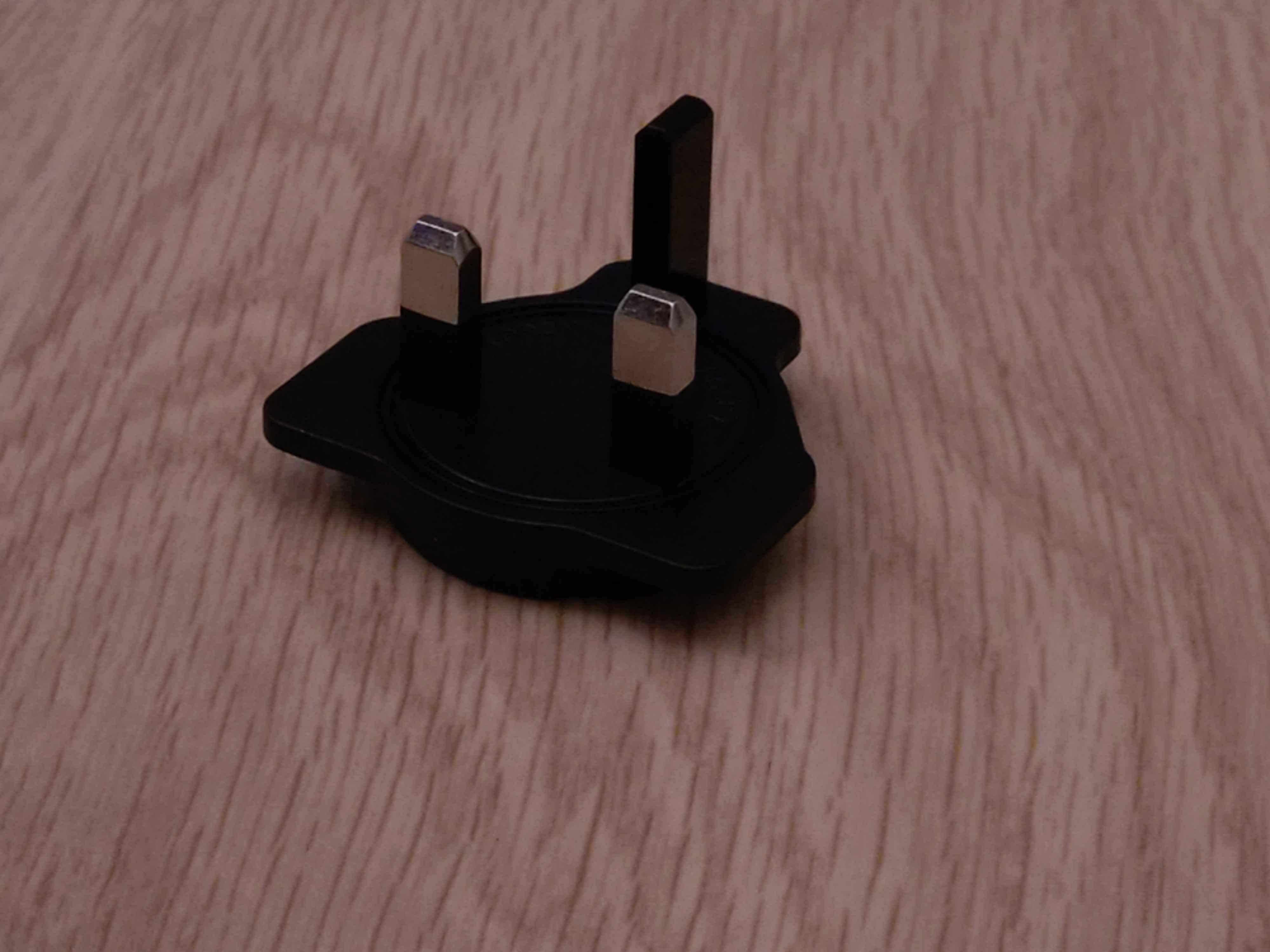
I happen to have (several) 30A 240V circuits in my house and shop. The one I was using tonight has an arc welder plugged into it. Under the applicable electric code in the US, this circuit has to be dedicated. It can serve only one outlet. If I want another 30A outlet, I have to wire a completely separate, dedicated circuit for that outlet. I can only install such outlets in certain places within my home and shop.
That is the standard here in North America. The standard for EU, Japan, and the rest of the world is comparable. North America (And possibly Japan?) has an additional feature in that our 240V circuits are split-phase: They expose the user to a maximum 120V fault to ground. To experience a 240V fault, you have to be ungrounded and simultaneously contact not just one but two opposing hot phases.
The UK daisy chains single-phase, 240V to ground, 30A outlets throughout their homes. They put circuits suitable for arc welding in their bathrooms. They use circuits suitable for arc welding for their alarm clocks and hair dryers.
The UK requirements on 30A circuits and outlets are far less restrictive than the requirements on 30A circuits and outlets in the rest of the world. The UK uses substandard household circuits, necessitating their over-engineered plug.
The UK could have deprecated their 30A circuits in favor of the 16A circuits in use in Europe. They elected to keep their substandard, arc-welder-ready outlets and over-engineer a plug instead.
Of course it is. That's not the issue under discussion. The issue under discussion is "Why does the UK use overengineered plugs not needed in the rest of the world?"
And the answer is because their household circuits are radically substandard relative to those in use in the rest of the world. Without those special plugs, UK circuits would be extraordinarily dangerous.
People die in fires.
Not the topic of discussion. Again, the topic is "Why does the UK use overengineered plugs not needed in the rest of the world?" To understand that, we consider the hypothetical use of non-fused plugs on UK circuits, compared to non-fused plugs on global circuits. When we consider that hypothetical, we realize the exceptional danger posed by that condition, and we identify the need for those plugs.
Because that is not the topic of discussion. The topic of discussion is "Why does the UK use overengineered plugs not needed in the rest of the world?" The danger is not the plugs. The danger is the household circuitry. The plugs are the safety device grafted on to restore the degree of safety the rest of the world enjoys without those special plugs. Of course the plugs are safe. The danger arises when we hypothetically apply the world's non-fused-plug standard to UK household circuits, in order to understand the necessity of those plugs.
Projection.
Indeed, we do. We have detachable appliance power cords built to be plugged into a 15/20A circuit, that connect to devices labeled to 7A, so the cord is similarly labeled. But, that cord is built with at least 18AWG wire, which is normally rated to carry 16A, not 7A. And it doesn't have our normal NEMA 5-15 socket on the downstream end, so it cannot be used as an "extension" cord.
Other than the fact that we don't actually have extension cords labeled (or rated) to carry 7A at all. Or that three 1500W space heaters will draw 37.5A @ 120V, which will easily trip our 15/20A breakers.
We could physically plug them into an extension cord labeled 10A, the lowest rating I've ever seen. But that cord will built with at least 16AWG wire, which is rated to carry 22A in chassis wiring. (It will also be very short.)
The key flaw in your argument is your failure to understand that the world does, indeed, protect its devices with household breakers. We do, indeed, build our devices to carry the full current that our household wiring could provide at an outlet, even where the device itself is intended to draw only a tiny fraction of that current. This is one of the most basic standards in use by UL, CSA, CE, and every other electrical certification body on the planet.
I know you understand the reason behind this standard. What I don't know is why you think the rest of the world doesn't understand it, and hasn't codified it.
Again, the topic of discussion is "Why does the UK need these plugs, when the rest of the world doesn't?"
To understand that topic, we do, actually, need to consider the dangers of the UK using the kind of plugs used in the rest of the world.
"Unsafe" is not the correct term. "Unsafe" implies an absolute condition. The UK system is not "unsafe", and I have not argued that it is "unsafe".
"Less safe" is the more accurate description. "Less safe" implies a relative condition. The UK system is "safe enough", even though their household wiring - the wiring between the breaker and the outlet - is significantly "less safe" than household wiring around the world.
A fault between the breaker and the outlet in most of the world develops 2000-4000 watts before a breaker can be expected to trip. Japan's 20A @ 100V is on the lower end; EU's 16A @ 240V is on the higher end of that scale. 2000-4000 watts arcing at a faulty terminal. 2000-4000 watts that can only be dissipated by various potentially flammable building materials around the faulty device.
In the UK, it's not 2000-4000. It's 7200 watts. A similar fault can deliver substantially more energy to those flammable building materials, increasing the risk of fire.
North America mitigates such risks in its 7200 watt (60A @ 120V, 30A @ 240V) circuits by minimizing the number of connections; the number of places where a fault can potentially develop. We don't allow multiple outlets: these circuits must be dedicated to a single, special-purpose outlet only. Europe, Japan, and the rest of the world have similar requirements for such circuits. The UK goes ahead and daisychains their 7200W circuits throughout the home.
By that metric, the household wiring is, indeed, "less safe" than competing circuits around the world. By that metric, UK household circuits are, indeed, substandard, even before they eschew simple straightforward branch topology for rings, which introduce a variety of complex failure modes that can easily overload household wiring.
The "less safe" condition of UK wiring necessitates additional protections at and after the outlet. The safety measures employed in the rest of the world are inadequate to mitigate the dangers posed by the UK's 7200 watt household circuits.