76
14

I’m kind of drekposting here since this is barely Judaism-related, but I felt like sharing some positivity and I hope that the moderators don’t mind.

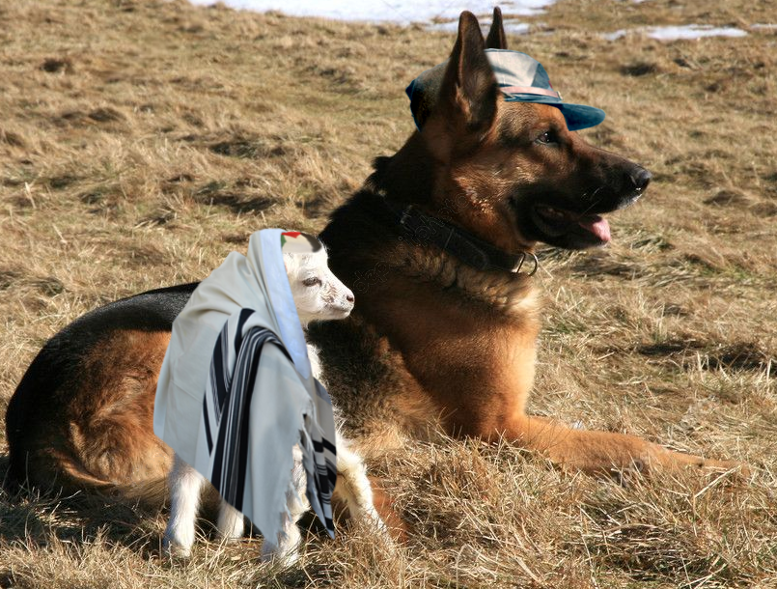
[Transcript]

Every Jew is like a precious lamb to me.

(Except for Netanyahu and anybody who supports him… those people are awful.)

رح ( بي بي نيتانياهو ) يآكل خرا !
انشاء الله 🤞🏼☝🏼

Shukur munchos por tus palavras ermozas .

77
8
submitted 1 year ago* (last edited 1 year ago) by bubbalu@hexbear.net to c/judaism@hexbear.net

Performance proper starts at 10:50

78
41

cross-posted from: https://lemmygrad.ml/post/6610351

Nineteen years after this Citizenship Law of 1952 was enacted, my parents moved from the U.S. to Jerusalem and were granted citizenship and full rights under the “Law of Return.” Out of a youthful naivete that would deepen into willful ignorance, they managed to become both American liberals who opposed the U.S. invasion of Vietnam, while also acting as armed settlers of another people’s land.

They moved into a Jerusalem neighborhood that had been ethnically cleansed only a few years earlier. They occupied a home built and recently inhabited by a Palestinian family whose community was expelled to Jordan and then violently barred from returning at the barrel of a gun — and by the citizenship papers my family held in their hands.

This 1-to-1 replacement was not a secret. People like my family lived in these quarters precisely because it was an “Arab house,” proudly advertised as such for its elegant, high-ceilinged design in opposition to the drably utilitarian, haphazardly constructed apartment blocks of the settler Zionists. I was born in the ethnically cleansed Palestinian village of Ayn Karim, much prized for possessing all the native Arab charm with none of the actual native Arabs to unsettle the pretty picture. My father was in the Israeli military, from which he and many of his friends emerged, after the monstrous invasion of Lebanon in 1982, liberal proponents of “peace.”

But to them, that word still meant living in a Jewish-majority country; it was a “peace” in which the original sin of the state, the ongoing process of ethnic cleansing, would remain firmly in place, legitimated and thereby more secure than ever. They sought peace, in other words, for Jews with Israeli citizenship, but for Palestinians, “peace” meant full surrender, a permanent occupation and exile.

All of this is to say: I don’t regard my decision to renounce this citizenship as an effort to reverse a legal status as much as it is an acknowledgement that this status never held any legitimacy to begin with. Israeli citizenship law is predicated on the worst kinds of violent crimes we know of, and on a deepening litany of lies intended to whitewash those crimes.

The look of officialdom, the trappings of lawful governance, with their seals of the Ministry of the Interior, testify to nothing other than this state’s slippery effort to conceal its fundamental unlawfulness. These are forged documents. They are, more importantly, a blunt instrument used to continually displace actual living people, families, entire populations of the land’s Indigenous inhabitants.

In its genocidal campaign to erase Palestine’s Indigenous people, the state has weaponized my very existence, my birth and identity — and those of so many others. The wall that keeps Palestinians from returning home is constituted as much by identity papers as by concrete slabs. Our job must be to remove those concrete slabs, to rip up the phony papers, and to disrupt the narratives that make these structures of oppression and injustice appear legitimate or, god forbid, inevitable.

To those who will breathlessly invoke the talking point that Jews “have a right to self-determination,” I will only say that if such a right does exist, it cannot possibly involve the invasion, occupation and ethnic cleansing of another people. Nobody has that right. Moreover, one can think of a few European countries that owe land and reparations to their persecuted Jews. The Palestinian people, however, never owed Jews anything for the crimes committed by European antisemitism, nor do they today.

My personal belief, like many of my 20th century ancestors, is that Jewish liberation is inseparable from broad social movements. That is why so many Jews were socialists in pre-war Europe, and why many of us connect to that tradition today.

As an observant Jew, I believe the Torah is radical in its contention that Jewish people, or any people, have no right at all to any land, but rather are bound by rigorous ethical responsibilities. Indeed, if the Torah has one single message, it’s that if you oppress the widow and the orphan, if you deal corruptly in government-sanctioned greed and violence, and if you acquire land and wealth at the expense of regular people, you will be cast out by the God of righteousness. The Torah is routinely waved around by land-worshipping nationalists as though it were a deed of ownership, but, if actually read, it is a record of prophetic rebuke against the abuse of state power.

The only entity with sovereign rights, according to the Torah, is the God of justice, the God who despises the usurper and the occupier. Zionism has nothing to do with Judaism or Jewish history other than that its leaders have long seen in these deep sources a series of powerfully mobilizing narratives with which to push their colonial agenda — and it is that colonial agenda alone that we must address. The constant efforts to evoke the history of Jewish victimhood in order to justify or to simply distract from the actions of an economic and military powerhouse would be positively laughable if they weren’t so cynically weaponized and deadly.

Zionist colonization cannot be reformed or liberalized: Its existential identity, as expressed in its citizenship laws and repeated openly by those citizens, amounts to a commitment to genocide. Calls for arms embargoes, as well as for boycotts, divestment and sanctions, are commonsense demands. But they are not a political vision. Decolonization is. It is both the path and the destination. We all must orient our organizing accordingly.

79
44
submitted 1 year ago* (last edited 1 year ago) by AnarchoBolshevik@lemmygrad.ml to c/judaism@hexbear.net

cross-posted from: https://lemmygrad.ml/post/2913041

Chanukkah is a Jewish holiday (or more accurately 1.1 holiweeks, since it lasts eight days) that starts on the 25th of the Hebrew month of Kislev and celebrates the military victory by the Hasmoneans over the Syrian Greeks in 164 BCE, and the Jerusalem Temple’s rededication under the Hasmoneans. Quoting Prof. Eyal Regev:

One important reason for promoting its celebration years after the purification of the altar was to celebrate and commemorate the Maccabees’ achievement and to support their successors, the Hasmoneans. The fact that the Maccabees, their followers and successors, encouraged Chanukah’s celebration in the two epistles, shows that Chanukah also had political significance.

[…]

Chanukah, which celebrates the rededication of the Temple under the Hasmoneans, would have been an effective political tool to reinforce Hasmonean government, since it was celebrated in the Temple and probably also in many Jewish houses.^[9]^ It strengthened Hasmonean authority and was a kind of Hasmonean Independence Day also representing their collective identity.^[10]^

Chanukah was also helpful in constructing the Jewish social memory about the Maccabees’ achievements.^[11]^ It was one of several festivals that the Maccabees instituted in order to commemorate their military victories for the coming generations. Additional festivals that served this role are the Day of Nicanor (13 in Adar; 1 Macc 7:48–49; 2 Macc 15:36),^[12]^ and Hakra Day, a day of the removal of the citadel (hakra) in Jerusalem, the last remnant of gentile oppression (1 Macc 13:49–52). These three festivals stressed Hasmonean authority and rule.^[13]^ Indeed, Chanukah became a holiday due to the intersection of its religious, Temple focus, with the political needs of the Hasmonean leaders who established it.

My memories aren’t as clear now that I’m an adult, but Chanukkah might well have been either my introduction to Judaism, or what interested me in it. I vaguely remember the feeling of fascination when I saw those bizarre and mysterious symbols on the dreidel. What strange looking symbols! It was my first exposure to the alephbet and was what eventually lead me to (briefly) studying Hebrew.

Being a gentile and lacking Jewish friends in my locale, I am disappointed to say that I cannot take part in the celebration, but the tale of resistance against overwhelming odds can easily resonate with many gentiles today, especially Palestinian ones. Just as the Maccabees could not give up their independence so easily, neither can the lower classes of the world.

Have a great Chanukah!

80
13

Though the text in the book of Maccabees does not detail what the rededication of the altar looked like, we can postulate that it resembled the dedication ceremonies described in the bible, particularly the dedication of the Tabernacle in Numbers 7. In this chapter, we learn that the chieftains of Israel brought various presents to the Tabernacle. Among the presents were items used in facilitating sacrifice, including silver basins, bowls, and ladles (Numbers 7:1-8:3). A Hanukkah gift is, therefore, a gift that enables us to worship God; this is precisely how the Jews celebrated the festival of Hanukkah in the years following their victory over the Greeks.

Everything changed after the destruction of the Temple in 70 CE.

Sacrifice was no longer possible and the understanding of how to worship God shifted from sacrifice to study and prayer. For this reason, the festival of Hanukkah could have transformed into a gift-giving holiday. Instead of giving gifts to facilitate sacrifice, one would give gifts to facilitate acts of study or prayer. Instead of giving a silver basin, one might give a tallit or a chumash. As we know, however, the rabbis took the celebration of Hanukkah in a different direction. They introduced the miracle of the oil and focused on the laws surrounding the lighting of the menorah.

The second way we can understand gift giving as a Jewish custom is with the introduction of Hanukkah gelt in Europe during the 18th century.

Many believe this custom developed because of the etymological connection between Hanukkah and education. Chinuch (education) shares the same Hebrew root (Chet/nun/chaf) as Chanukah (dedication). For this reason, education (specifically Torah study) became a central focus of Hanukkah. Historian Eliezer Segal suggests that families began to use these Torah study sessions during Hanukkah as an opportunity to give small amounts of money to teachers who were otherwise prohibited from accepting money for teaching Torah. Parents would give children money to give to their teachers. Eventually, Segal suggests, the children began to expect it themselves. This, he says, might be the origin of the practice of giving gelt during Hanukkah.

There are some, however, who date the practice much earlier. In "The Original Chanukah Gelt," Marvin Tameanko argues that this custom dates back to the very first Hanukkah festival celebrated by the Maccabees. He points to the then-common practice of taking war booty: when the Jews destroyed the Greek armies, they took weapons, armor, horses, and coins (I Maccabees 3:41). These coins were distributed to victorious soldiers, widows, and orphans of the dead as well as the general population, including children. Tameanko suggests that this could be the origin of Hanukkah gelt.

The third way to understand gift giving as a Jewish custom is by reinterpreting Hanukkah as a holiday that has always celebrated the interplay between Judaism and the dominant culture of the time. In his book, "The Jewish Way: Living the Holidays," Irvin Greenberg says, “Hanukkah is the paradigm of the relationship between acculturation and assimilation where each generation has interpreted Hanukkah in its own image, speaking to its own needs.” He discusses how the story of Hanukkah began because of the blending of Greek and Eastern cultures. Hellenism attracted the Jewish elite. In fact, there were some Jews who favored aggressive assimilation. Gift giving is the prime example of a custom that was, and still is, borrowed from the dominant culture.

In addition to Jews using foreign coins as Hanukkah gelt, gift giving was generally practiced in Greek culture during the time of the book of Maccabees. There are three examples in the books of Maccabees that describe Greeks engaging in the practice of gift giving.

In the first example, King Anthiochus’s officers tell Mattathias they will give him gold, silver, and gifts if he makes a pagan sacrifice (I Maccabees 2:15-28). In the second, King Antiochus realizes that his wealth diminished during the war, and he laments that he will no longer be able to give gifts the way he used to (I Maccabees 3:30). In the third example, the King of Persia turns a holy site into a shrine and uses the money he makes from it to give gifts to his friends (II Maccabees 1:34-35).

Each of these examples speaks to the fact that gift giving was a prevalent practice in Greek culture during the time of the story of Hanukkah. It sets the stage for a discussion about how Jews borrow from and engage with the dominant culture of their time. If Hanukkah is a time for thinking about what it means to be a free people who also live and participate in greater society, it is a perfect opportunity to think about what it means to share practices with others and whether a borrowed ritual can still be considered Jewish.

81
14

A few weeks ago I asked a Sephardi friend if I could try having an Orthodox style tech break. He generally feels uneasy about us trying to copy rules that aren't for us, but he basically said 'If you want to, sure.' (Later I did try to have this tech break, but I screwed it up after 22 hours.) I wasn't trying to hold my own Shabbat celebration, but some of you might feel a little uneasy anyway because in another respect I'm still being a copycat. What do you think?

I have my own impression for phenomena that are probably okay to borrow and which ones are over the line, but I hesitate to call it reliable. I would appreciate any feedback on the outline.

These are okay:

  • Learning Jewish languages and dialects
  • Following and sharing Jewish recipes
  • Participating in Jews' celebrations, festivals, and other events with their permission
  • Wearing a kippah when a Jewish person requests it
  • Singing Jewish songs
  • Regularly thanking the Almighty for food (and when we relieve ourselves)

These are off-limits:

  • Trying to reuse (biblical) Hebrew for conversational purposes
  • Adding trayf ingredients to Jewish recipes (I actually don't know if you'd care about this, but it still sounds cringe)
  • Holding Jewish celebrations as if they were your own
  • Wearing a kippah whenever you want, and appropriating other ceremonial fashion like streimels and prayer shawls
  • Blowing a shofar whenever you want
  • Giving yourself a secret Hebrew name

Is this about right? Am I missing anything?

82
97
83
17

cross-posted from: https://lemmygrad.ml/post/6408688

“Our politicians cannot be complacent in these marble hallways while Israel continues to burn Palestinians alive in their tents,” said Niall Ricardo, an organizer with the Independent Jewish Voices Canada group, in a statement.

Protesters accused the Canadian government of “arming” Israel by exporting weapons and military parts to the United States, which are then supplied to Israel.

They also demanded an end to the import of military goods and technology from Israel.

84
17

The extent of racist offenses and discrimination against Ethiopian Jews manifests in various aspects, including reluctance by factories to employ them, landlords refusing housing, and specific schools rejecting their children. In a troubling incident unveiled by the [...] NGO Tebeka in September 2011, 281 children of Ethiopian descent were unlawfully denied registration at a school in the Central District of Israel. This not only constituted a clear violation of children’s right to education but also reflected a broader pattern of exclusion within the country (Refworld, 2012).

In a separate incident, an Ethiopian mother and resident of Israel reported that on her daughter’s first day of kindergarten, the child was placed in a classroom exclusively composed of Ethiopian [...] youngsters. Despite the school justifying the placement based on the geographic area of the children, parents publicly perceive it as a result of the color of their skin, expressing concerns about potential discrimination (Sokol, 2019).

In addition, in 2019, a group of Ethiopian-Israeli parents took legal action against four ultra-Orthodox schools in Jerusalem that refused to enroll their children for the upcoming school year, further highlighting the persistent barriers in the education system (Surkes, 2019). These incidents underscore the urgent need to address discriminatory practices and promote inclusivity within the educational framework.

85
24
submitted 1 year ago* (last edited 1 year ago) by AnarchoBolshevik@lemmygrad.ml to c/judaism@hexbear.net

Yemini led a contingent of Zionist aggressors over to Jewish man and left-wing activist James Crafti, protesting in a keffiyeh, to accost him while filming his usual "Rebel" material.

While I expect accurate coverage of the conduct of this angry, violent mob in mainstream, legacy media spaces to be largely non-existent, some outlets saw the violence in person and saw fit to include it. During the exchange, one of Yemini’s Zionist mob hurled Crafti to the ground, as witnessed by an Age journalist.

Charming of the Herzlians to offer anticolonial Jews a (very small) fraction of their Palestinian siblings' horrific suffering.

(Spotted here.)

86
30

As a settler colonial movement, Zionism was always focused on the maintenance of a majority Jewish presence in historic Palestine. However, the seizing and control of resources has been no less integral to this project. The settler colonial reality of the 21st century is driven in no small part by the corporate interest of weapons manufacturers as well as the billionaire and oligarch class that seek to profit off the spoils of war and genocide. In the current moment, it should come as no surprise that there is also unabashed talk about the annexation of the West Bank and even parts of South Lebanon.

Such is the natural result of a movement and ideology that prizes real estate over the well-being of the actual people who happen to live on the land. I’m particularly mindful of this as I contemplate this week’s Torah portion, Chayei Sarah, which begins with the famous episode in which Abraham negotiates with the Hittites to purchase the Cave of Machpelah as a burial site for his recently deceased wife Sarah. This story is often wielded by many Zionists as a deed of sale to this sacred site – and contemporary land acquisition in Palestine as the “inalienable possession of the Jewish people.”

There is, of course, another way to understand the spiritual meaning of this story: it is not about land acquisition but love and loyalty. Abraham is not motivated to purchase this land in order to claim exclusive entitlement to it: he is driven by his desire to honor his beloved wife Sarah, and to ensure that she and his extended family will have a permanent resting place. To read this episode only about entitlement to land is limited at best – and to judge by the apartheid and violence by which Israel maintains its control of this site today – a moral sacrilege at worst.

At the end of the portion, following the death of Abraham, we read that his sons Ishmael and Isaac buried their father together in the Cave of Machpelah. I can think of no better image to underscore the critical importance of pursuing a Judaism that prizes love over land. This Shabbat Chayei Sarah, may we rededicate our commitment to this sacred vision.

87
113
submitted 1 year ago* (last edited 1 year ago) by thelastaxolotl@hexbear.net to c/judaism@hexbear.net

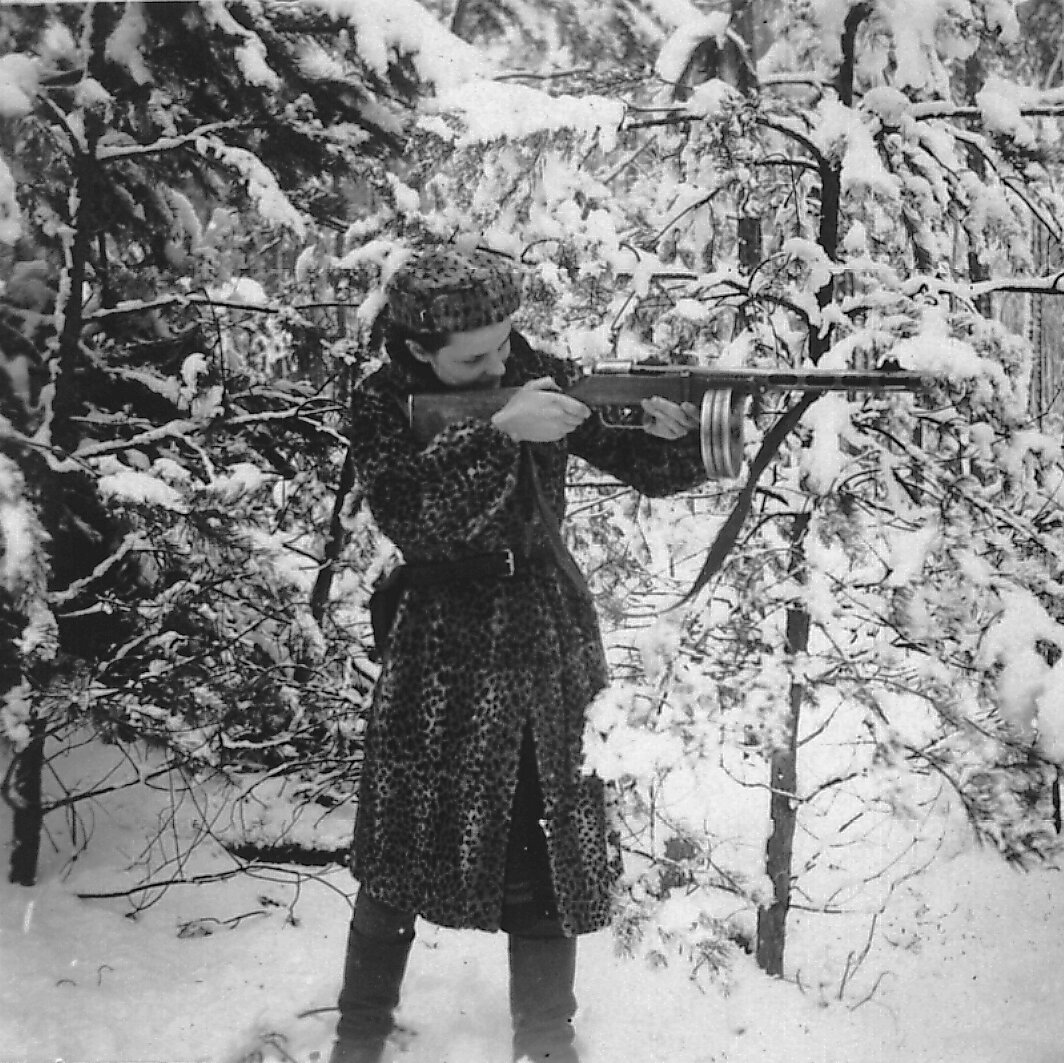
Faye Schulman, born on this day in 1919, was a Jewish partisan and photographer who took up arms against the Nazis who were responsible for killing her family.

On August 14th, 1942, the Germans killed 1,850 Jews from the "Lenin" ghetto (named after Lenin, Poland, where Faye was from), including her parents, sisters, and younger brother. Faye was spared for her ability to develop photographs, and the Nazis ordered Faye to develop their photographs of the massacre. Later, she cited taking a photo of her dead family in a mass grave as the impetus to take up arms.

During a partisan raid on the camp, Faye fled to the forests and joined the Molotava Brigade, a partisan group mostly comprised of escaped Soviet Red Army POWs. She was accepted because her brother-in-law had been a doctor and they were desperate for anyone who knew anything about medicine. Faye served the group as a nurse from September 1942 to July 1944, even though she had no previous medical experience.

During another raid on the Lenin ghetto, Faye succeeded in recovering her old photographic equipment. During the next two years, she took over a hundred photographs, developing the medium format negatives under blankets and making "sun prints" during the day. While on missions, Faye buried the camera and tripod to keep it safe. Schulman is the only known Jewish partisan photographer from this era.

"I want people to know that there was resistance. Jews did not go like sheep to the slaughter. I was a photographer. I have pictures. I have proof."

  • Faye Schulman

After liberation, Faye married Morris Schulman, also a Jewish partisan. Faye and Morris enjoyed a prosperous life as decorated Soviet partisans, but wanted to leave Pinsk, Poland, which reminded them of "a graveyard." Morris and Faye lived in the Landsberg displaced persons camp in Germany for the next three years and immigrated to Canada in 1948.

Megathreads and spaces to hang out:

reminders:

  • 💚 You nerds can join specific comms to see posts about all sorts of topics
  • 💙 Hexbear’s algorithm prioritizes comments over upbears
  • 💜 Sorting by new you nerd
  • 🌈 If you ever want to make your own megathread, you can reserve a spot here nerd
  • 🐶 Join the unofficial Hexbear-adjacent Mastodon instance toots.matapacos.dog

Links To Resources (Aid and Theory):

Aid:

Theory:

88
7
submitted 1 year ago by bubbalu@hexbear.net to c/judaism@hexbear.net

'We are good we are flawed we are the breath of an imperfect g-d'

89
49
submitted 1 year ago* (last edited 1 year ago) by WhyEssEff@hexbear.net to c/judaism@hexbear.net

5 minutes in immediately hit with the “antizionism is antisemitism we gotta drill that into the kids at Sunday school and combat it on campus” and “there’s so much Hamas propaganda floating around in America we have to make sure the kids know we aren’t colonizers”

these people are mostly younger than me, dog get me the fuck out of here no-mouth-must-scream

90
15
submitted 1 year ago* (last edited 1 year ago) by AnarchoBolshevik@lemmygrad.ml to c/judaism@hexbear.net

These long-term Jewish-Muslim networks were defined by a deep sense of mutual trust, respect, and learning, where Muslim teenagers saw the potential in the Jewish businessmen, acquiring valuable life skills and other opportunities. Similarly, Yitzhak and Jakub saw a younger version of themselves in these teenagers during the 1950s, when the welfare and school systems were less attentive to the needs of minorities and migrants. We will see that this sort of expressed boundary blurring through joint minority sentiments was less pronounced regarding newer migrants to the neighborhood.

Levi, another Jewish interlocutor (age thirty-six) who runs a successful Bahnhofsviertel-based third-generation company, noted, “Muslims saw that this [neighborhood] was all under Jewish ownership. So they adopted and learned from us, which created this invisible [Jewish-Muslim] bond.” Jewish-Muslim boundaries in this context were blurred through expressions of long-term unity and familiarity such as “we all grew up” and “grew old together” (“sind zusammen aufgewachsen”), “brotherhood” (“Verbrüderung”), or “special symbiosis.” These discourses and boundary blurring practices indicate a remarkable historical trend, resembling boundary blurring and shifting during Jewish-Muslim encounters in the interwar period as well as the documented “cultural symbiosis” in medieval Spain.

Yitzhak recalled how he drank tea in local mosques, had conversations in Turkish barbershops, went on synagogue visits with Ahmet, played table tennis with Muslim teenagers, and was invited to wedding or birthday celebrations. He hoped that his children would learn from him, as he had learned from his father and Muslim friends on Münchener Straße, how to greet and treat everyone with respect regardless of their social backgrounds. Growing up with these neighborhood stories, the children of these Jewish-Muslim network pioneers knew each other, belonged to the same sports clubs, worked in Jewish enterprises through their fathers’ connections, went to similar schools, and were influenced by the legacy of these relationships in various ways.

Jakub’s daughter, for instance, works in interfaith dialogue together with local Jewish and Muslim institutions, while Mustafa’s son has a Jewish girlfriend and plays table tennis for Makkabi Frankfurt. The biographical accounts of Jewish-Muslim friendship networks and notions of “growing up together” contain various nostalgic sentiments and memories of a more convivial phase with softer boundaries, which now seems to have been erased from public imaginations of Jewish-Muslim relations.

Language Fusion and Crossing

By working for several Jewish family businesses in the Bahnhofsviertel over ten years in the 1980s and 1990s, Ahmet started to learn Yiddish, and was soon known as one of the few “Yiddish-speaking Turks” of the Bahnhofsviertel. Some respondents still remembered him as “the Muslim who spoke better Yiddish than many Jews.” Similarly, Yitzhak, Noah, and other Jewish interlocutors acquired basic proficiencies in Turkish and Arabic.

During our meetings (including at a synagogue), Yitzhak would joyously exclaim Turkish phrases and religious terms such as Allah Akbar, Alhamdulillah, or Bismillah-ir-Rahman-ir-Rahim (in the name of God, the merciful and compassionate) to express his emotions and to greet his surroundings. The role of Turkish in business interactions was stressed when Yitzhak said, “birçok müşteriler Turki yek” [I had many Turkish customers].… These [language] skills are important when you deal with Turks on a daily basis.” Depending on whether Jewish or Muslim customers entered the shop, Yitzhak and Ahmet would attend to them in Yiddish, Turkish, or Arabic.

One time, a rabbi transiting from Canada entered the shop, and Ahmet talked to him in Yiddish. The rabbi inquired about his background, insisting that Ahmed must be a Jew from Turkey, eventually uttering in disbelieve, “Look at this Bengel [boy]. It’s impossible that you are not a Jew. In Canada, we try to teach Yiddish to our children, [unsuccessfully], and, here a Muslim can speak it.” Ahmet reflected with some pride in his voice that “the Canadian Chacham [Torah scholar] was shocked (fix und fertig) and almost fainted (wär fast umgekippt).”

91
12

It cannot be denied that the Jewish self-criticism so widespread among the German Zionist intelligentsia often seemed dangerously similar to the plaints of the German anti-Semites. The Zionists were keenly aware of this problem but they were not deterred by it. The Jewish nationalist newspaper Serubabel⁶ even admitted that “the Jewish national idea may indeed coincide at some point with anti-Semitism.”

Moreover, some of the Zionist ideologues viewed the new anti-Semitism of the 1880s as a by-product of the nationalist movements in Europe: “Like Zionism, anti-Semitism is a consequence of the great nationalist movement that fills the vacuum of the end of our century.”⁷ This notion can be understood in light of the premise — then popular among the Zionists — that anti-Semitism was not directed against all the Jews.

It is at this point that the Zionist criticism converged with the liberal apologetics (which will be discussed later in these pages), though these two trends were moving in opposite directions. While the liberal apologetics pointed to the shnorrer, the yeshiva bocher, and the “Talmud Jew” as the ones to blame for hatred of the Jews, the Zionists believed that anti-Semitism was provoked primarily by the assimilationists and nouveau riche: “It is not against the jews who maintain their ancient customs… that anti-Semitism is directed but rather against those Jews who cover up their Jewishness with a veneer of German culture.[”]

However, this claim was true only of those German anti-Semites who rejected the Enlightenment’s premise that the Problem of the Jews stemmed from their cultural backwardness, and were frightened rather of their modernizing potency that eventually would disrupt the traditional fabric of German society. According to this outlook, the most dangerous Jews were indeed the assimilationists, who were also the main enemy of the Zionists.

[…]

Nathan Birnbaum […] was probably the most original Zionist ideologue of the pre-Herzl era, a dynamic young man who was among the founders of the first Jewish student society, Kadimah, and the editor of the first German-language Jewish-nationalist newspaper, Selbst-Emancipation. As early as 1885 in the initial issue of the paper, which he both edited and for the most part wrote, Birnbaum published an article entitled “Our Drawbacks” that read in part:

The base spirit of usury that has kept our hand from the labor of the plow and the hammer, the senseless deceit that eagerly anticipates the undoing of others, the brazen conceit and the luxury that is flaunted every summer at the resorts of Karlsbad and Nice, the pursuit of honor and wealth that stops at nothing, the cowardliness that drives us from the ranks of the fighters and rescues us from the manly duel, our ridiculous and alienating appearance — this list of merits and virtues derives from a single source: our Semitic stock.¹⁴

Quoting Faris Yahya’s Zionist Relations with Nazi Germany, pages 9–10:

The founder of the political Zionist movement, Theodor Herzl, was aware of the philosophical common ground between Zionism and anti-Semitism when he wrote: “The governments of all countries scourged by anti-Semitism will be keenly interested in assisting us to obtain the sovereignty [that] we want.”¹ Herzl “frequently asserted, in all innocence, that anti-Semites would be the Jews’ best friends and anti-Semitic governments their best allies. But this faith in anti-Semites expressed very eloquently and even touchingly how close his own state of mind was to that of his hostile environment and how intimately he did belong to the ‘alien’ world…”

“Anti-Semitism was an overwhelming force and the Jews would have either to make use of it or be swallowed up by it. In his own words, anti-Semitism was the ‘propelling force’ responsible for all Jewish suffering since the destruction of the Temple and it would continue to make the Jews suffer until they learned how to use it for their own advantage. In expert hands this ‘propelling force’ would prove the most salutory factor in Jewish life; it would be used in the same way that boiling water is used to produce steam power.”²

Other than European Fascism, I can think of no other movement that has defended antisemitism as regularly as Zionism has, and I never see Herzlians discuss this sordid history. The best that they could say to this is ‘it was a different time back then’, an unconvincing excuse given that they have shown time and time again to have no more than an ephemeral concern in the antisemitism of Elon Musk, Azov, John Hagee, Donald Trump, and other widely respected xenophobes. That modern Zionists can constantly raise the alarm over antisemitism while glossing over the sentiments of Theodor Herzl and others… astonishes me.

92
147
93
57

We find overt antisemitic attitudes are rare on the left but common on the right, particularly among young adults on the right. Even when primed with information that most U.S. Jews have favorable views toward Israel—a country disfavored by the ideological left—respondents on the left rarely support statements such as that Jews have too much power or should be boycotted.

We find evidence on the left of anti-Jewish double standards compared to Muslim Americans and Indian Americans. The right exhibits strong anti-Muslim double standards. However, in these measures too, the anti-Jewish attitudes on the left are small in magnitude compared to the anti-Jewish attitudes on the right. The right does not have an anti-Jewish double standard, but they nevertheless attribute to Jews substantially more responsibility and culpability for Israel than the left does. Indeed, young far right identifiers are seven times more likely to believe that Jewish Americans should be held to account for Israel compared to young far-left identifiers.

At the risk of sounding condescending, I am willing to forgive ordinary Jews for supporting the ‘State of Israel’s right to exist’ on the probability that they simply don’t know any better. In my experience, lower-class Jews tend to be less supportive of Zionism the more that they learn about its sordid history, in great part because the entity is built on somebody’s stolen homeland.

As for why I think that it is important for Jews to denounce the Zionist entity, but less so for Muslims to denounce predominantly Muslim governments when they commit wrongs, it is because Muslim politicians do not typically justify abhorrent actions saying that they are necessary for the good of the Muslim people. Herzlians, in contrast, always pretend that they represent Jews and claim that their atrocities are necessary for the safety of the Jewish people. Hence my ‘double standard’, as the researchers would call it.

94
17

Co-signed by many of the mainstream U.S. Jewish organizations, clearly harder to roust up the fatigued rank-and-file. Even with a free meal voucher, only 2000 show up to a stadium with capacity for 40,000.

95
18
Happy Sukkot! (xcancel.com)
96
30

“Yom Kippur,” the day of ritual and moral cleanness and self‐denial, has become the climax of the Jewish High Holy Days. This day is the hope for freshness and new beginning for individuals and for the collective. Once a year, on the tenth of the seventh month (Tishre), the high priest atones (כפר) for impurities of the Temple and the altar, and at the same time also for sins of all the people: himself, his close family, his priestly clan, and all Israel (Lev 16:10–11, 16–19, 21–22, 24, 29–33; 23:27; Num 29:7; Exod 30:10). In fact, atonement of the people is the core of the Yom Kippur ritual (Lev 16:6–11, 15, 17, 21–24, 30–32), while the atonement of the Temple and the altar is mentioned only secondarily (Lev 16:16, 18–20, 33).

The biblical text states: “For on that day [shall the priest] make an atonement for you, to cleanse you, that you may be clean from all your sins before the Lord” (Lev 16:30).[1] Despite the evident meaning of the term “all your sins,” the rabbis learn from the phrase “before the Lord” that Yom Kippur atones for sins “between man and God” (בין אדם למקום) only, and this too, only under certain conditions.[2] For the sins “between man and his fellow” (בין אדם לחברו), one must appease his fellow and request forgiveness. In case he or she harmed another, he or she must pay compensation or return the stolen goods.[3]

I wish that others would forgive me for my sins and transgressions.

97
36
submitted 2 years ago* (last edited 2 years ago) by AnarchoBolshevik@lemmygrad.ml to c/judaism@hexbear.net

Gaza is a concentration camp and rapidly becoming a death camp. Gas chambers and firing lines have been replaced with bombs, tanks, and white phosphorous. We say never again for anyone. Talli Gotliv, an Israeli lawmaker, demanded that Israel “Shoot powerful missiles without limit. Not flattening a neighborhood. Crushing and flattening Gaza," she continued… "Otherwise, we would have done nothing. Not with passwords, with penetrating bombs. Without mercy! Without mercy!" A wish Netanyahu is fulfilling.

Israel is bombing neighborhoods, hospitals, schools, places of worship, tunnels through which people are trying to escape, without regard for civilian life. Half of Gaza is children. The intention is clear. The intention is genocide. Depriving people of food, water, electricity and basic needs, is not just collective punishment, it is an act of genocide.

As we offer solidarity with Palestinian resistance, we are reminded of the Warsaw and Vilna Ghetto and concentration camp uprisings against the Nazis. Both are acts of resistance against fascist régimes. In both cases, there is a struggle for freedom from genocide and ethnic cleansing and the right to exist as a free people.

Since 1948, Palestinians have had to flee while resisting so that they could stay as much as possible in their own homes on their own land, and for their own self-determination. Dr. Meyer called for a return of Palestine to Palestinians and a return of Judaism to the ethics of “do unto others.” We stand on the history of Jewish participation in struggles for our collective liberation. We stand with the right of Palestinians to their collective self-defense.

We stand against genocide, whether the genocide that killed many of our families, or the genocide we are witnessing. The majority of the world is against this genocide. Internationally, many are showing up and protesting, calling out the US, UK, and EU, who are backing Israel’s genocidal plan with their arms, propaganda, and censorship. We stand with the majority. No genocide in our name. We say never again for anyone.We invite other Jews of Conscience to join us in demanding an immediate end to the escalating genocide in Palestine.

To show your support for this statement, please sign here.

98
3
submitted 2 years ago* (last edited 2 years ago) by AnarchoBolshevik@lemmygrad.ml to c/judaism@hexbear.net

With the exceptions of alcohol (and the occasional locust), nearly everything that is kosher is also halal. It is normal for Muslims to seek kosher cuisine whenever Islamic grocers or restaurants are difficult to access. Quoting Ethan B. Katz’s The Burdens of Brotherhood: Jews and Muslims from North Africa to France, page 52:

Illustrating the potential for interaction, Muslims looking for halal meat regularly entered kosher butchers’ shops. Given that many Muslims have long considered kosher meat permissible under Islamic law, since the nineteenth century, a number of North African Muslim travelers had sought out kosher butchers when visiting Europe. In war time France, many observant Muslims naturally turned to Jewish slaughter houses for their meat.¹¹⁶

Page 66:

During the 1930 celebrations of the centenary of the Algerian conquest, one Jewish observer spotted groups of visiting Muslim notables in traditional attire entering the kosher restaurants of the 9th arrondissement, drawn by both the compatibility of Jewish ritual slaughter practices with Muslim rules of halal and the familiar menu.²⁰

Indeed, the daily experience of the city was changing: Parisians out walking in certain quarters might regularly pass by a restaurant with North African or Balkan cuisine and smell the wafting scent of couscous, merguez, baklava, or other traditional “Oriental” or “Arabic” foods; see Jews or Muslims dressed in “North African” garb going about their daily lives in the city; or hear previously unfamiliar Arabic musical modes and instruments emanating from cafés, restaurants, and concert halls.

Page 227:

Until halal shops became widespread in Marseille in the mid to late 1960s, many newly arrived Muslims went to kosher butcheries here and elsewhere in the city to buy their meat.¹¹³

Page 234:

Not far from Cronenbourg, the Bagouchas, an Algerian Jewish family, opened the city’s first “Oriental” grocery store, with products from North Africa. “All the Muslims,” remembers Dahan, “went to this épicerie, because they found there someone who spoke Arabic, who dressed like them, who served the great sacks of spices to which they were accustomed in North Africa.” For many years before Strasbourg had halal shops, religious Muslims purchased their meat at kosher butcheries.¹³⁸

Page 240:

Jews’ and Muslims’ mutual familiarity, common customs and language, and physical proximity gave way to social, economic, cultural, and even religious relations. In many North African cafés, Jews and Muslims played cards and listened to Arabic music together.¹⁶⁰ Mediterranean grocery stores regularly featured mixed Jewish and Muslim clienteles. Many Jews and Muslims lived in the same apartment building.¹⁶¹ A number of Tunisian Muslims who found their way to Belleville took jobs in the quarter working for Jewish‐owned food establishments.¹⁶²

North African Jews in Belleville often had greater resources than their Muslim counter parts and reached out to them. As an organizer for Logique, a Jewish voluntary association helping underprivileged children in Belleville, Patricia Jaïs remembers working with both Jewish and Muslim families in need. She recalls as well a Jewish friend whose father kept his neighborhood North African café open after hours each night to allow Muslims who came with no money to eat for free.¹⁶³

Community boundaries were at once porous and fixed. With fifteen kosher and twelve halal butcheries in the short stretch between the Ménilmontant and Belleville Metro stops, Jews and Muslims generally purchased ritually slaughtered meat that accorded precisely with their own, rather than each other’s comparable, traditions.¹⁶⁴

Reviving customs popular in North Africa, Jews and Muslims also exchanged foods around the Muslim holiday of Ramadan. During the fast month itself, Jewish grocers often offered fruits, vegetables, and fresh herbs that Muslims used to prepare their evening meals. On Aïd el‐Fitr, the feast that concludes the holiday, Muslims would bring pastries and grilled mutton to their Jewish neighbors. As in North Africa, these exchanges highlighted a sense of community.

By their festive, occasional nature, though, they underscored the way that many Jewish and Muslim neighbors, while speaking in the street and remaining amicable, stayed at arm’s length.¹⁶⁵ The mixing of Jews and Muslims was accepted here, but it occurred in a precise, controlled context and thus relied on understood boundaries.

Quoting Aviva A. Orenstein’s Once We Were Slaves, Now We are Free: Legal, Administrative, and Social Issues Raised by Passover Celebrations in Prison:

Interestingly, one cause of the increased cost of kosher meals in some prisons is the request by devout Muslims for kosher foods, which satisfy the Muslim requirements of halal.¹⁵⁷

[Trivia]In medieval Europe, some Christian authorities referred to Islamic dietary laws as another justification for classifying Muslims as legally ‘Jewish’. Quoting David M. Freidenreich’s Jewish Muslims: How Christians Imagined Islam as the Enemy, pages 135–6:

Bernard transformed the structure of canon law, but he did not seek to change the ways in which canonists perceived Muslims. Huguccio, Bernard’s contemporary and an equally influential canonist, did just that: perhaps in an effort to account for the Third Lateran Council’s unprecedented association of Jews and Saracens, he collapsed the legal distinction between these groups.

“Today,” he asserted in the late 1180s, “there does not seem to be any reason for saying that servitude to pagans is different from servitude to Jews, for nearly all contemporary pagans judaize: they are circumcised, they distinguish among foods, and they imitate other Jewish rituals. There ought not be any legal difference between them.”¹¹

Huguccio acknowledges that the New Testament itself instructs Christian slaves to accept the authority of their pagan masters (1 Peter 2:18). He emphasizes, however, that twelfth‐century “pagans”—that is, Muslims—are different from their predecessors because they adhere to “Jewish rituals” such as male circumcision and abstention from pork.

Just as Christians may not serve Jews, Huguccio contends, so, too, they may not serve “judaizing pagans”—that is, Muslims. Canonists, after all, regarded literal observance of Old Testament law as a defining feature of Judaism, and they would readily brand Christians who practice circumcision or distinguish among foods as judaizers; from this perspective, it follows naturally that Muslims judaize in their adherence to these practices. By extension, Huguccio seems to suggest, Muslims are as likely as Jews to corrupt the beliefs and behaviors of their Christian slaves.

[…]

Huguccio, unlike Bernard, also forbids shared meals with Muslims on the grounds that “nearly all Saracens at the present judaize because they are circumcised and distinguish among foods in accordance with Jewish norms […] The reason for the prohibition [against Jewish food] expressed in Omnes applies equally to both groups.” According to Huguccio’s interpretation of Omnes, the sixth‐century canon forbidding shared meals with Jews discussed above, exposure to Judaism is dangerous because Christians might be tempted to adopt Old Testament practices.

By this logic, interaction with Muslims is equally fraught since they, too, observe Old Testament norms literally. Huguccio’s argument for avoiding shared meals with Jews and Saracens alike appears in the influential Ordinary Gloss to the Decretum, the mid‐thirteenth‐century commentary that regularly accompanied subsequent copies of that collection.¹²

99
74
submitted 2 years ago by plinky@hexbear.net to c/judaism@hexbear.net
100
31
Happy New Year! (www.hebcal.com)
submitted 2 years ago* (last edited 2 years ago) by AnarchoBolshevik@lemmygrad.ml to c/judaism@hexbear.net

I’m kind of embarrassed that we’re going to end up celebrating the New Year thirteen weeks late again! Oh well. We’ll beat you to the punch one of these days, as soon as we catch you off guard!

Anyway, here is some history that someone may find interesting: Rosh Hashanah with the Early Israelites. Quote:

Part of the new year celebration ritual in ancient Near Eastern cultures was the solemn procession of the god, whose image would be removed from the temple precinct, paraded, and then returned to it. This ritual served a practical function, since the god’s quarters needed to be purified—a practice referred to in the Bible with the verbs kappēr and ṭahēr, and associated with Yom Kippur, also part of the New Year season.[28]

In addition, it gave the god’s many non-priestly and non-royal worshipers direct access to the deity, unavailable to them during the year. In the Babylonian New Year festival, the king is reported to have taken the god Marduk “by the hand,” leading the image back into the temple.

In Israel and Judah, a similar ritual appears to have taken place with the portable shrine in which YHWH was mysteriously present.[29] The Ark proceeded amid acclamation (tĕrûᴄâ) and blasts of the horn (qôl šōpār, 2 Samuel 6:15). In the premonarchic period, this would have been led by the priests, while in the monarchic period, the king would have taken a leading rôle in these proceedings.

A fine illustration of the king’s rôle is preserved in the narrative about David’s transfer of the Ark to Jerusalem (2 Samuel 6). Donned like a priest in a linen ephod, David led the Ark to its resting-place. Although the story narrates a one-time event, it is modeled after the annual procession of the Ark.[30] In a similar manner, the Judean kings would have taken the lead in the procession of the Ark.

The participation of the king was a powerful means to consolidate the position of the human king, with rather obvious political implications: G‐d was king on high, and the monarch was his deputy on earth. The few psalms that celebrate the human ruler as G‐d’s son on earth (such as Psalms 2 and 110) likely originated in the context of the New Year celebration. Certainly, the presentation of the king as a priestly figure (Psalm 110:4) is entirely in keeping with his rôle in the procession.

view more: ‹ prev next ›

judaism

4907 readers
10 users here now

Preliminary Rules

Rule 0: Follow the Chapo.Chat Code of Conduct.

Rule 1: No dehumanizing ANYONE, especially Palestinians.

Rule 2: No Israeli apologia.

Rule 3: Anti-Zionism is allowed. Anti-semitism is not.

Rule 4: Leftist ideologies are secular, not atheist. This is not a place to “dunk” on Judaism, but a place to help liberate it.

Rule 5: BDS is good and based.


"Love labor, hate mastery over others, and avoid a close relationship with the government" (Avot, 1:10)


"Anti-Semitism means spreading enmity towards the Jews. When the accursed tsarist monarchy was living its last days it tried to incite ignorant workers and peasants against the Jews. The tsarist police, in alliance with the landowners and the capitalists, organised pogroms against the Jews. The landowners and capitalists tried to divert the hatred of the workers and peasants who were tortured by want against the Jews. In other countries, too, we often see the capitalists fomenting hatred against the Jews in order to blind the workers, to divert their attention from the real enemy of the working people, capital. Hatred towards the Jews persists only in those countries where slavery to the landowners and capitalists has created abysmal ignorance among the workers and peasants. Only the most ignorant and downtrodden people can believe the lies and slander that are spread about the Jews. This is a survival of ancient feudal times, when the priests burned heretics at the stake, when the peasants lived in slavery, and when the people were crushed and inarticulate. This ancient, feudal ignorance is passing away; the eyes of the people are being opened.

It is not the Jews who are the enemies of the working people. The enemies of the workers are the capitalists of all countries. Among the Jews there are working people, and they form the majority. They are our brothers, who, like us, are oppressed by capital; they are our comrades in the struggle for socialism. Among the Jews there are kulaks, exploiters and capitalists, just as there are among the Russians, and among people of all nations. The capitalists strive to sow and foment hatred between workers of different faiths, different nations and different races. Those who do not work are kept in power by the power and strength of capital. Rich Jews, like rich Russians, and the rich in all countries, are in alliance to oppress, crush, rob and disunite the workers.

Shame on accursed tsarism which tortured and persecuted the Jews. Shame on those who foment hatred towards the Jews, who foment hatred towards other nations.

Long live the fraternal trust and fighting alliance of the workers of all nations in the struggle to overthrow capital." - V. I. Lenin, Anti-Jewish Pogroms

founded 5 years ago
MODERATORS