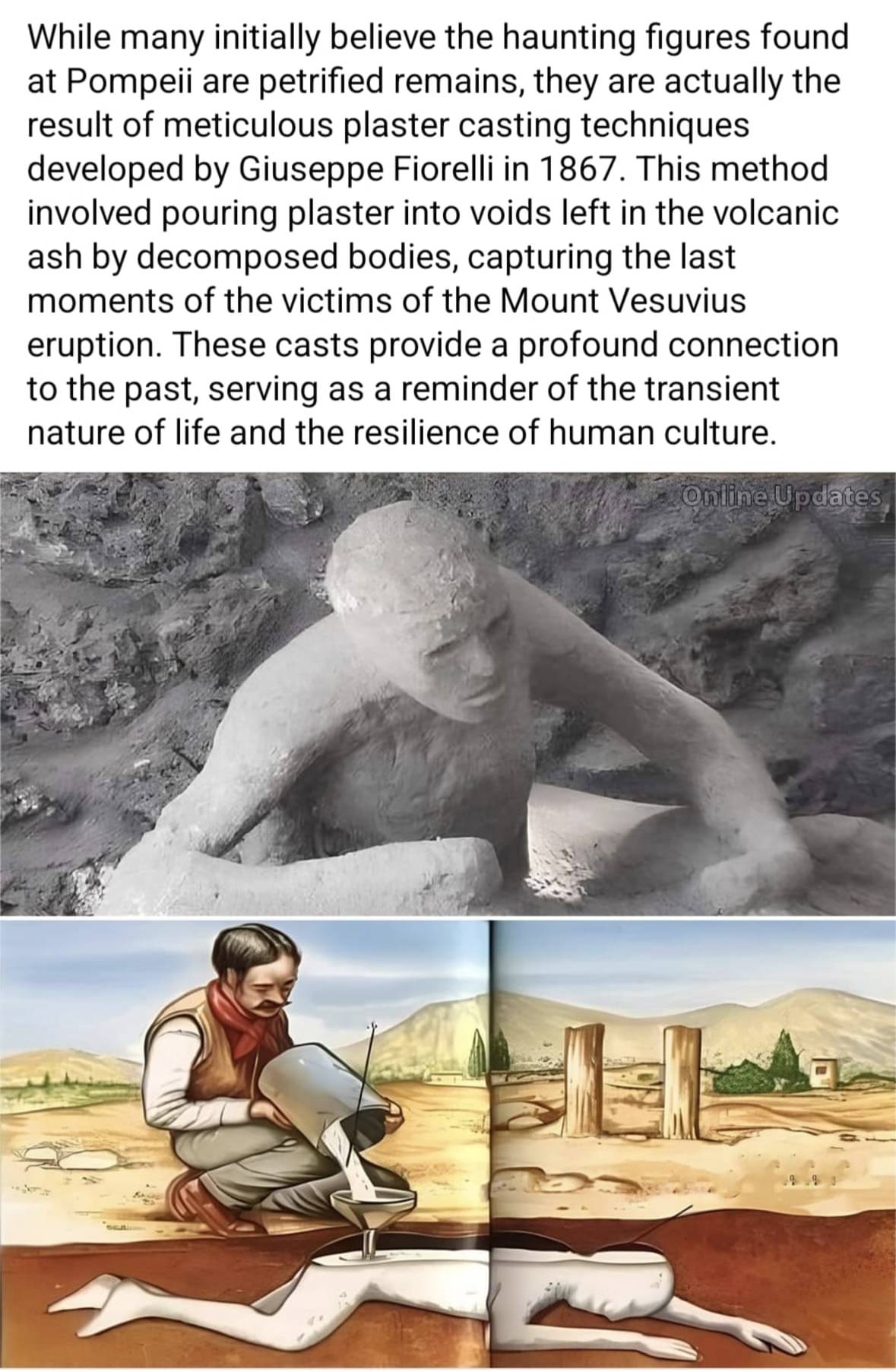
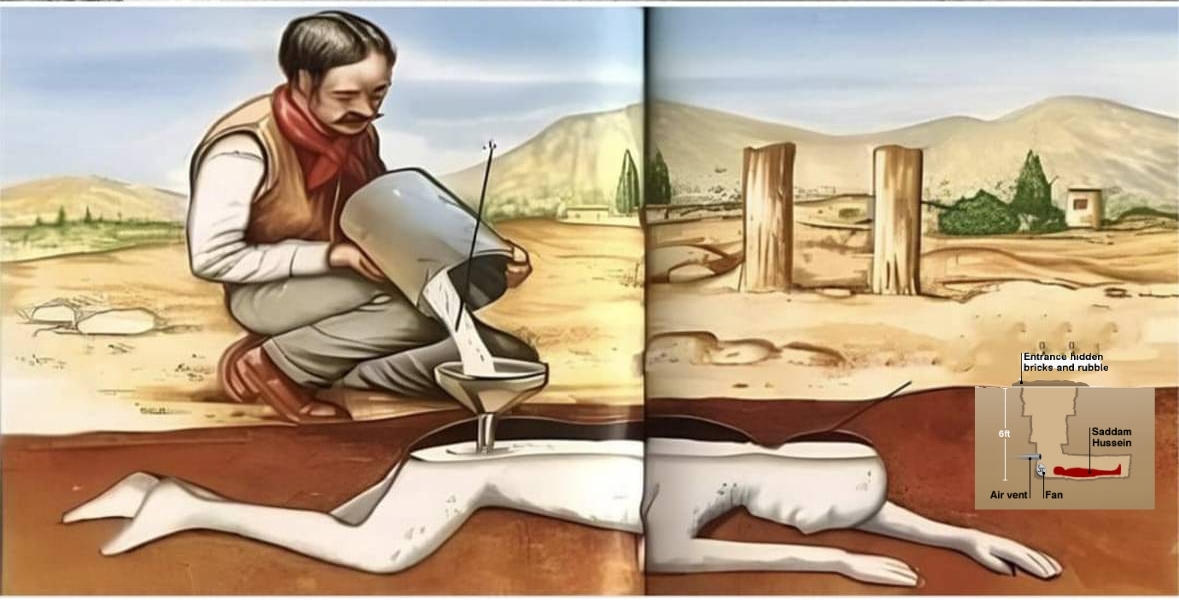
They could have placed the funnel anywhere else in the illustration, but they chose not to.
Wow! I didn’t know they were casts. I thought we found the remains as presented.
The only thing I question is why the artist who drew the illustration of the molds being filled choose to put the funnel in the body cavity's asshole.
Alternate caption:
Most people dont know that boofing was actually invented by archaeologists researching Pompeii. Justice Kavanaugh was unavailable for comment.
When I first started reading this I was thinking it would end up being some Pompeii didn’t happen denial craziness ha
DIY fossilization
What happened to the bones? How did they know there was a body there?
This has to be added to the meme collage of Sadam and digging for diamonds etc.
Why is the funnel in his arse. Why was that artistic choice made.


This suggests to me there there might be bones inside the plaster?
butt stuff
Preserving preserved history.
Archaeologists preserved the newly discovered remains using a variation of a technique developed by Italian archaeologist Giuseppe Fiorelli in 1863. The process involves pouring liquid chalk into cavities left by decomposing bodies; this plaster fills gaps in preserved bones and teeth, creating a cast of the bodies as they looked at the moment of death.
top 50 comments