you are viewing a single comment's thread
view the rest of the comments
[–] 6 points 2 years ago (4 children)

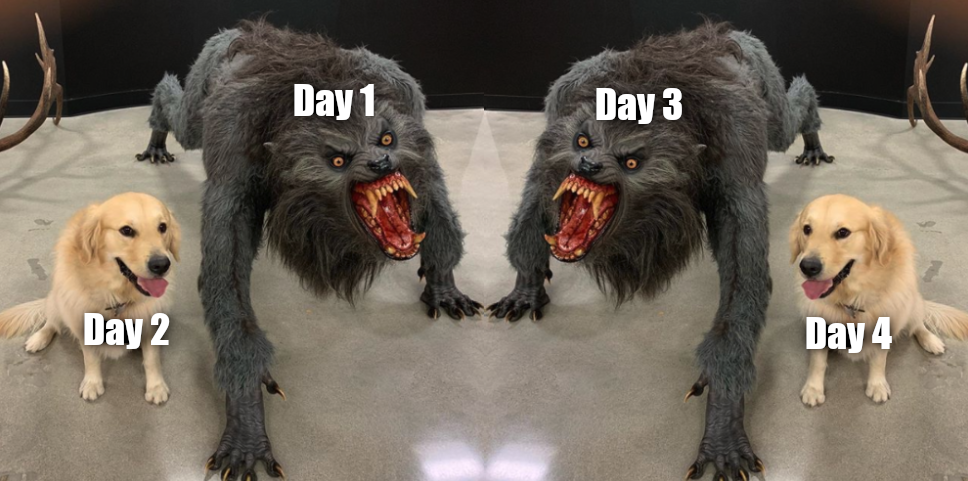
Day 1 wasn't so bad, depending on approach. People got tripped up hard with replacing strings because of the old "twone." If you didn't happen to do string replacements it wasn't so bad.

Day 3 absolutely wrecked me though - and my overall rank was still pretty significantly better than it had been on days 1 and 2.

  • source
  • hideshow 8 child comments
  • On the flip side, twone absolutely ruined my life. Worst part was that I was looking at it and thinking "yes I handled that edge case and am only taking the first number, why's it not working"

    Everything else has been a breeze. I'm using typescript and it's been chill.

  • source
  • parent
  • [–] 5 points 2 years ago

    If you didn’t happen to do string replacements it wasn’t so bad.

    Yeah. I was using regex to find the numbers as a quick implementation before realizing that floor. Just switched it to use a positive lookahead to solve that issue.

    Day 3 was one of those challenges that if you thought of a good method quickly it wasn't too bad. Ended up compiling strings and using regex again. Worked really well actually.

  • source
  • parent
  • [–] 1 point 2 years ago (1 child)

    Not only replacing didn't work. I did it as a regex, but Rusts regex crate only supports non-overlapping matches.

  • source
  • parent
  • hideshow 2 child comments
  • [–] 3 points 2 years ago (2 children)

    Python's re also only supports non-overlapping matches and only one direction, so what I did was

    spoilerI looked for the first digit/word using the regex. Then for the last digit/word, I inverted the string and the regex (so I was matching the words eno, owt, eerht, etc.) and took the first occurence, and inverted that in case it was a word, and then I had my last digit. I just had to pay attention to only include the |\d after inverting the regex, since d\| is not right.
    There are probably more elegant ways, but I couldn't come up with anything as simple as this.

  • source
  • parent
  • hideshow 4 child comments
  • [–] 2 points 2 years ago

    Oh, cool, I did pretty much the same thing, just finding the words manually instead (didn’t want to use any external libraries, so I just wrote a function to search for me. Haskell doesn’t have much for OOT B functionality).

  • source
  • parent