all 14 comments

sorted by: hot top controversial new old
[–] 11 points 2 years ago* (last edited 2 years ago) (3 children)

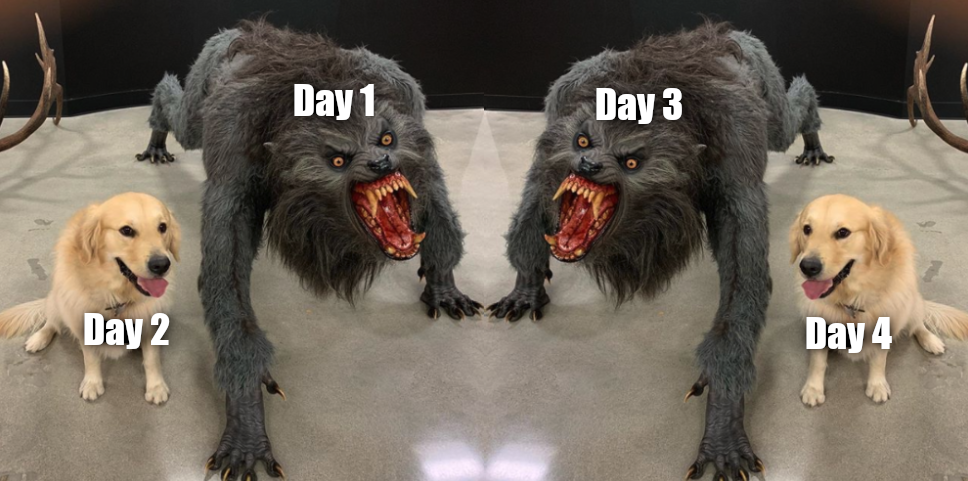
It's such a shame. Day 4 part 2 took me much longer to codify my idea in Rust correctly than I would like to admit.

I'm so tempted to switch to a simpler language, but I wouldn't learn Rust then.

  • source
  • hideshow 3 child comments
  • [–] 5 points 2 years ago

    I started off this year with Go, and after the first three days, I was so happy to switch to Rust for today. It's one of my absolute favorite programming languages, but I never use it at work, so it's one of my joys of Advent of Code.

  • source
  • parent
  • [–] 4 points 2 years ago (1 child)
  • [–] 1 point 2 years ago

    Rust isn't even that difficult, at least when comparing it to languages that fill a similar niche, like C++.

    It's of course more difficult than higher level languages, but for a systems language it manages very well to balance ease of use with the power to code relatively close to the hardware. Rust just has a "slight" entry barrier, with the Borrow Checker being a rather unique feature. Once one has surmounted that, it's surprisingly smooth sailing, because Rust doesn't have nasty surprises. Unless one intentionally does something stupid, the rule is "if it compiles, it works".

  • source
  • parent
  • [–] 6 points 2 years ago (7 children)

    Day 1 wasn't so bad, depending on approach. People got tripped up hard with replacing strings because of the old "twone." If you didn't happen to do string replacements it wasn't so bad.

    Day 3 absolutely wrecked me though - and my overall rank was still pretty significantly better than it had been on days 1 and 2.

  • source
  • hideshow 7 child comments
  • On the flip side, twone absolutely ruined my life. Worst part was that I was looking at it and thinking "yes I handled that edge case and am only taking the first number, why's it not working"

    Everything else has been a breeze. I'm using typescript and it's been chill.

  • source
  • parent
  • [–] 5 points 2 years ago

    If you didn’t happen to do string replacements it wasn’t so bad.

    Yeah. I was using regex to find the numbers as a quick implementation before realizing that floor. Just switched it to use a positive lookahead to solve that issue.

    Day 3 was one of those challenges that if you thought of a good method quickly it wasn't too bad. Ended up compiling strings and using regex again. Worked really well actually.

  • source
  • parent
  • [–] 1 point 2 years ago (3 children)

    Not only replacing didn't work. I did it as a regex, but Rusts regex crate only supports non-overlapping matches.

  • source
  • parent
  • hideshow 3 child comments
  • [–] 3 points 2 years ago (2 children)

    Python's re also only supports non-overlapping matches and only one direction, so what I did was

    spoilerI looked for the first digit/word using the regex. Then for the last digit/word, I inverted the string and the regex (so I was matching the words eno, owt, eerht, etc.) and took the first occurence, and inverted that in case it was a word, and then I had my last digit. I just had to pay attention to only include the |\d after inverting the regex, since d\| is not right.
    There are probably more elegant ways, but I couldn't come up with anything as simple as this.

  • source
  • parent
  • hideshow 2 child comments
  • [–] 2 points 2 years ago

    Oh, cool, I did pretty much the same thing, just finding the words manually instead (didn’t want to use any external libraries, so I just wrote a function to search for me. Haskell doesn’t have much for OOT B functionality).

  • source
  • parent
  • [–] 3 points 2 years ago

    I didnt even finish part 1 of day 3

  • source
  • [–] 2 points 2 years ago

    Day 1 was easy for me, because the standard library of the language I use has both a method for searching for the first substring, that matches a predicate, and one for the last one.

    Day 3 was a little tricky though, I concur.

  • source