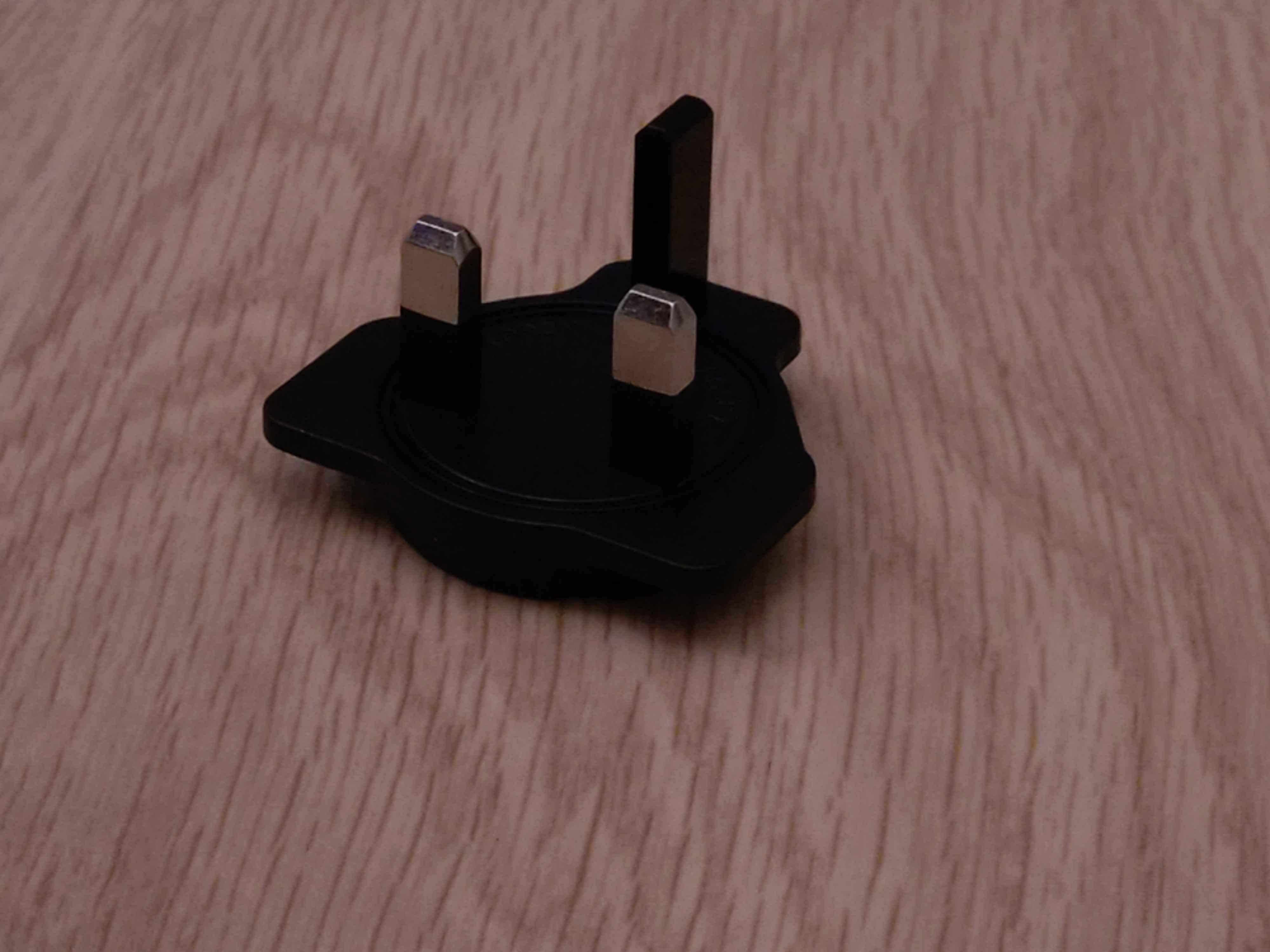
People who joke about legos haven't stepped on this bad boy

you are viewing a single comment's thread
view the rest of the comments
[+] 123 points 9 months ago* (last edited 6 months ago) (53 children)
  • [+] 24 points 9 months ago (38 children)
  • [+] 56 points 9 months ago* (last edited 6 months ago) (32 children)
  • [–] 4 points 9 months ago

    The USA approach to this is to mandate a comical number of outlets everywhere (to prevent extension cord usage), mandate a large number of individual circuits (especially for things that draw a large amount of power), and more recently some combo of AFCI/GFCI/CAFCI breakers (to provide some level of sensing things going wrong and shutting off power).

    The stats are not great for the USA in terms of number of fires. I haven't done deep research. From personal experience, most homes built after modern US electrical code was fleshed out are generally fine. Modern homes (or ones upgraded to modern code) seem very safe - the "smart" breakers tend to actually work.

    My anecdote here is that my relatively small hometown area (15,000 people, largely built up between 1860-1940) still has frequent fires relating to electrical and heating systems and the current city I live in (95,000 people mostly built up starting in ~1960) has very few fires ever. I spend 2 weeks a year around Christmas back in my hometown. 3 of the last 7 years had a structure loss fire while I was there. In the same period of time there have been 2 structure loss fires in my current city total.

  • source
  • parent
  • [–] 0 points 9 months ago (27 children)

    So you’re not saying it’s because the wiring is substandard, but because it’s ring circuits, which are not up to the same standard as if they used a breaker panel.

    Isn’t that the same thing?

  • source
  • parent
  • hideshow 27 child comments
  • [+] 18 points 9 months ago* (last edited 6 months ago) (26 children)
  • load more comments (23 replies)
  • [–] 7 points 9 months ago (3 children)

    UK’s uniquely substandard wiring.

    Care to elaborate on this? Imo it does sounds like a win if that's the case.

  • source
  • parent
  • hideshow 3 child comments
  • [–] 0 points 9 months ago (2 children)

    Post-war reconstruction, they had a massive copper shortage. The wiring standards they adopted allowed for using as little copper as possible. That meant fewer, high-amperage circuits, rather than many low-amperage circuits. They used "ring circuit" topology instead of "branch circuits" to allow them to use undersized wiring.

    Basically, all the shortcuts they took in their household wiring introduce considerably greater risks than exist elsewhere, including North America. Their household wiring is overloaded relative to most of the rest of the world. They mitigated the risks of their household wiring with stricter standards on their appliance wiring. Which is why they need a plug for their phone charger comparable to the plugs we use on a welder.

    It's a good plug A damn good plug. It's just complete overkill for electric systems outside of the UK.

  • source
  • parent
  • hideshow 2 child comments
  • [–] 7 points 9 months ago (1 child)

    That makes sense, but imo for those country that follow UK standard with 220v/240v power everywhere in the house, it better be overkill than not. But then i guess that's why EU also have this two pin plug for low power application that come with partially insulated pin, and won't hurt your feet when step on. Best of both world!

  • source
  • parent
  • hideshow 1 child comment
  • load more comments (1 reply)
  • [–] 0 points 9 months ago (6 children)

    There's no UK standard for three-phase and high amperage sockets or plugs. In fact, UK sockets don't support 16A three-phase at all, so if you have higher power needs (for example for EV charging) you're left with having to install a dedicated wall box that uses an entirely different connector than the 3-pin UK plug, BS 1363.

    Given this incompatibility, how can you argue that UK sockets are better, for instance, than SN 441011?

    To say nothing of how comically giant every appliance plug needs to be, regardless of how low its wattage is?

  • source
  • parent
  • hideshow 6 child comments
  • [+] 4 points 9 months ago* (last edited 6 months ago) (4 children)
  • [–] -3 points 9 months ago (3 children)

    By this logic, a potato is the best in terms of electrical safety. That's of course tongue in cheek, but if we're reducing plug capabilities in the interest of calling them safe, USB-A 1.0 is the "safest" because it only outputs 5V at 3A.

    I'm sure I don't need to point out how the plug is part of a broader electrical system and forms an integral part of it. Excusing the plug from an entire host of applications by stating that a different standard solves for that is the very point of my comment.

    SN441011 is the Swiss system that through its 2-, 3- and 5-pin design supports single- and three-phase for up to 11 kW in domestic applications.

    As an aide, regarding fuses in UK plugs: Putting the onus of electrical safety on the user for home repairs with a screwdriver is, in my opinion, inherently unsafe, especially when there's no safe backup through a circuit breaker. Imagine an impatient user replaces a burnt fuse with a piece of aluminum foil.

  • source
  • parent
  • hideshow 3 child comments
  • [+] 1 point 9 months ago* (last edited 6 months ago) (2 children)
  • [–] 1 point 9 months ago (1 child)

    Thank you for your concern, but the comment was, as I said, tongue in cheek.

    I'm confused about why you're being so hostile. My only intention is to understand the rationale behind labeling the UK plug as the safest. We've already identified that the manner of how it fits into a wider, modern domestic setting is antiquated and other standards and plugs need to fit this purpose. You for example called out IEC 60309 for EVSE, SN441011 for household appliances, and the risks that plug fuses introduce through the nature of them needing to be repaired by an unskilled layperson with analogies to similarly unsafe practices.

    If other plugs provide safe alternatives for the issues I've reiterated, shouldn't we be looking at those plugs as safer alternatives?

  • source
  • parent
  • hideshow 1 child comment