

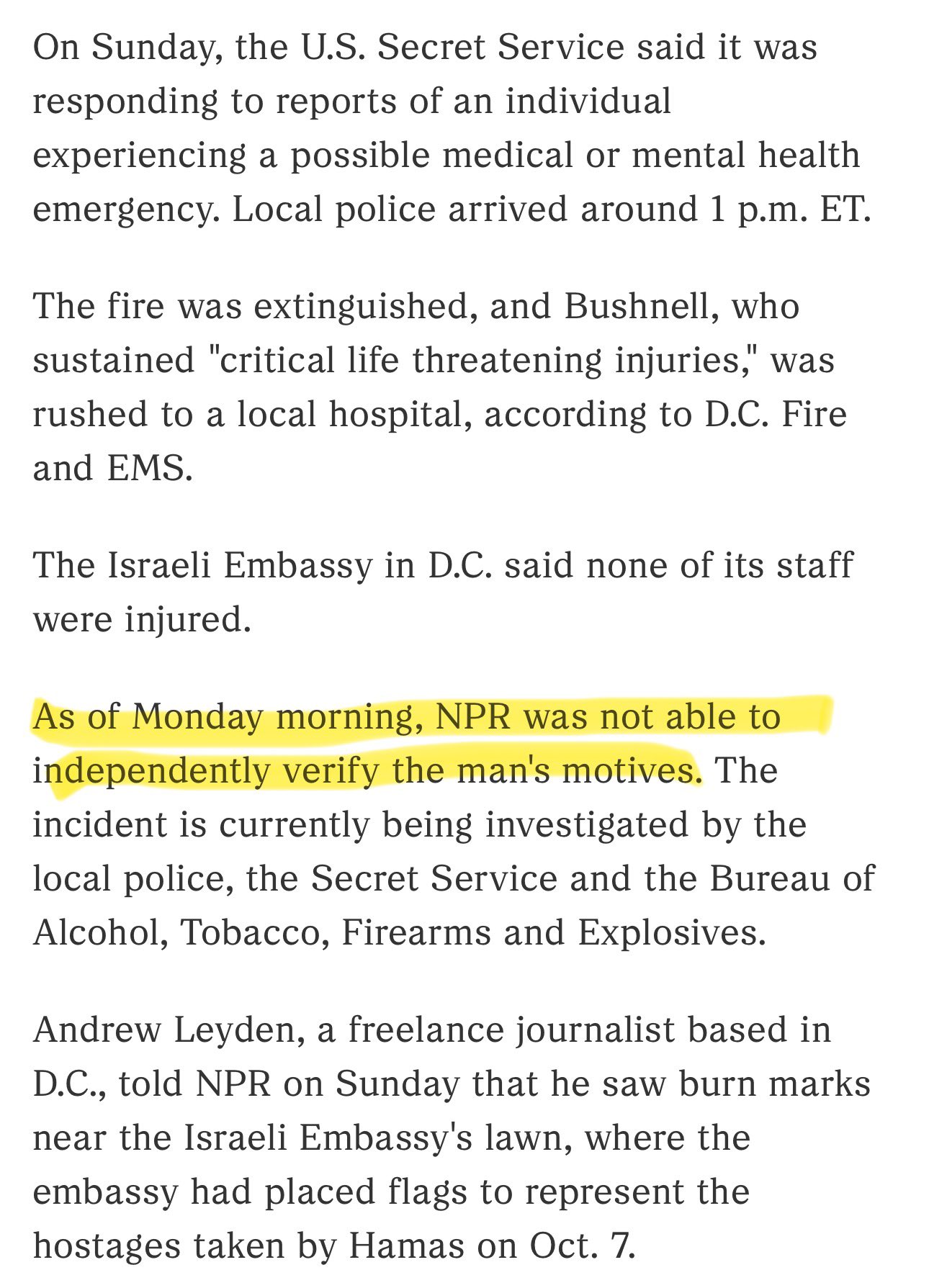
NPR sure thinks so.
You do understand the difference between reporting on understood facts and reporting on reasonable conclusions, right?
People can put one and one together to draw a conclusion, but it's actually a boon for journalists to independently verify what they report on. If you don't believe this, there are a number of conservative news outlets that may appeal to your need of reporting of unverified conclusions.
So here's my big issue with what you're saying.
When you say
My biggest issue is the mentions of Hamas hostages while not mentioning Palestine, Gaza or Genocide whatsoever.
I look and see that the article currently says:
Israel responded with a military assault on Gaza which, according the health ministry in the enclave, has killed over 29,000 people. Nearly 2 million people have been displaced and over 60% of housing has been damaged in Gaza, according to the United Nations Office for the Coordination of Humanitarian Affairs.
"BUT INTERNET, THEY MODIFIED THE ARTICLE ONCE IT GOT POPULAR!" you'll say.
To which I refer you to the earlier archive.org snapshot of this very same article that mentions neither Hamas hostages nor Palestine/Gaza.
So it seems your beef is neither with the initial release of an article, nor the current state, but instead with a random snapshot of a developing story, which is simply silly. The initial article from archive.org does not have the issue you don't like, and any argument you have for "further modifications of the article having more weight" automatically apply to the current versions of the article that does talk about Gaza.