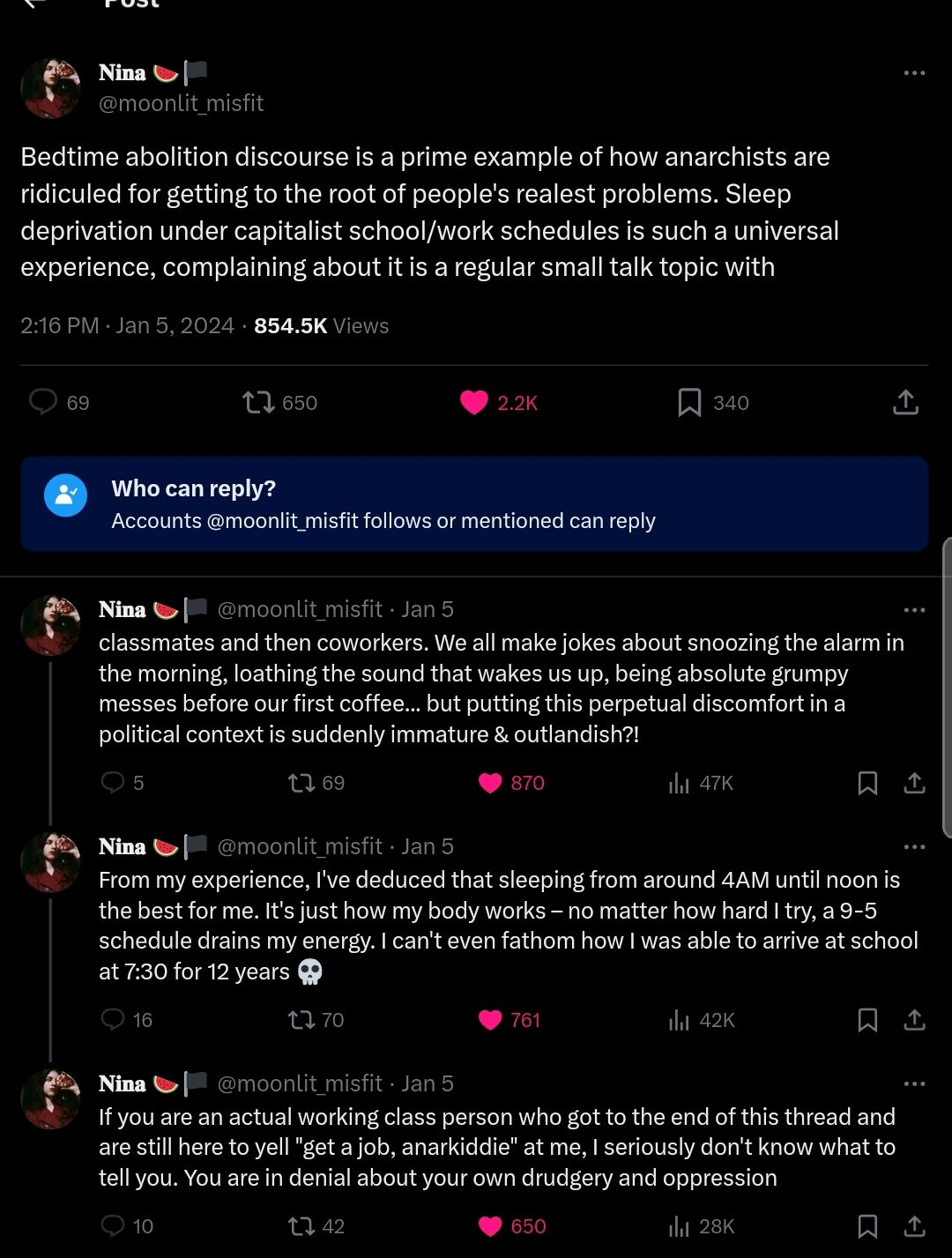
Listen, this user is a terminally online anarchist who complains about tankies and calls Stalin genocidal. But shes correct about this one. Mostly. I mean using the term "bedtime abolition" sounds dumb but Im pretty sure she only did that because its a common joke about anarchists. The core point is about how 9-5 work schedules dont work for everyone. As an ND person who struggles with culturally normal sleep schedules, I absolutely agree that society needs to accomodate these things. I absolutely agree that its literally normal talk everyone says that work schedules suck.
People saying "just go to bed on time" or "just pop a melatonin" have never been in the position of trying to do that and failing, just laying awake for hours until you finally fall asleep two hours before you need to be up.
https://nitter.net/moonlit_misfit/status/1743350718944121067