I suspect it mainly has to do with the fact that Windows usually outputs uncompressed audio (due to requiring extra licencing for codecs like Dolby on a general-purpose PC, unlike consoles).
Because of that, a dedicated sound card will take that weight off the CPU.
In my case in particular, i noticed an 5-8FPS increase when playing AC:Revelations with my dedicated sound card (bear in mind, my CPU is merely a Core 2 Duo), but that's because i still don't have the money to upgrade my whole rig.
Back on topic, i saw a video by Anton's Hardware that made a deep research on the topic, and while the conclusion was that, yes, on current games & hardware it didin't make up much of a difference, it could be useful for specific cases, (in some poorly optimized games you can get better frames, and in well-optimized games can push FPS a bit further.
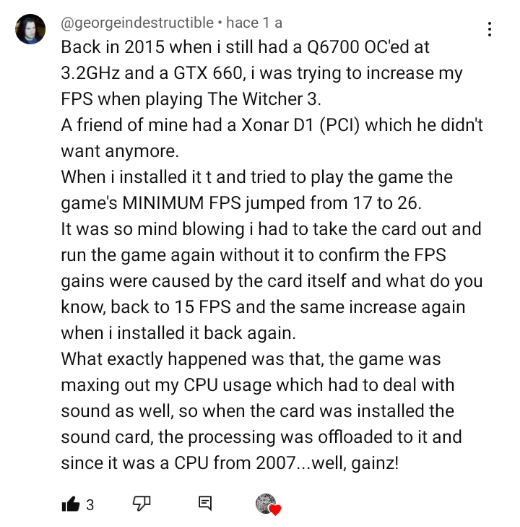
To finally end my comment, i'll add a link to the video i just mentioned, along with one of the comments that i think demonstrates a "best case scenario" for the use of a sound card in current gaming.