you are viewing a single comment's thread
view the rest of the comments
[–] 85 points 2 years ago (25 children)

Smishing is a phishing cybersecurity attack carried out over mobile text messaging. It's also known as SMS phishing.

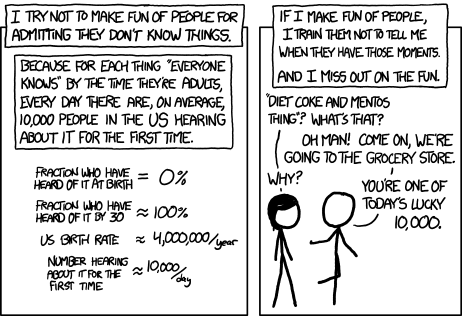
I had never heard that term before. Is it just a UKism, or am I one of today's lucky 10,000?
  • source
  • hideshow 25 child comments
  • [–] 99 points 2 years ago (4 children)

    Not just UK. It’s a stupid term that organizations use in cybersecurity trainings but no one else uses.

  • source
  • parent
  • hideshow 4 child comments
  • [–] 15 points 2 years ago (2 children)

    It feels like one of those where the people that have expertise enough to name new things are not experts in naming things.

  • source
  • parent
  • hideshow 2 child comments
  • [–] 15 points 2 years ago

    I encountered Quishing the other day - the inadvertent scanning of QR codes that take a browser to a malformed URL or site with malware embedded.

    Back in my day, it was just called "being a bit dense", especially as most cameras/QR readers will offer you a prompt to go to a website first.

  • source
  • parent
  • [–] 26 points 2 years ago (2 children)

    "Smishing" sounds like kiwi slang for playing Smash Bros

  • source
  • parent
  • hideshow 2 child comments
  • [–] 4 points 2 years ago

    At the beginning of Smash Bros Ultimate, some people jokingly tried to make "Smush" a thing (since the previous, fourth game, officially Super Smash Bros for 3DS/for Wii U, was often referred to as Sm4sh for short).

  • source
  • parent
  • [–] 16 points 2 years ago (6 children)

    I've worked in IT for 15 years and it's the first time I've heard SMS phishing condensed to smishing. But I specialize in servers and server security, so I'm not too surprised it's a thing.

  • source
  • parent
  • hideshow 6 child comments
  • [–] 3 points 2 years ago (4 children)

    We're forced to take a cybersecurity online course every year, and I'm constantly confused at what the terms are supposed to mean. Like why is spear phishing a thing? Why do we need specialized terms for every conceivable variation of a concept?

    Let's just stick with basic terms:

    • malware - malicious software
    • social engineering - covers calls, texts, emails, etc designed to get access to something they shouldn't
    • cracking - breaking cryptography
    • security hacking - breaking secure systems by exploiting bugs, such as zero-days or unpatched systems, usually to get privilege escalation

    I may be missing a couple, but I think most cybersecurity concepts can fit in one of those categories.

  • source
  • parent
  • hideshow 4 child comments
  • [–] 2 points 2 years ago (3 children)

    Well, I'm not a cybersec specialist, but my job requires us to comply with NIST cyber security frameworks, including going through external audits every year. In my opinion, your basic generalities are fine for those not working in that field specifically.

    However, for cyber security analysts and other specialists, I think specific subcategories are necessary. The reason being, IT is an absolutely massive field that contains a ton of specialties. As such, that means there are roughly an equal variety of malicious actors in the same field.

    There's no such thing really as a general "hacker" anymore. Especially when you take into consideration the rapid expansion of state sponsored cyber attacks/warfare. You'll have specialists for various types of:

    • phishing (e.g. targeting general pop/employees, or those going for specific people)
    • cryptography (e.g. those who try to compromise an org's PKI, or people finding vulns to exploit expired certs like what happened with Azure last year)
    • vuln hunters/exploiters (e.g. people that monitor known vulnerabilities and probe orgs' defenses to see if those vulns are present/unpatched/unmitigated, or even people who try to discover new ones)
    • malware engineers (e.g. fairly self explanatory, but malware is a very broad term and can come in numerous shapes and sizes, like even using infected images on a website to conduct RCE on mobile devices like what happened a year or two ago)

    Sorry, tangent is getting a bit long-winded now. Anyway, tldr; general terms are fine for laymen or non-specialists, but more precise terms are beneficial for experts in that field.

  • source
  • parent
  • hideshow 3 child comments
  • [–] 2 points 2 years ago (2 children)

    Sure, specialists can and should use specialized terms. But that's not what articles like this are targeting. Keep that to symposiums and whatnot, and keep the general public vernacular simple to avoid confusion. That's all I'm saying.

  • source
  • parent
  • hideshow 2 child comments
  • [–] 3 points 2 years ago (4 children)

    So is original phishing supposed to be over the phone? Like it's the email game called emishing or something?

  • source
  • parent
  • hideshow 4 child comments
  • [–] 1 point 2 years ago

    Nah phishing is a 90s term though probably coined in reference to phreaking. That started up in the 60s and by the 80s even the US had mostly switched to out of band signalling for their telephone system so none of the stuff worked any more.

  • source
  • parent