A land contract is a sale. So is a private mortgage. I don't want to be condescending here, but it's not unreasonable to expect that you know what those terms mean when you use them as examples. Your regime also expects that the seller carry the note (which in every or almost every jurisdiction is how a land contract works now--it's almost indistinguishable from a mortgage as a matter of law--and in any jurisdiction where I'm wrong about this, it's worse for the buyer anyway). If the seller is put in a position where you're trying to incentivize them to sell, demanding that they bear additional risk and cost isn't going to do that. I also assume you understand that this scenario increases the likelihood that the seller is the one left holding the bag if the bad credit purchaser defaults. Is it fair to assume the purchaser has bad credit? Yes, because purchasers with excellent credit and assets can already buy property now.
Doubling property taxes doesn't get you the result you want either. It just hurts the small owners, because property tax doesn't care how many properties you own; it only cares about the property to which it's attached. Large corporations don't care about a doubled property tax, because they can just eat it and raise the rents. They're already colluding to fix rents, and that's the whole problem. Tax credit for an occupier? Terrific. We'll put the CEO in the penthouse, put the rest of the C suite in our other penthouses downtown, and use the extra cash for stock buybacks.
What's actually needed is a wealth tax. Don't penalize someone for owning a nice house. Penalize them for owning thirty houses.
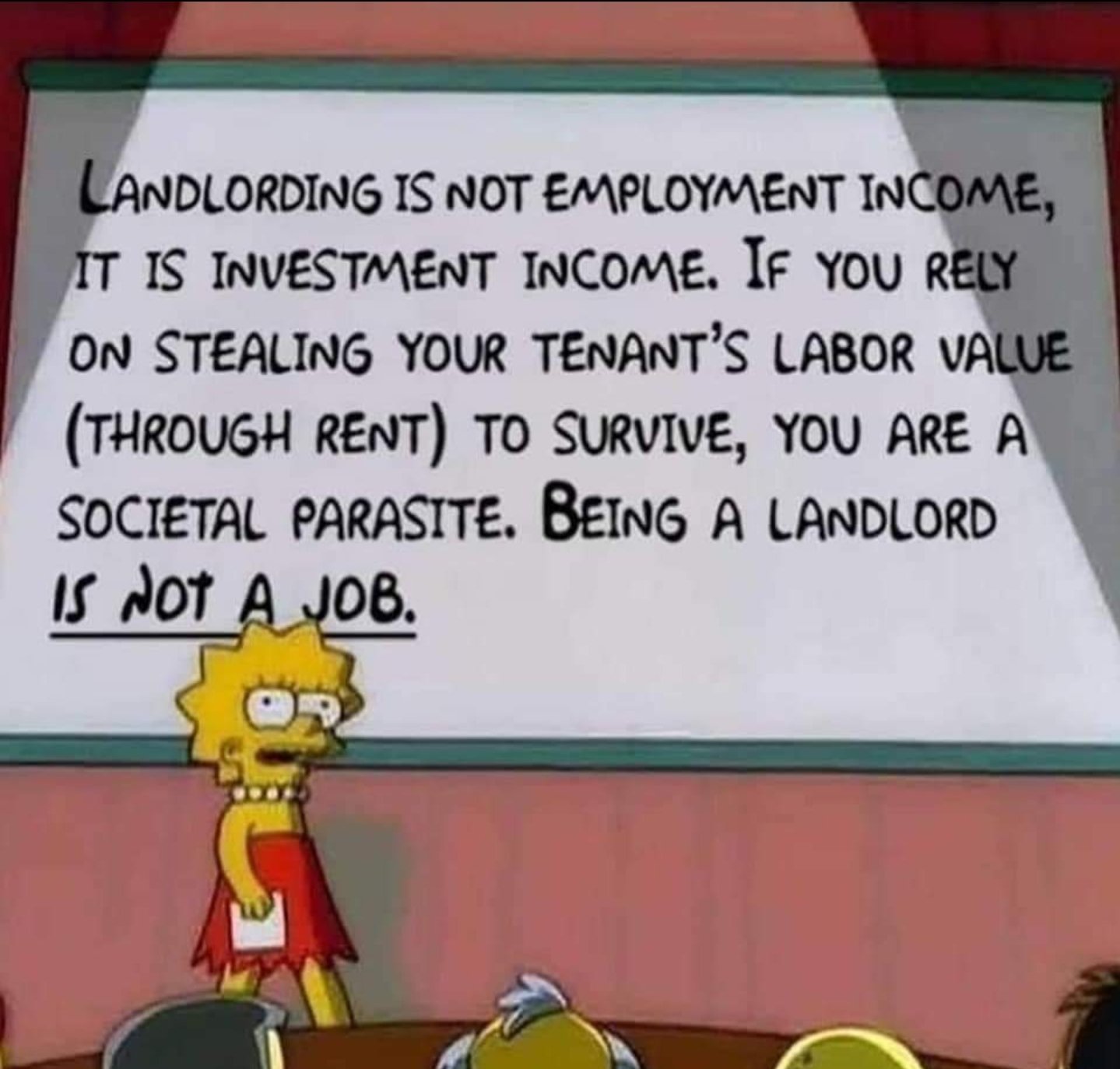
Now, I agree in principle that more people should be able to own land, and I also agree that the current situation in which land is being increasingly concentrated in the hands of fewer ultra-rich entities is unsustainable (and heinous, besides). But the "if you're currently a landlord, you should be forced to sell your property to whoever you might otherwise rent it to" just doesn't work. You simply can't make it attractive enough, because you can't change the reality that most renters just can't afford to buy the property. If they could, the problem wouldn't exist. If I own valuable property, there's no magic hand-waving you can do that is going to make me want to sell to someone who can't afford it, because I know they can't afford it! All putting their name on the deed does is ensure that the property gets sold when they default on the note, and whoever's holding the note has to cry foreclosure (and guess what? That does cost money and labor to the mortgagee, since the defaulting buyer is probably bankrupt/judgment proof).
So I'll just turn the place into a hog farm instead. Now instead of renting the house I inherited from the last generation to another family while I wait for my kids to grow up (a situation I expect to find myself in within the next decade or two), I'm instead going to find another way to make it valuable. There's no universe in which I'm going to sell it. I feel like that kind of scenario accounts for a lot of the upper middle class in the next fifty years, all else being the same. Putting those folks in the same boat with the corporate landlords is shooting your agenda in the foot.