So I've been thinking a lot about this. With a few exceptions you're actually pretty close to describing what we have in the States. There is more than one power producer in my state, and all the producers feed into the same grid whose infrastructure is regulated by the government. If a producer fails to produce, I can still get access to the electricity on the grid, but the key difference is that most of the delivery infrastructure is fully owned and operated by the same companies that do the production. I think we're getting hung up on the difference between provider and producer, which in America is mostly always the same thing.
It sounds like the Netherlands does in fact have two power providers then in the form of Enexis and TenneT, at least as I understand the term "provider" as we use it here. Or do you also maintain contracts/payments with individual power production firms that you haven't already described? What is the benefit of maintaining a contract with any of these companies if they already sold the power to Enexis/TenneT and they don't do any other administration services?
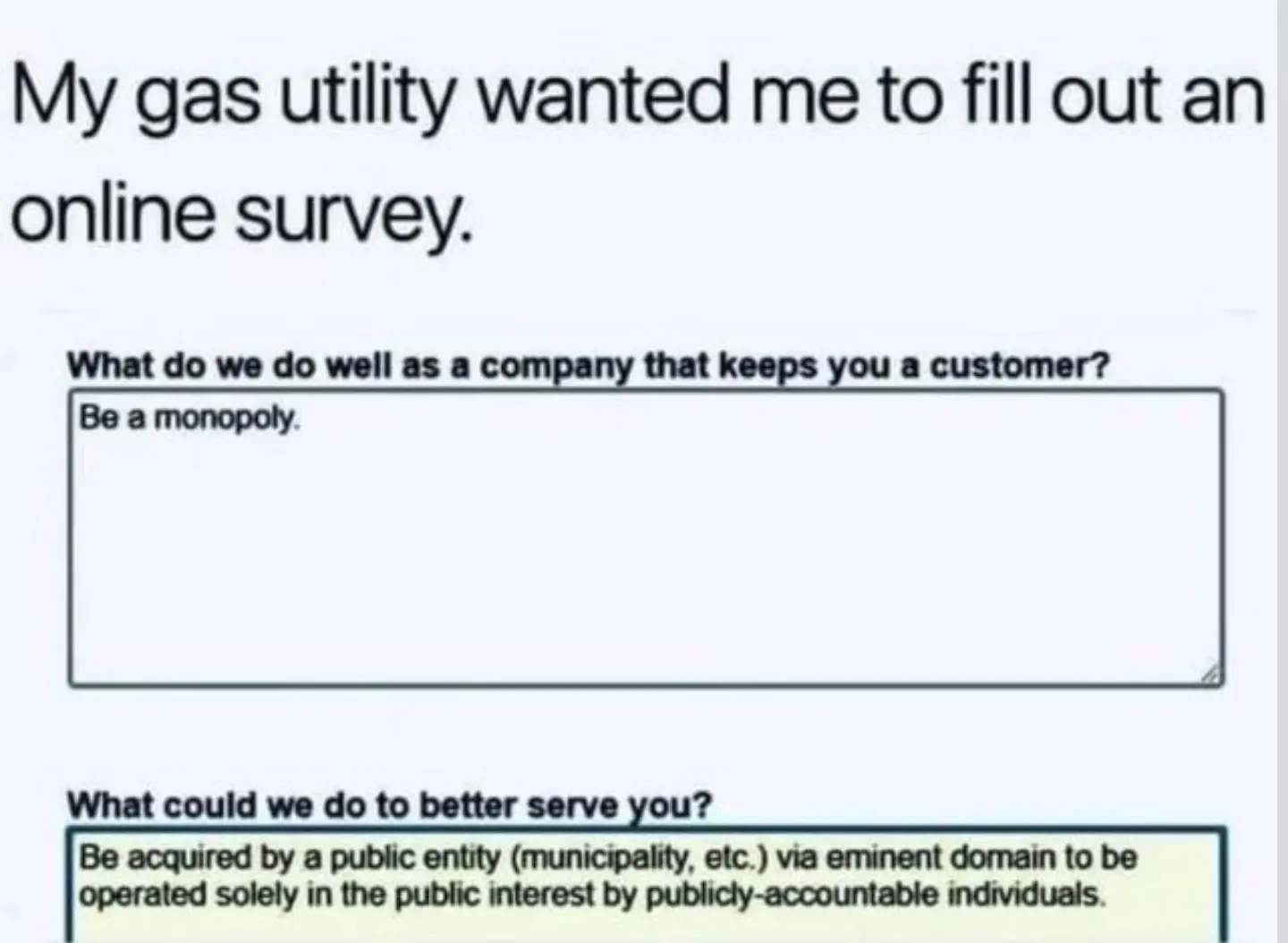
Our system is indeed fragile and I wish we could figure it out. I was a little off, DTE Energy services 2.3 million customers for power. We regularly experience outages affecting people into the hundreds of thousands. There's no incentive for them to improve the infrastructure since they're a monopoly. Most of the power here is delivered via free-standing poles instead of underground lines, which are obviously prone to issues related to wind/snow/trees. It fucking sucks. Even just separating the delivery system from private business would be a monumental shift.