top 50 comments

sorted by: hot top controversial new old
[–] 175 points 2 years ago (26 children)

Man, it's so wild how little we know about biology and how much we as a society spend on absolute, utter, bullshit, instead of figuring out how just the basics of us work.

I know it was never possible before modern computers, labs, and equipment, but we really should have like 1000x the amount of basic biological research going on that we do.

  • source
  • hideshow 26 child comments
  • [–] 85 points 2 years ago (8 children)

    I got a degree in microbiology in 95 and I did not know about these. Heck I even did a rotation in an xray crystallography lab which was super into cellular structures.

  • source
  • parent
  • hideshow 8 child comments
  • [–] 76 points 2 years ago (4 children)

    To be brutally honest, 95 was an eternity ago in microbiology terms. Human genome project didn’t complete till 2003. You must have some wild perspective on seeing us go from what are essentially a modern dark times to modern day

  • source
  • parent
  • hideshow 4 child comments
  • [–] 46 points 2 years ago (3 children)

    oh certainly. even at that time the xray crystallography lab was basically dying out as it was becoming more of a standard tool rather than an area of research.

  • source
  • parent
  • hideshow 3 child comments
  • [–] 15 points 2 years ago (2 children)

    From the Age of Enlightenment to essentially space flight, in a single career. 🤓🤌🏼

  • source
  • parent
  • hideshow 2 child comments
  • [–] 11 points 2 years ago (2 children)

    my exact feelings, I was like how come I did not know about these

  • source
  • parent
  • hideshow 2 child comments
  • [–] 30 points 2 years ago (2 children)

    we think about people 100 or 500 years ago and it seems absurd just how little they knew about health and the body, but hopefully we'll look the same to our descendants in as many years

  • source
  • parent
  • hideshow 2 child comments
  • [–] 12 points 2 years ago (1 child)

    When I was much younger, the favorite restaurant my family used to treat ourselves to every so often had tables decorated with olde timey newspaper pages. Still very much legible and permanently preserved in epoxy, the advertisements fascinated me — even way back when (≈/< 1930s), the same kinds of "revolutionary" "exotic" "new" tricks that <insert expert title(s)> hate, etc. squawked their bullshit for the punters & mouth breathers. Hell, even Pompeii revealed it's been going on for millennia... Same as it ever was. 🙇🏽‍♂️🤓😅

  • source
  • parent
  • hideshow 1 child comment
  • load more comments (1 reply)
  • [+] 17 points 2 years ago* (last edited 1 year ago) (3 children)
  • [–] 11 points 2 years ago

    Not entirely true. Humans have successfully modified the genome of plants and especially bacteria in a targeted way for years now. But things are of course much more complex in humans and vertebrates in general.

  • source
  • parent
  • [–] 14 points 2 years ago (5 children)

    Ask any expert in almost any field of science. If they're good at their jobs, they'll mostly tell you the same thing about their field.

    The scariest thing in the world is that you can apply that to nearly everything.

  • source
  • parent
  • hideshow 5 child comments
  • load more comments (1 reply)
  • [–] 69 points 2 years ago

    All I know is that Vaults are NOT the powerhouse of the cell.

  • source
  • [–] 46 points 2 years ago (3 children)

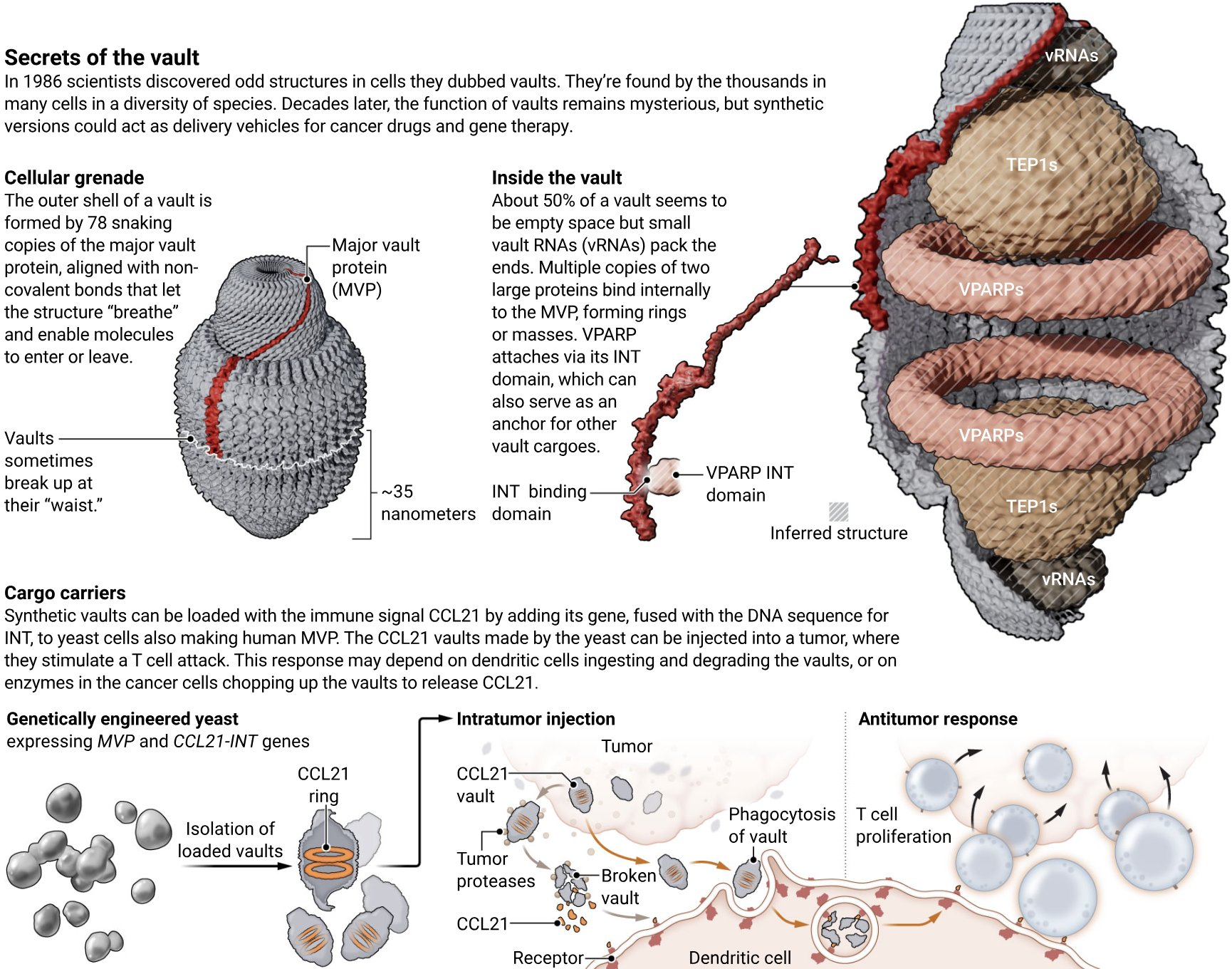
    The infographic appears to be noob-friendly because of its title but then expects you to know what VPARP is and what it's for

  • source
  • hideshow 3 child comments
  • [–] 45 points 2 years ago (3 children)

    Borderlands devs just came up with episode 5

  • source
  • hideshow 3 child comments
  • load more comments (1 reply)
    [–] 42 points 2 years ago* (last edited 2 years ago) (4 children)

    Interesting. Makes me wonder if it might play a role in some physical illnesses we haven’t found a cause for yet, especially immune mediated ones.

    Decent article going more in depth

  • source
  • hideshow 4 child comments
  • [–] 14 points 2 years ago (2 children)

    This is seriously interesting yet unsettling at the same time that these are not being studied more. For whatever reason I have a feeling that they are going to be way more important someday since all creatures have them.

  • source
  • parent
  • hideshow 2 child comments
  • [–] 18 points 2 years ago (1 child)

    I mean that’s biology. We can do some pretty cool stuff, but we just don’t understand how so much in the human body works. It’s so fucking complex.

  • source
  • parent
  • hideshow 1 child comment
  • I was instantly reminded of the appendix, where for so long we thought it was just an extraneous evolutionary leftover of an organ, only to find out not all that long ago that it actually acts as a seed vault of sorts for our gut's microbial biome to repopulate the good bacteria in case something bad happens and wipes them out.

  • source
  • parent
  • [–] 36 points 2 years ago (2 children)

    What if they're only to make the cells bigger so our bodies don't need to make so many of them to reach a total size as large as we are?

  • source
  • hideshow 2 child comments
  • [–] 15 points 2 years ago

    that wouldn't be an unfounded hypothesis. surface area to volume ratio is extremely important in cells. by artificially lowering the volume (by taking up a lot of it with a structure) the cell can make better use of its existing surface area

    though it looks like the volume of these structures aren't that large comparatively

  • source
  • parent
  • [–] 29 points 2 years ago (3 children)
  • [–] 22 points 2 years ago* (1 child)

    I find it fascinating that researchers have been able to acquire so much structural details about vaults without figuring out their purpose. It's possible that they're bits of evolutionary garbage - things that don't contribute to survival in any discernible way, but also don't hurt anything, so natural selection doesn't get rid of them.

  • source
  • hideshow 1 child comment
  • [–] 15 points 2 years ago

    Cells make too many of them to not have a purpose. There is a large energy cost to manufacturing 10k-100k per cell. That's enough for selection to remove them if they were useless.

    What's probably going on is they have an important but uncommon purpose. Like a fire extinguisher. They are in most buildings but a lot of people will never see a situation where one is needed.

  • source
  • parent
  • [–] 19 points 2 years ago

    Incredible article and read that will send me down the rabbit-hole later when I have some free time!

    Thanks for sharing!

  • source
  • [–] 13 points 2 years ago* (last edited 2 years ago)

    My wild speculation:

    Viral snares/traps? Semi-permeable membrane + RNA; the virus gets in and binds to the RNA inside, then the viral package is "spent" on fake RNA that can't replicate. The MVP shell could keep regular cellular machinery away from the trap RNA. There are thousands of these vaults within the cell, as to create a bunch of "pits" that a virus could fall into, thus effectively slowing viral spread, even a little?

    edit: from a link in the article:

    vault protein somehow helps epithelial cells internalize P. aeruginosa, which in turn speeds the clearance of an infection. Compared to normal mice, for example, MVP-less mice were 3 times as likely to die when their lungs were infected with the bacterium

    This was mentioned as a hypothesis that was determined to be fruitless. Was this ever explored further? Different viruses, organ systems, etc.? Since it's in a lot of different organisms, maybe some common virus that affects many different species is affected by this.

    This is very interesting.

  • source
  • [–] 8 points 2 years ago

    What's next, our cells commit usury?

  • source
  • [–] 5 points 2 years ago

    They're for storing the molecular correlates of trauma, obviously :3

  • source
  • [–] 4 points 2 years ago (1 child)

    Nice
    ( N.B. : Typo : "TIL about vaults, the largest structures in the our cells. No one knows what they're for." )

  • source
  • hideshow 1 child comment
  • load more comments (1 reply)
    load more comments
    view more: next ›