I think people already understand this, they just don’t care as long as their devices play the media they want to consume.
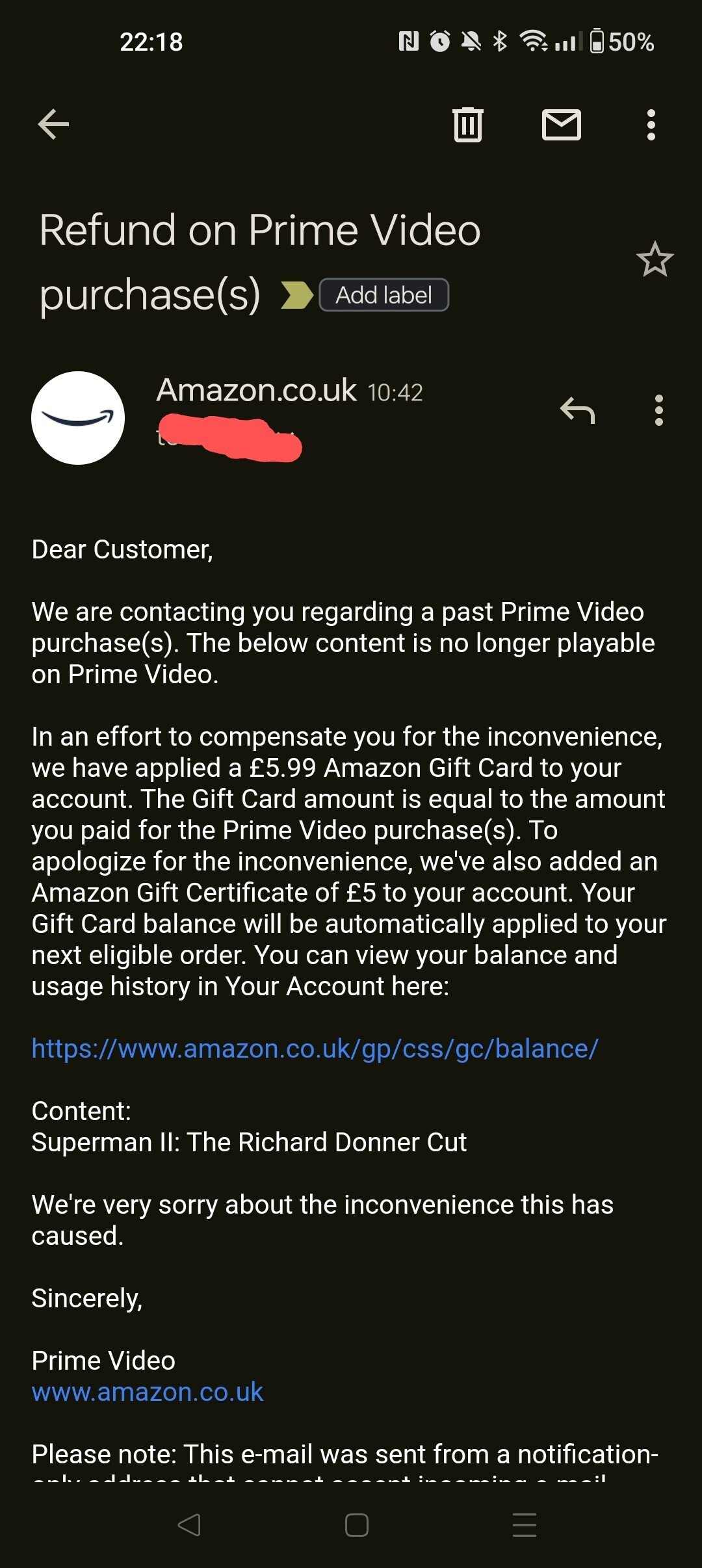
[...] Amazon refunded nearly 2x the purchase price [...] it covers a purchase of a Blu-Ray of the same movie on Amazon, so you’d have a path to complete resolution here.
Isn't this a tacit acknowledgement that either the consumer may not have understood that their purchase was revocable, or that there is not a true 'complete resolution', since the path to complete resolution is a physical replacement (and not persistent access to a digital distribution)?
People who purchase content through a digital distributor are doing so under the common understanding of "purchase" as an exchange of money for personal ownership. The word for the arrangement described here then isn't purchase, it's lease.
If Amazon or any other digital distributor actually offered purchases of digital copies of content, people would obviously choose it over access to a title that can be revoked at any time. The legality of the practice isn't really what is in question here, it's the suggestion that this is an informed consumer choice that is. And even if the consumer was fully cognizant of the temporary nature of the arrangement, they still do not have a true alternative for digital copies.