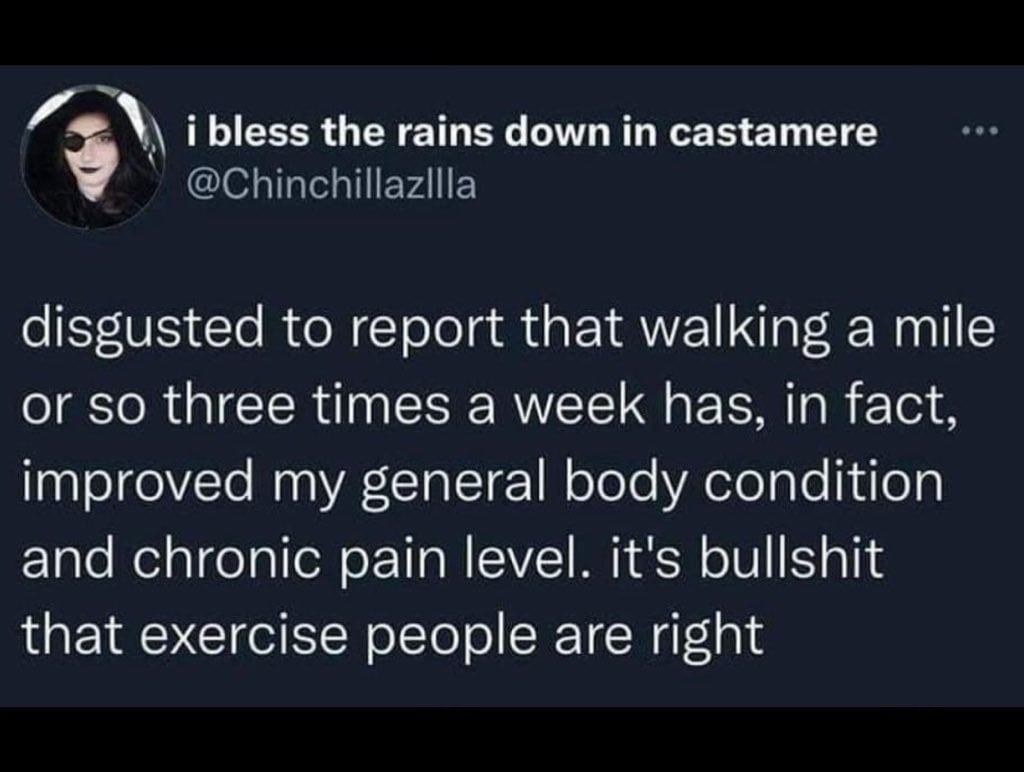
▲ 1826 ▼ There has to be another way (lemmy.world) submitted 2 years ago by The_Picard_Maneuver@lemmy.world to c/whitepeopletwitter@sh.itjust.works 169 comments fedilink hide all child comments
[–] Agent641@lemmy.world 5 points 2 years ago (3 children) Back when we lived to the ripe old age of 38. (Im kidding, I know that was mostly due to infection and whatnot) permalink fedilink source parent hideshow 3 child comments replies: [–] snooggums@midwest.social 19 points 2 years ago (2 children) The 'age of 38' thing isn't even due to infection ir disease, or even a thing at all. 38 was the average between the high number of infant deaths and the normal lifespan of someone who didn't. Ok, women giving birth skewed it a bit too. Men didn't die in battle as much as people think, since most battles were decided when a small portion of the losing side died and the rest fled. permalink fedilink source parent hideshow 2 child comments replies: [–] MBM@lemmings.world 8 points 2 years ago* (last edited 2 years ago) (1 child) Do we have numbers for the hunter-gatherer time that can even be skewed by infant deaths? Edit: as it turns out, yes, absolutely. Wikipedia says the lifespan is around 21-37 years but 57% died before 15 and 64% of those that don't would also reach 45. permalink fedilink source parent hideshow 1 child comment replies: [–] snooggums@midwest.social 3 points 2 years ago Yeah, mid twenties to mid thirties tends to be the peak of human health and physcial fitness which would be true no matter what conditions are, so it would make sense that disease, accidents, and other trauma would be far less fatal during those ages. permalink fedilink source parent
[–] snooggums@midwest.social 19 points 2 years ago (2 children) The 'age of 38' thing isn't even due to infection ir disease, or even a thing at all. 38 was the average between the high number of infant deaths and the normal lifespan of someone who didn't. Ok, women giving birth skewed it a bit too. Men didn't die in battle as much as people think, since most battles were decided when a small portion of the losing side died and the rest fled. permalink fedilink source parent hideshow 2 child comments replies: [–] MBM@lemmings.world 8 points 2 years ago* (last edited 2 years ago) (1 child) Do we have numbers for the hunter-gatherer time that can even be skewed by infant deaths? Edit: as it turns out, yes, absolutely. Wikipedia says the lifespan is around 21-37 years but 57% died before 15 and 64% of those that don't would also reach 45. permalink fedilink source parent hideshow 1 child comment replies: [–] snooggums@midwest.social 3 points 2 years ago Yeah, mid twenties to mid thirties tends to be the peak of human health and physcial fitness which would be true no matter what conditions are, so it would make sense that disease, accidents, and other trauma would be far less fatal during those ages. permalink fedilink source parent
[–] MBM@lemmings.world 8 points 2 years ago* (last edited 2 years ago) (1 child) Do we have numbers for the hunter-gatherer time that can even be skewed by infant deaths? Edit: as it turns out, yes, absolutely. Wikipedia says the lifespan is around 21-37 years but 57% died before 15 and 64% of those that don't would also reach 45. permalink fedilink source parent hideshow 1 child comment replies: [–] snooggums@midwest.social 3 points 2 years ago Yeah, mid twenties to mid thirties tends to be the peak of human health and physcial fitness which would be true no matter what conditions are, so it would make sense that disease, accidents, and other trauma would be far less fatal during those ages. permalink fedilink source parent
[–] snooggums@midwest.social 3 points 2 years ago Yeah, mid twenties to mid thirties tends to be the peak of human health and physcial fitness which would be true no matter what conditions are, so it would make sense that disease, accidents, and other trauma would be far less fatal during those ages. permalink fedilink source parent