There are no ethical choices under first-past-the-post voting. We must instead make a decision that reduces the most harm.
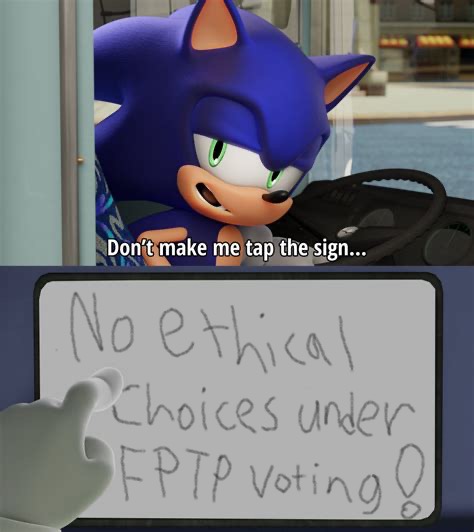
There are no ethical choices under first-past-the-post voting. We must instead make a decision that reduces the most harm.
I’ve never seen any sort of logical response to this argument.
:::spoiler I can provide one, and I'll also say, I've never seen a logical response to this argument, beyond drive-by downvotes.
Voters have something politicians want (votes) and politicians have something voters want (the ability to set policy). That means that there's a negotiation to be had. And the worst thing you can do in a negotiation is to say that you'll unconditionally agree to whatever terms the other side offers.
To use an example, there's a game/social experiment called "The Ultimatum Game." In it, the first player offers the second player an offer on how to split $100, and the second player chooses to accept or deny the offer. If both players behave as rational, "homo economicus" the result will be that player 1 offers a $99-$1 split. But in practice, most second players will reject offers beyond a certain point, usually around $70-$30, and most first players will offer more even splits because of that possibility. The only reason that the $99-$1 case is "rational" is because it's a one-off interaction. There is a cost associated with accepting such a deal, and that cost is that you've established yourself as a pushover for all future interactions, and there is no reason that anyone would offer you more than $1 if the game were repeated.
In the same way, an organized political faction that can credibly threaten to withhold support unless a baseline of demands are met will have more political leverage compared to a faction that unconditionally supports the "lesser evil." If a politician only needs to be marginally less bad than the alternative to win your vote, then they have no incentive to be more than marginally less bad. It's the same way that if you know the second player will act rationally, you can get away with only offering them $1 because $1>$0. Declaring a minimum baseline and sticking to it is a valid political strategy, in the same way "I won't accept less than $30, even if it means I get nothing" is a valid game strategy.
Whether you think that applies in this particular case is another question, but if you were looking for an logical explanation of the reasoning, there it is.