Still here lurking!
I love the Pathfinder basic flip mat and bigger basic flip mat. You can use wet and dry erase on them. They’ll last forever. They’re really easy to care for. And they’re inexpensive.
They fold up instead of rolling up but they’re great.
I’ve been using two chessex battle maps for a few months now and they’re great too but dry erase only, more expensive, and need more special care like not leaving anything on them, not folding them, and using the right colors.
If I had to pick one, it would be the Pathfinder basic flip mat.
https://paizo.com/products/btq02eip?Pathfinder-FlipMat-Basic
Really fun video. Getting a consistent group together is probably the hardest part of running a game. If you can enjoy a game with even as few as one or two players, that can work well.
I use a few tricks to keep groups going:
- Have six full-time players.
- Have two "on call" players – these are players who are interested but might not be able to commit regularly and are willing to jump in when a spot is open.
- Run with as few as four. This means it takes five people cancelling before you can't run a game.
- Run at a consistent time each week.
- Run shorter games – I go for 3 hours.
That's helped me keep multiple groups going for ten years with one group consistent for about 20 years.
I wrote an article with my thoughts on running mysteries here:
https://slyflourish.com/running_investigations_and_mysteries.html
The new DMG likewise has a big table for figuring out how many rolls would succeed given a target number and number of rolls.
I have two approaches I prefer these days:
-
The damage pool. Instead of tracking individual damage, you pool damage in a single tally and remove the last monster hit when it crosses the HP of a monster. Add up all the damage and remove a bunch of monsters with an area attack.
-
Group up sets of monsters into four groups and then roll once for each group. If sixteen skeletons have to save versus a turn undead. Group them into four groups of four and roll four times.
We have a handful of ideas like this in Forge of Foes and the Lazy DMs Companion and released them under a CC license here:
https://slyflourish.com/lazy_gm_resource_document.html#runninghordes
I put my top tips here after about 15 years of collecting the best tips from hundreds of GMs:
https://slyflourish.com/top_advice.html
- Let the Story Unfold at the Table
- Set Up Situations and Let the Characters Navigate Them
- Be On the Characters Side
- Use Tools and Techniques that Help You Prepare to Improvise
- Focus on your Next Game
- Build Your World, Campaign, and Adventures from the Characters Outwards
- Pay Attention to Pacing
- Focus on the Fiction First and Mechanics Second
The OSR podcast Between Two Cairns does critiques of old school adventures.
The Black Flag SRD also has some simpler spellcaster NPCs.
This article may help:
Thank you!
This is a question for TTRPG GMs. What RPG books, supplements, or accessories do you find yourself using year after year? Which RPG products provide the biggest regular impact at your table?

I'd love a go at Crown and Skull by Runehammer. It looks really interesting. I'd like to play it before I run it and, frankly, just don't have the time.
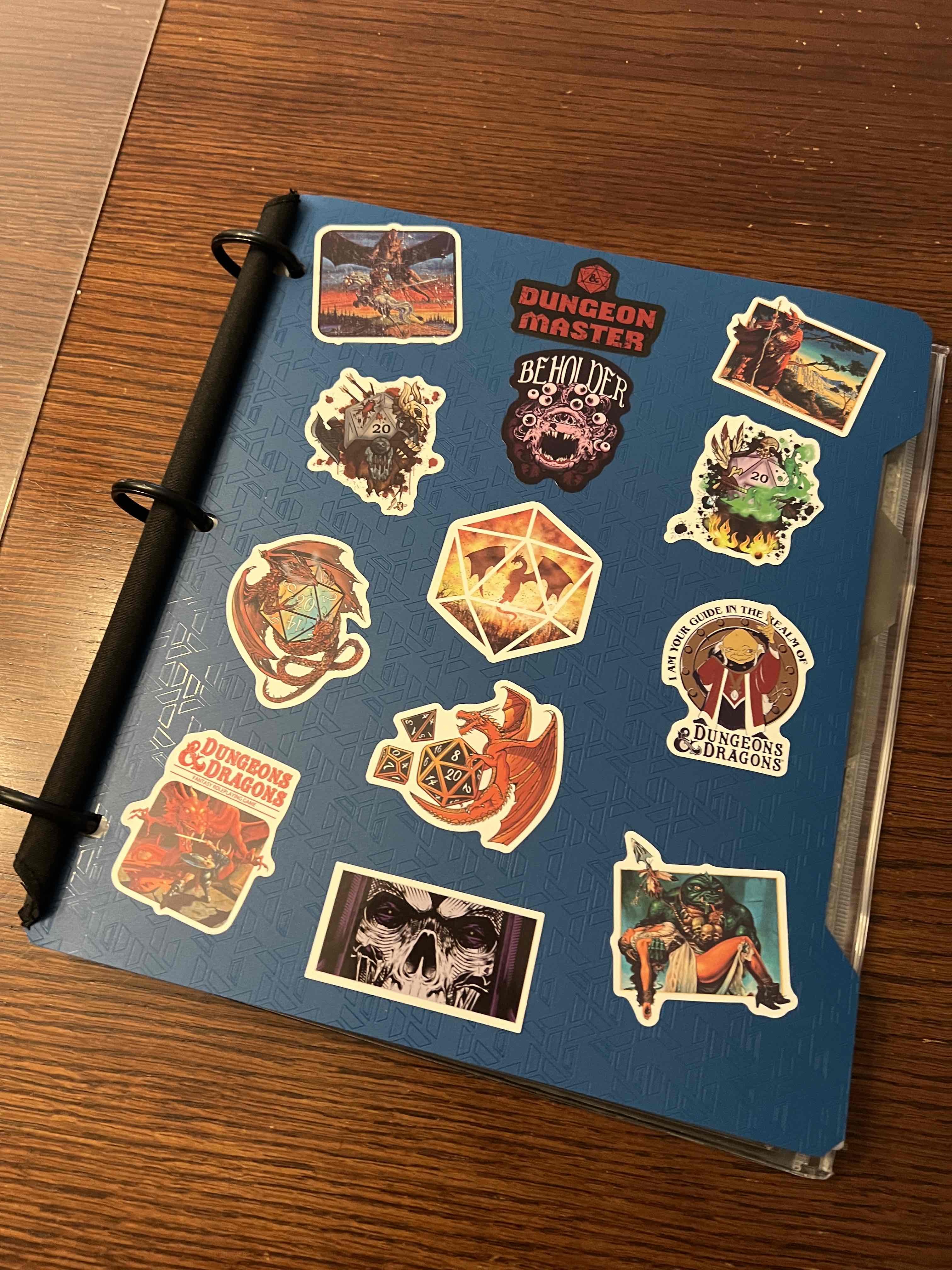
Show us some pictures of your gaming, notebook or binder. I’m getting back into using a physical binder now that my games are more in person, and I need the inspiration!
view more:
next ›