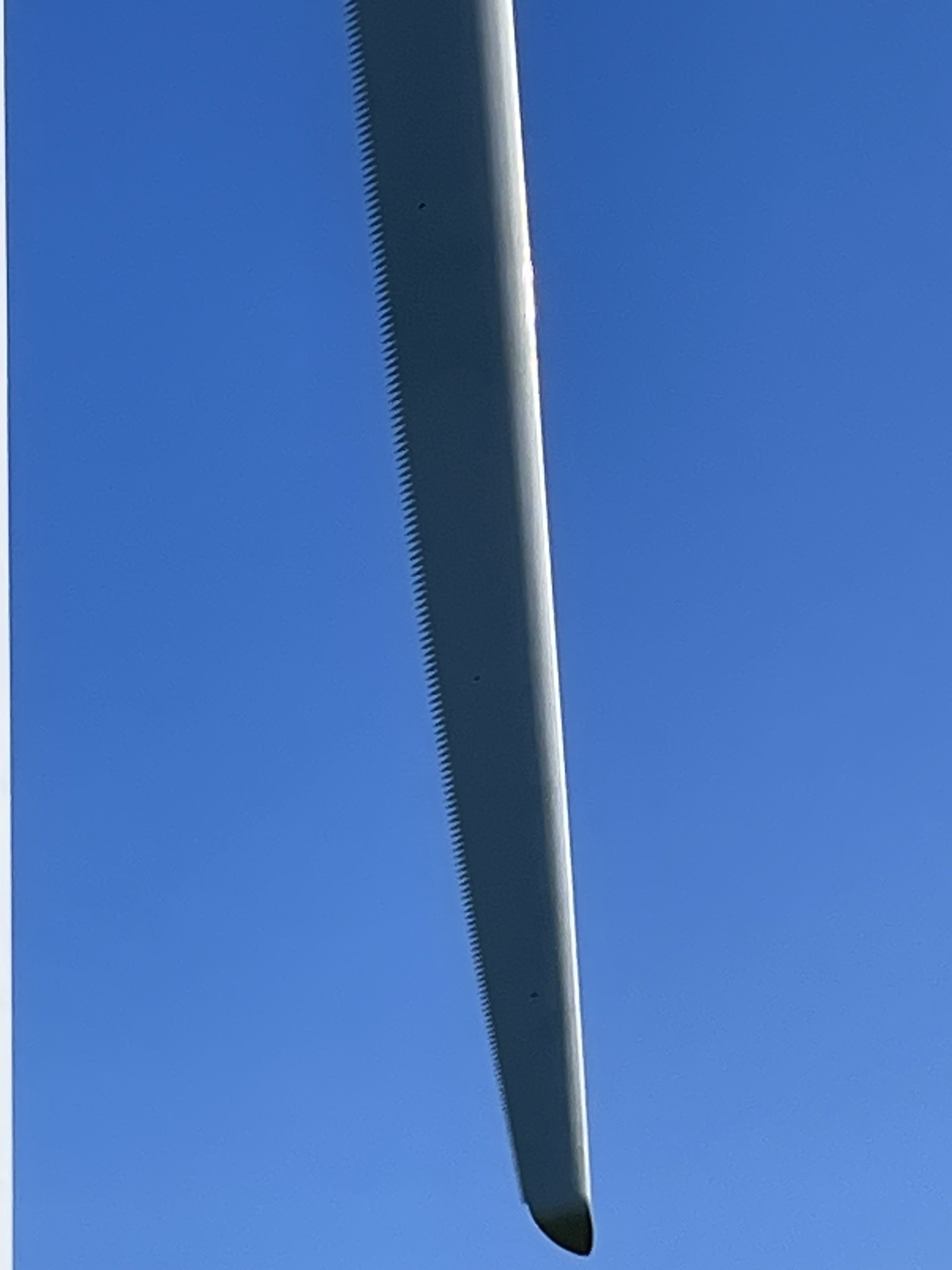
It reduces the turbulence at the trailing edge, reducing noise. Bernouli's principle dictates that part of the force on the blade is due to the airflow on each side moving at different speeds, if the crashed into each other all at once, you'd get a lot of turbulence, and hence noise. The serrations ensure that the two flows meet over a longer distance, reducing said turbulence.
post
replies:
Helps them chop up birds better
As others have said, mostly about noise reduction. There's actually work looking whether the same concept could be developed for electric aircraft.
They disrupt the trailing edge eddies - which is what causes any noise - and so make them quieter. They are often fitted in areas where sound might be a particular issue.
replies:
all 10 comments