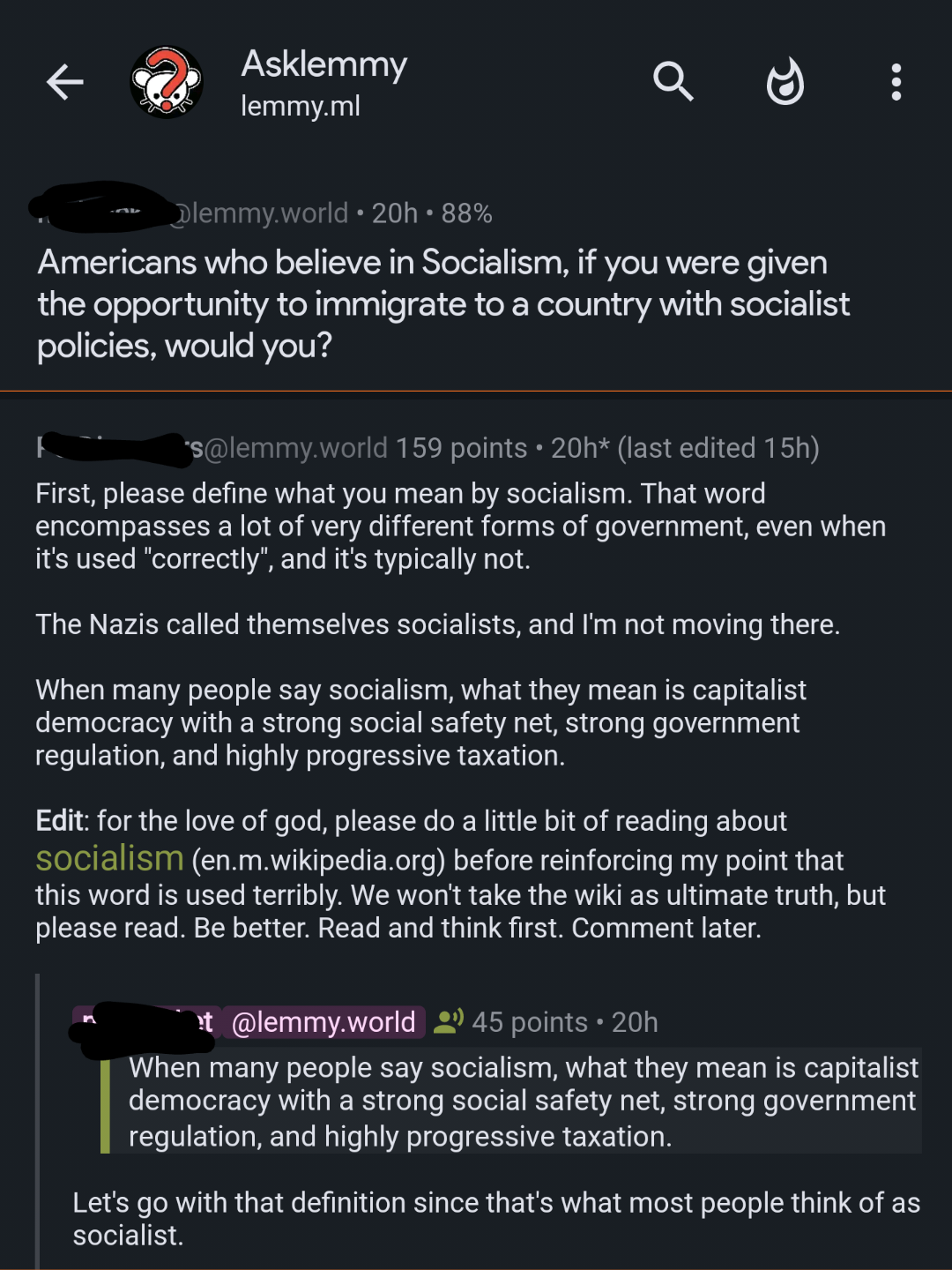
The problem with language is that the only thing required for a definition to be "correct" is for that definition to be in common use. That's just how language works.
You can try to fight against that, and lead a never ending struggle to halt the conversation and say, "no no, the Real definition is this!" every time someone uses a definition that conflicts with the definition you use. But at some point fighting against semantic drift and taking a stubbornly prescriptivist stance on how words should be defined is a fruitless battle that doesn't actually help you communicate those ideas more clearly. Instead, you should adopt a different communication strategy that is less prone to misunderstandings.
There are so many different and contradictory understandings of what it means to be "progressive" "leftist" "liberal" "socialist" "communist" and so on that it's impossible to create a definition that everyone agrees on. Even if you correctly incorporate things like historical origin, first recorded use, and the context in which a world was popularized when evaluating how you define those terms, those things don't actually help communicate your thoughts more clearly. Which should ideally be the mechanical function that language facilitates.
Part of the issue is that those words are very broad and general, and encompass a wide variety of competing schools of thought who all nonetheless identify themselves using these umbrella terms. Of course some of the disagreement over definitions comes from bad actors deliberately mischaracterizing these things for propagandistic/rhetorical purposes, but even if that wasn't the case umbrella terms such as these are inherently more prone to semantic drift over time.
A better strategy for communicating political ideas is to use terms that are much more specific in context, such as Marxism. Of course, Marxism has the same problem of bad actors intentionally mischaracterizing what Marxism is, but because Marxism is a much more specific thing it is much easier to resolve disputes over contradictory definitions. This is because there is an authoritative source you can refer back to in order to resolve conflicts and disagreements over definitions. Because Marxism is defined by the collected body of work authored by Marx (as well as those who contributed to that body of work and expanded upon that work over the years), it is much easier to have a conversation with agreed upon definitions by referencing that body of work.
Edit: But to get back on topic and define socialism, "Socialism is when the government does stuff."