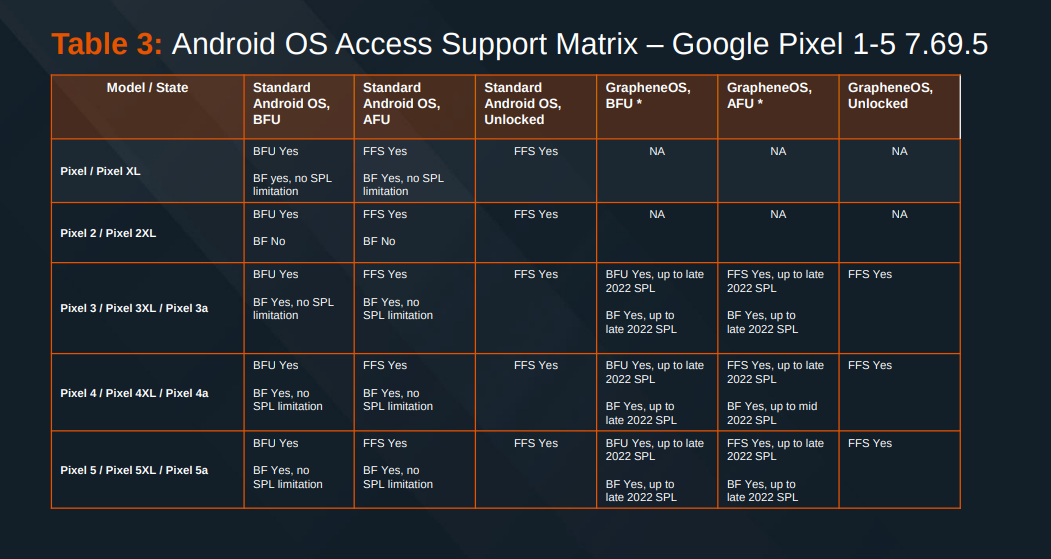
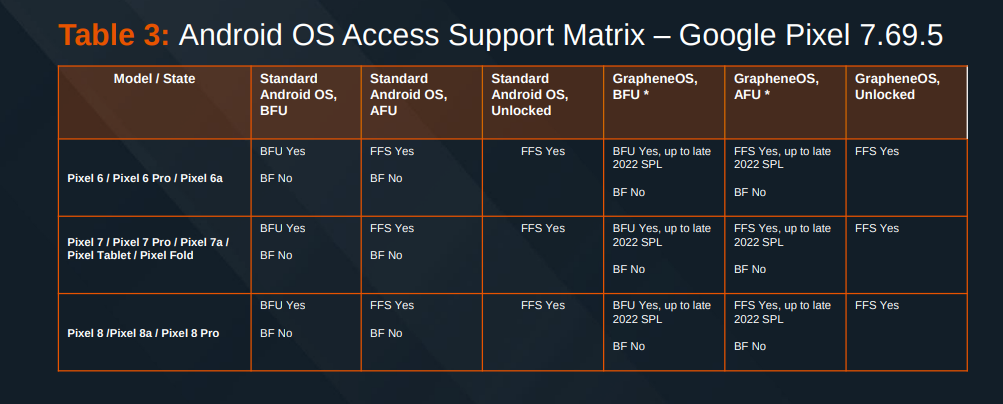
That rate limiting can easily be bypassed by an attacker. In order to be effective, the rate limit needs to be enforced by tamper-resistant hardware, i.e. a secure element. Here are some of the requirements for a secure element: https://developer.android.com/privacy-and-security/keystore#StrongBoxKeyMint
An implementation of StrongBox KeyMint must contain the following:
Its own CPU
Secure storage
A true random-number generator
Additional mechanisms to resist package tampering and unauthorized sideloading of apps
A secure timer
A reboot notification pin (or equivalent), like general-purpose input/output (GPIO)
For details, I recommend reading:
- https://grapheneos.org/faq#encryption
- https://blog.quarkslab.com/android-data-encryption-in-depth.html
Only devices with a proper implementation of a secure element (Titan M2, i.e. Pixel 6 or later, or the Apple SEP, i.e. iPhone 12 or later) are actually resistant to brute-force attacks by forensic data extraction tools, such as Cellebrite or GrayKey. GrapheneOS has obtained some internal documents from multiple forensics companies. They published the Cellebrite docs at https://discuss.grapheneos.org/d/14344-cellebrite-premium-july-2024-documentation
Specifically, I recommend looking at this chart:
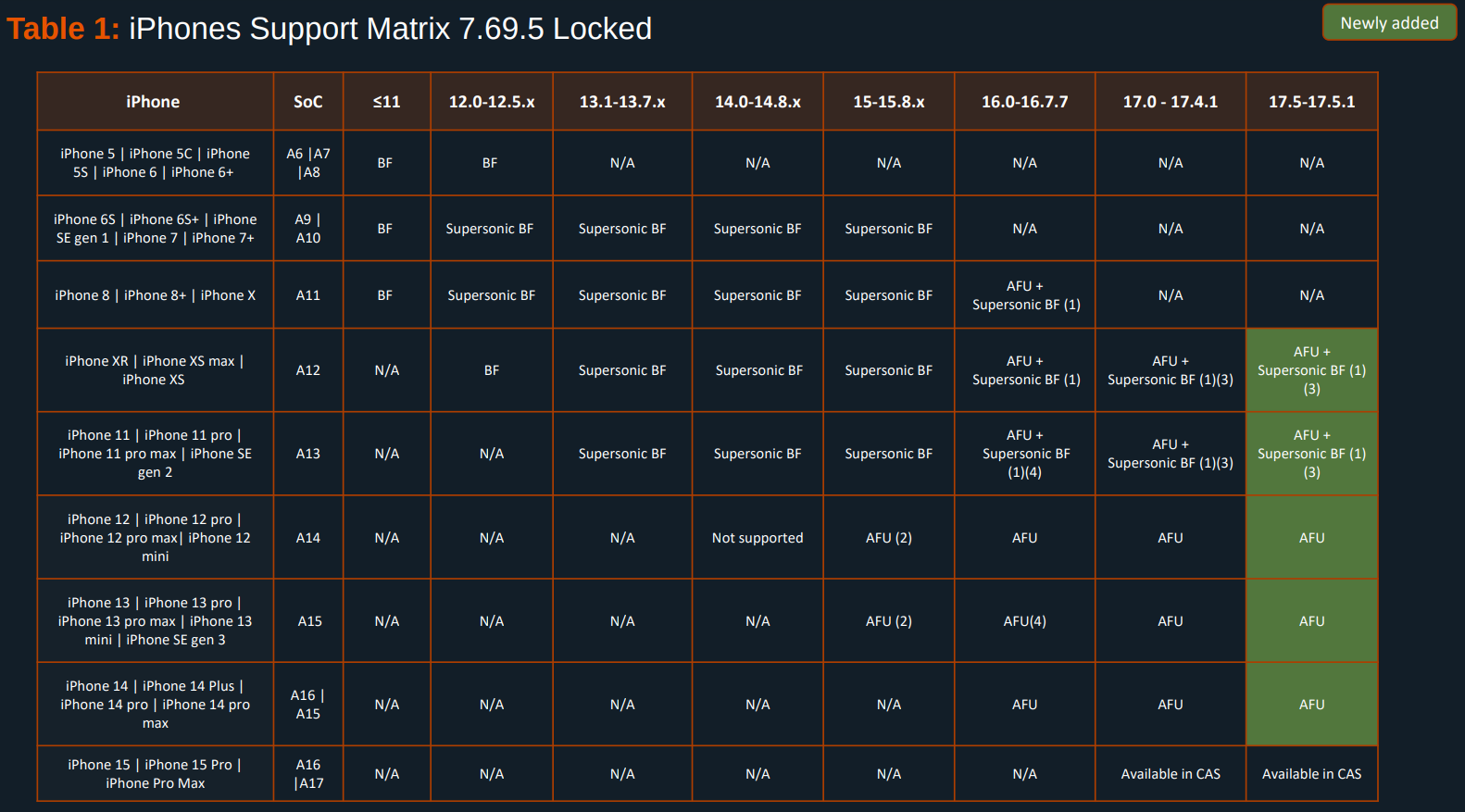
It clearly shows that data cannot be extracted from iPhones with the SEP, unless the device is in the AFU state, meaning that the encryption keys are kept in memory.
Those are the charts for Pixels: