Cross-posted from "TRUE communism!" by @Muaddib@sopuli.xyz in !politicalmemes@lemmy.world
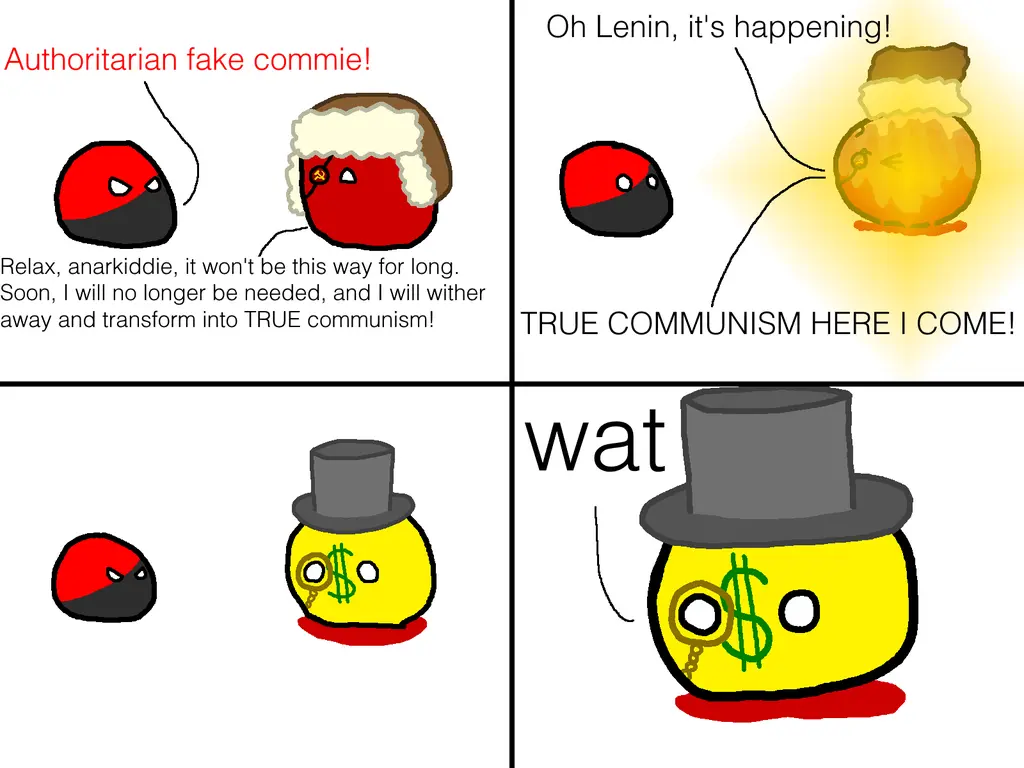
Cross-posted from "TRUE communism!" by @Muaddib@sopuli.xyz in !politicalmemes@lemmy.world
The former is partially true, (though not intrinsic to socialism, but the unique flaws in the later years of the soviet system), the latter, no. The large majority of the people supported the system and wished to retain it until the very end due to the social instability at the time, and the larger majority regret its fall. The "internal contradictions" were the liberal reforms that added elements embodied into the system that worked against a collectivized and planned economy.
The soviet economy was relatively strong, but towards the end because of liberalization, as well as problems from needing to dedicate a large proportion of production to millitarization to keep parity with the US, it began to decrease the rate of growth that was so rapid earlier on.
More importantly, it's absolutely true that the dissolution of the USSR was avoidable. The mistakes made by the soviets towards the end don't need to be repeated, we can learn from what worked so well with the socialist system while also not repeating their mistakes. The torch is carried on by countries that have learned, like Cuba, the PRC, etc.
Marxism is a science, and is improved through practice.