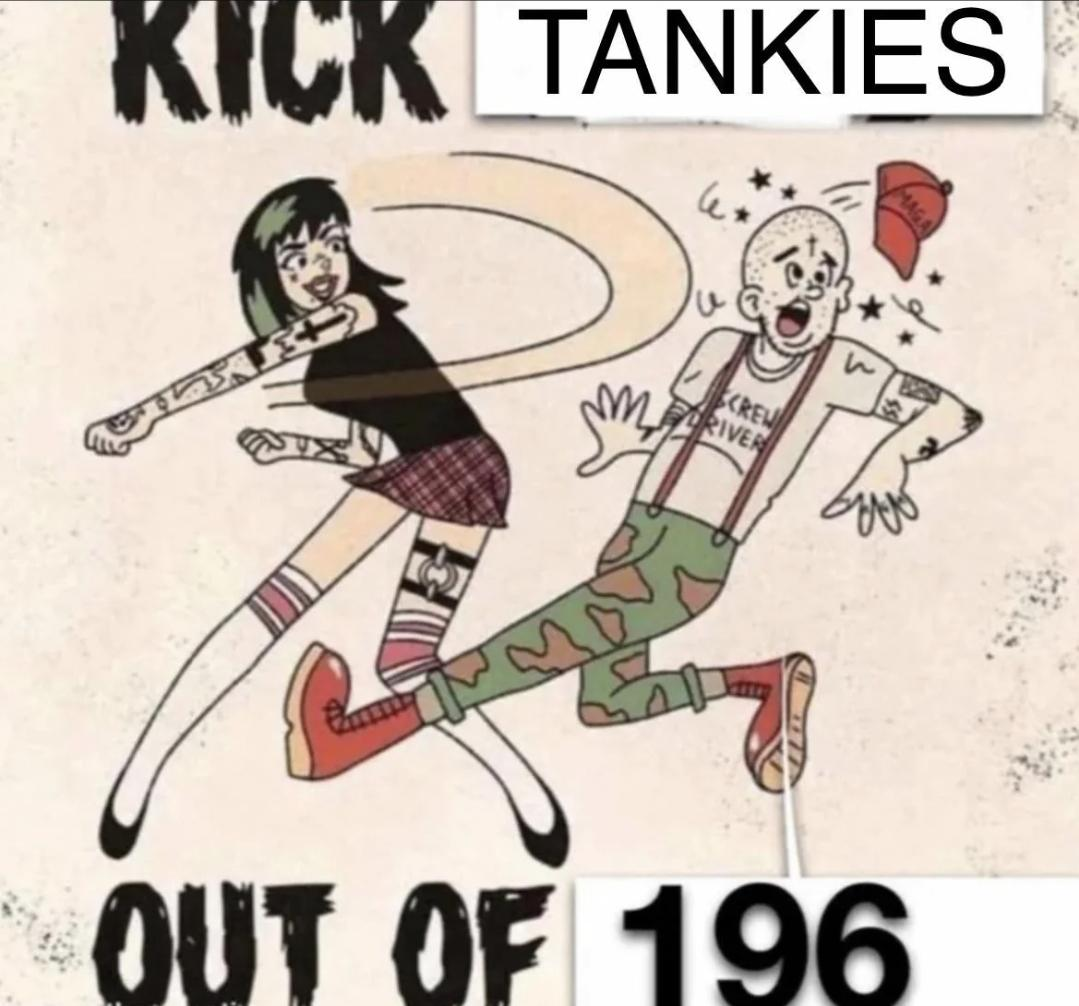
▲ 137 ▼ important rulepost (lemmy.world) submitted 3 years ago by dsmaster7173@lemmy.world to c/196@lemmy.world 97 comments fedilink hide all child comments
[–] KermitLeFrog@lemmy.world 0 points 3 years ago (1 child) My opinion on the USSR is that Lenin was cool, Trotsky was cool, and everyone else deserved to be hanged in Minecraft permalink fedilink source parent hideshow 2 child comments replies: [–] weirdwallace75@lemmy.world -3 points 3 years ago (1 child) Lenin and Trotsky were mass murderers. permalink fedilink source parent hideshow 2 child comments replies: [–] brain_in_a_box@lemmy.world 2 points 3 years ago (1 child) What do you think a revolution is? permalink fedilink source parent hideshow 2 child comments replies: [–] weirdwallace75@lemmy.world 0 points 3 years ago Not the massacre of the Kronstadt Rebellion: Disappointed in the direction of the Bolshevik government, the rebels—whom Leon Trotsky himself had praised earlier as "adornment and pride of the revolution"—demanded a series of reforms: reduction in Bolshevik power, newly elected soviets (councils) to include socialist and anarchist groups, economic freedom for peasants and workers, dissolution of the bureaucratic governmental organs created during the civil war, and the restoration of civil rights for the working class. Convinced of the popularity of the reforms they were fighting for (which they partially tried to implement during the revolt), the Kronstadt seamen waited in vain for the support of the population in the rest of the country and rejected aid from emigrants. Although the council of officers advocated a more offensive strategy, the rebels maintained a passive attitude as they waited for the government to take the first step in negotiations. By contrast, the authorities took an uncompromising stance, presenting an ultimatum demanding unconditional surrender on March 5. Once this period expired, the Bolsheviks raided the island several times and suppressed the revolt on March 18 after shooting and imprisoning several thousand rebels. [snip] Trotsky and his commander-in-chief, Sergey Kamenev, had approved chemical warfare by gas shells and balloons against Kronstadt if the resistance continued. Not the Red Terror permalink fedilink source parent
[–] weirdwallace75@lemmy.world -3 points 3 years ago (1 child) Lenin and Trotsky were mass murderers. permalink fedilink source parent hideshow 2 child comments replies: [–] brain_in_a_box@lemmy.world 2 points 3 years ago (1 child) What do you think a revolution is? permalink fedilink source parent hideshow 2 child comments replies: [–] weirdwallace75@lemmy.world 0 points 3 years ago Not the massacre of the Kronstadt Rebellion: Disappointed in the direction of the Bolshevik government, the rebels—whom Leon Trotsky himself had praised earlier as "adornment and pride of the revolution"—demanded a series of reforms: reduction in Bolshevik power, newly elected soviets (councils) to include socialist and anarchist groups, economic freedom for peasants and workers, dissolution of the bureaucratic governmental organs created during the civil war, and the restoration of civil rights for the working class. Convinced of the popularity of the reforms they were fighting for (which they partially tried to implement during the revolt), the Kronstadt seamen waited in vain for the support of the population in the rest of the country and rejected aid from emigrants. Although the council of officers advocated a more offensive strategy, the rebels maintained a passive attitude as they waited for the government to take the first step in negotiations. By contrast, the authorities took an uncompromising stance, presenting an ultimatum demanding unconditional surrender on March 5. Once this period expired, the Bolsheviks raided the island several times and suppressed the revolt on March 18 after shooting and imprisoning several thousand rebels. [snip] Trotsky and his commander-in-chief, Sergey Kamenev, had approved chemical warfare by gas shells and balloons against Kronstadt if the resistance continued. Not the Red Terror permalink fedilink source parent
[–] brain_in_a_box@lemmy.world 2 points 3 years ago (1 child) What do you think a revolution is? permalink fedilink source parent hideshow 2 child comments replies: [–] weirdwallace75@lemmy.world 0 points 3 years ago Not the massacre of the Kronstadt Rebellion: Disappointed in the direction of the Bolshevik government, the rebels—whom Leon Trotsky himself had praised earlier as "adornment and pride of the revolution"—demanded a series of reforms: reduction in Bolshevik power, newly elected soviets (councils) to include socialist and anarchist groups, economic freedom for peasants and workers, dissolution of the bureaucratic governmental organs created during the civil war, and the restoration of civil rights for the working class. Convinced of the popularity of the reforms they were fighting for (which they partially tried to implement during the revolt), the Kronstadt seamen waited in vain for the support of the population in the rest of the country and rejected aid from emigrants. Although the council of officers advocated a more offensive strategy, the rebels maintained a passive attitude as they waited for the government to take the first step in negotiations. By contrast, the authorities took an uncompromising stance, presenting an ultimatum demanding unconditional surrender on March 5. Once this period expired, the Bolsheviks raided the island several times and suppressed the revolt on March 18 after shooting and imprisoning several thousand rebels. [snip] Trotsky and his commander-in-chief, Sergey Kamenev, had approved chemical warfare by gas shells and balloons against Kronstadt if the resistance continued. Not the Red Terror permalink fedilink source parent
[–] weirdwallace75@lemmy.world 0 points 3 years ago Not the massacre of the Kronstadt Rebellion: Disappointed in the direction of the Bolshevik government, the rebels—whom Leon Trotsky himself had praised earlier as "adornment and pride of the revolution"—demanded a series of reforms: reduction in Bolshevik power, newly elected soviets (councils) to include socialist and anarchist groups, economic freedom for peasants and workers, dissolution of the bureaucratic governmental organs created during the civil war, and the restoration of civil rights for the working class. Convinced of the popularity of the reforms they were fighting for (which they partially tried to implement during the revolt), the Kronstadt seamen waited in vain for the support of the population in the rest of the country and rejected aid from emigrants. Although the council of officers advocated a more offensive strategy, the rebels maintained a passive attitude as they waited for the government to take the first step in negotiations. By contrast, the authorities took an uncompromising stance, presenting an ultimatum demanding unconditional surrender on March 5. Once this period expired, the Bolsheviks raided the island several times and suppressed the revolt on March 18 after shooting and imprisoning several thousand rebels. [snip] Trotsky and his commander-in-chief, Sergey Kamenev, had approved chemical warfare by gas shells and balloons against Kronstadt if the resistance continued. Not the Red Terror permalink fedilink source parent